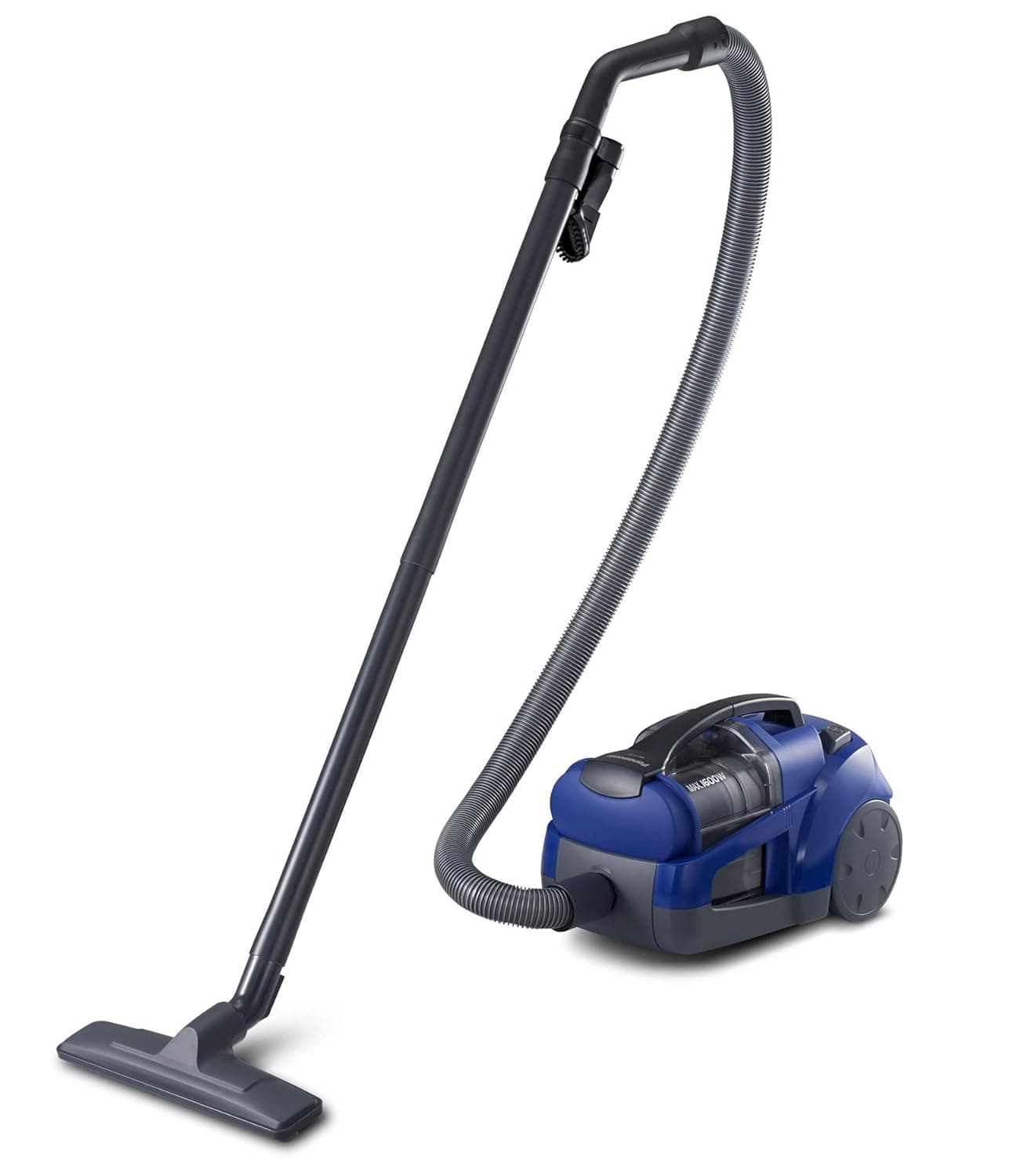
The engineering behind the 8000 Pa suction is centered on the 1600 W universal motor, which is surprisingly high for a cordless vacuum cleaner. Typically, such wattage is reserved for corded models, but here it is utilized to maximize static pressure. This high motor-to-airway ratio ensures that despite the 4 kg mass, the airflow remains laminar, preventing the clogging sensation common in lower-wattage units. The trade-off is a noise level of 80 dB, which is the result of high-velocity air movement through the internal turbine, making it highly effective for heavy debris like road dust or spilled grains.
The Single Stage-stage HEPA filtration system is engineered to capture 99.97% of particulates as small as 0.3 microns. In the context of Indian urban pollution, this is vital for trapping fine silt and soot that enters through balconies. The washable nature of the filter is a strategic engineering choice, allowing the user to restore airflow efficiency without frequent replacement costs. By utilizing a pleated design, the surface area is maximized within a compact chamber, ensuring that the 1600 W motor's pull is not throttled by a saturated filter during intensive cleaning sessions.
Operating as a cordless vacuum cleaner, the unit utilizes a high-capacity power system to drive its 1600 W universal motor. While specific runtime is listed as NA, the architecture suggests a high-discharge battery configuration capable of sustaining the significant current draw required for 8000 Pa of suction. The charging system likely follows a CC-CV (Constant Current-Constant Voltage) protocol to protect the cells from the high heat generated during operation. For Indian users, this means the device is best suited for focused bursts of heavy-duty cleaning rather than continuous hours of operation across multiple rooms.
The 1.2 L bagless dust capacity utilizes a cyclonic separation mechanism to keep debris away from the motor intake. This design is critical for maintaining the 8000 Pa suction throughout the cleaning cycle. Centrifugal force spins heavier particles to the outer walls of the bin, while the central vortex carries finer dust into the HEPA stage. This prevents the immediate drop in performance seen in bagged models. For Indian 2BHK apartments where hair and fine dust are prevalent, this separation ensures the motor remains protected from fine abrasive particles that could cause wear.
The integrated blower function is a mechanical redirection of the motor's exhaust air, transformed into a concentrated jet. Unlike standard vacuums where exhaust is diffused, this model uses a dedicated port to harness the 1600 W motor’s power for displacement tasks. This is specifically beneficial for cleaning Indian balcony tracks, sliding window channels, and AC condenser fins where suction nozzles cannot physically reach. By toggling the airflow direction, the unit becomes a dual-purpose tool, solving the problem of stuck grime that requires mechanical agitation before it can be effectively vacuumed away.
Constructed from high-impact ABS plastic, the 4 kg chassis is designed for durability against the accidental knocks common in cluttered Indian households. The handle design is ergonomically weighted to offset the motor’s mass, providing better control when using it as a portable vacuum for car or sofa cleaning. The parking position and attachment storage for the crevice nozzle and dusting brush ensure that the footprint remains minimal. Every engineering choice, from the motor wattage to the filter placement, reinforces the MC CL561A145 as a high-performance cleaning tool for those who prioritize power and filtration.