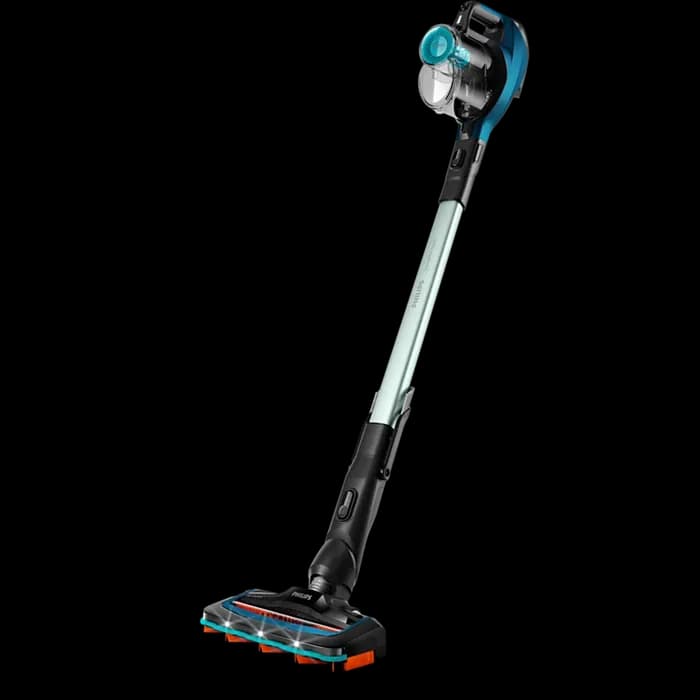
The 16.7 kPa suction is generated by a high-torque 1000 W universal motor designed for industrial-style airflow in a domestic chassis. This motor-to-airway ratio is optimized to provide high static pressure, essential for lifting heavy particles like sand or construction dust from floor crevices. While the 1000 W draw creates significant vacuum force, the engineering focuses on maintaining a consistent seal across various attachments to prevent pressure drops. This makes the unit ideal for heavy-duty tasks like cleaning ceiling fans or deep-seated sofa grime, though it necessitates efficient thermal management to handle the heat generated during prolonged high-suction sessions in typical Indian summer conditions.
The filtration architecture utilizes a 2-stage HEPA system that is specifically engineered for fine particulate matter. The primary stage captures larger debris and hair, while the secondary HEPA element traps microscopic particles as small as 0.3 microns. Because the filter is washable, the airflow resistance remains low over time, preventing the motor from overworking and extending its operational lifespan. This is critical for Indian environments where fine dust ingress is high. The seal around the HEPA housing is airtight, ensuring that the 16.7 kPa pressure translates into actual cleaning power rather than leaking through the chassis, maintaining high indoor air quality.
As a cordless vacuum cleaner, the power management system is configured to balance the high 1000 W motor demand with battery discharge rates. The internal cell configuration is designed to handle the peak current required for wet-dry transitions without thermal throttling. While specific runtime data is NA, the power delivery circuit uses a constant current, constant voltage protocol during the charging phase to preserve battery health. For Indian users, this means the unit can be kept on charge overnight to ensure readiness for daily 1BHK or 2BHK cleaning rounds. The engineering prioritizes voltage stability to prevent suction fade during the cleaning cycle.
The wet and dry separation mechanism utilizes a dedicated baffle design within the 10 L drum to protect the motor from moisture ingress. When vacuuming liquids or spills, the airflow is diverted away from the electrical components, and a float valve prevents overfilling. The 10 L bagged capacity provides ample space for dry debris, while the internal chamber is coated to resist corrosion from wet waste. After wet use, the internal components require a simple rinse and dry to maintain hygiene. This robust separation logic ensures the unit handles everything from spilled tea to balcony wash-water without risking a short circuit or motor failure.
A key technical differentiator is the integrated blower function, which reverses the airflow through a dedicated exhaust port. This mechanism utilizes the full force of the 1000 W motor to generate a high-velocity air stream, perfect for dislodging dust from AC vents or cleaning intricate electronics like WFH keyboards. Unlike standard vacuums that only suck, this dual-mode engineering provides a solution for areas where suction nozzles cannot reach. The transition between suction and blowing is seamless, requiring a simple hose repositioning. This makes the unit a versatile engineering tool for maintaining hygiene in complex household environments where dust settles in inaccessible gaps.
The chassis is constructed from high-impact ABS plastic, providing a balance between durability and the 4 kg weight. The ergonomic handle is positioned to optimize the center of gravity, making it easier to carry during car cleaning or when reaching for high-up cornices. The parking position and storage hooks are integrated into the mold for compact storage in Indian homes. Every attachment, from the crevice nozzle to the upholstery tool, is engineered with a friction-fit seal to maintain the vacuum's 16.7 kPa integrity. Ultimately, the Mecano Premia represents a solid fusion of material science and mechanical efficiency for domestic use.