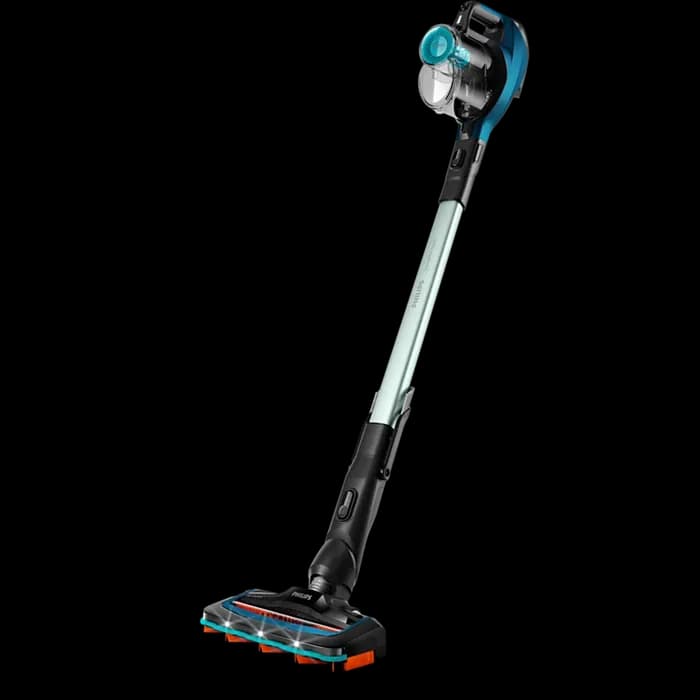
The 14 kPa suction pressure is generated through a high-torque 1200 W universal motor, which provides a significant static pressure advantage for a cordless vacuum cleaner. In engineering terms, this motor-to-airway ratio is optimized to maintain high velocity even when the 10 L bag begins to fill. While the static pressure is lower than industrial corded units, the 1200 W draw ensures that heavy particles like cement dust or coarse sand are lifted effectively from tile and wood flooring. This balance makes the device ideal for standard 2BHK debris, though it may require multiple passes on high-pile carpets where airflow resistance is significantly higher compared to hard surfaces.
The filtration architecture utilizes a 3-stage system consisting of a primary cloth filter and a secondary sponge layer. This mechanical separation is critical for Indian environments where fine road dust can quickly clog standard filters. The cloth stage acts as a high-capacity pre-filter, capturing larger pet hair and fibers, while the sponge layer traps finer particulate matter before air reaches the motor. Because both stages are fully washable, users can restore the original airflow dynamics without purchasing new consumables. This washable construction is an engineering necessity for maintaining the 1200 W motor’s cooling efficiency over long-term use, preventing overheating during intensive sessions on mattresses or car upholstery.
Powering a 1200 W motor in a cordless format requires a sophisticated battery management system to handle the high current draw. The internal cell configuration is designed to deliver a consistent voltage output to maintain the 14 kPa suction throughout the 20-minute runtime. While the runtime is optimized for targeted cleaning rather than whole-house deep cleans, the discharge curve is engineered to be flat, preventing suction drop-off as the battery nears depletion. Users should follow CC-CV charging protocols to ensure cell longevity, especially in warmer Indian climates. This power delivery system prioritizes burst performance, making it highly effective for rapid interventions on sofas, keyboards, and AC vents.
The wet and dry functionality is facilitated by a robust internal baffle design that protects the 1200 W motor from moisture ingress. When suctioning liquid spills or balcony grime, the air-water separation chamber uses centrifugal force to deposit fluids into the 10 L container while allowing dry air to pass through the sponge filters. This dual-purpose engineering eliminates the need for two separate devices, though users must ensure the cloth filter is removed during wet operation to prevent mildew. The 10 L bagged capacity provides a substantial buffer for both dry debris and liquid waste, ensuring that the vacuum maintains its operational efficiency without frequent stops for emptying.
Unlike many standard vacuum cleaners, this model incorporates a dedicated blower function by redirecting the motor exhaust through a narrowed aperture. This technical mechanism creates a high-velocity air stream capable of dislodging dust from recessed areas like laptop keyboards and complex AC vent fins where suction alone might fail. In an Indian context, the blower is particularly useful for clearing dry leaves from garden paths or cement dust from window sills after renovation work. By leveraging the existing 1200 W power source, the blower adds a secondary utility layer, allowing the device to act as a comprehensive maintenance tool for both indoor and outdoor cleaning tasks.
The chassis is constructed from high-impact ABS plastic, balancing structural rigidity with a total weight of 4 kg. The center of gravity is positioned near the handle to reduce wrist strain during handheld operations on curtains or car ceilings. The parking position and attachment storage points are engineered for space-saving in smaller 1BHK apartments where storage is a premium. Each component, from the flexible hose to the crevice nozzle, features a friction-fit locking mechanism that prevents air leaks, thereby preserving the 14 kPa suction at the tool head. This focus on material science and ergonomic geometry ensures that the Micro WD10 remains manageable for daily household maintenance.