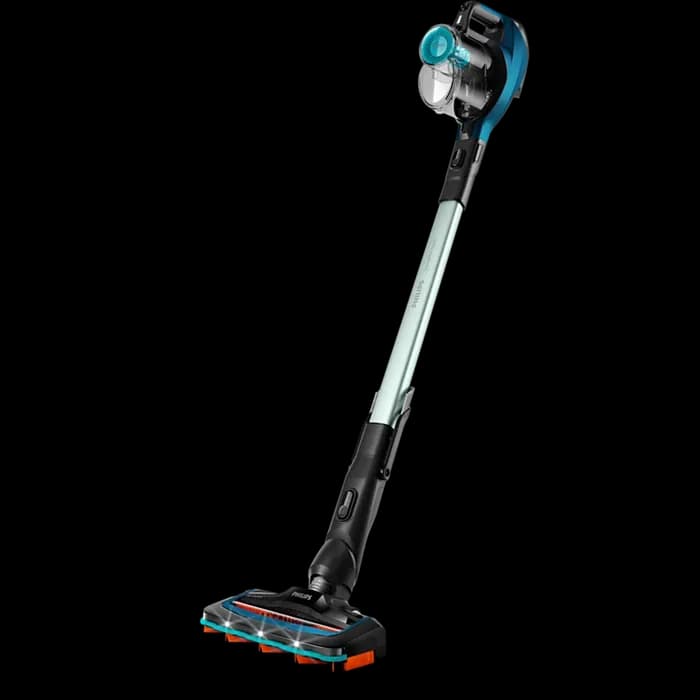
The engineering behind the suction profile focuses on optimizing the 600 W motor to produce a steady 6 kPa of pressure. Unlike high-wattage corded models that prioritize raw airflow volume, this motor-to-airway ratio is tuned for static pressure efficiency. This design allows the impeller to maintain consistent velocity even as the 2.5 L bag fills with fine Indian road dust. While 6 kPa is lower than industrial extractors, the high-speed motor maintains enough kinetic energy to lift surface-level debris from hard tile and cement floors. This specific pressure curve is ideal for daily maintenance cycles where energy conservation and motor longevity are prioritized over heavy-duty removal.
The 3-stage HEPA filtration architecture is designed to address the high particulate matter common in urban Indian environments. The primary stage captures larger debris like hair and food crumbs, while the secondary mesh stabilizes the airflow before reaching the HEPA media. The final HEPA stage is engineered to trap particles as small as 0.3 microns, including pollen and dust mites found in mattresses. A critical engineering advantage is the washable construction of these filters. By allowing users to rinse away accumulated grime, the system prevents the static pressure drop-off typically seen in disposable filter systems, ensuring the vacuum maintains its performance without requiring expensive recurring component purchases.
Power management is handled by a sophisticated battery array that supports a 300 min runtime, a duration significantly higher than standard handheld units. The internal circuitry utilizes a Constant Current-Constant Voltage (CC-CV) charging protocol to manage the 5-hour recharge cycle, protecting the lithium cells from the voltage fluctuations common in Indian power grids. The motor draw is balanced against thermal limits, ensuring that the unit can operate for extended periods without overheating. For the user, this means the ability to clean a 3BHK apartment multiple times on a single charge. This electrical efficiency reduces the overall cost per cleaning session, aligning with long-term sustainability goals for the modern home.
The wet and dry separation mechanism utilizes an internal baffle design to protect the 600 W motor from moisture ingress. When the unit transitions from dry dust to liquid spills, the airflow is diverted through a specialized chamber that prevents droplets from reaching the high-speed impeller. The 2.5 L bagged system is primarily for dry use, while the mop pad attachment manages surface-level moisture on tile and wood flooring. Engineering this dual-purpose path requires precise seal tolerances to prevent air leaks that would otherwise compromise the 6 kPa suction. Proper post-use maintenance, such as drying the mop pad, is essential to prevent microbial growth and maintain system hygiene.
The inclusion of a blower function utilizes the exhaust side of the 600 W motor, redirecting filtered air through a concentrated nozzle. In the Indian context, this is technically superior for cleaning recessed areas like AC vent fins and mechanical keyboards where suction alone cannot reach. By reversing the airflow logic, the device clears fine silt from sliding window tracks and balcony corners that are difficult to access with standard brushes. This dual-use engineering maximizes the utility of the high-speed motor without adding significant weight to the 3.3 kg chassis. It represents a versatile approach to airflow management, turning the byproduct of vacuum suction into a functional cleaning tool for complex electronics.
Constructed from high-grade ABS plastic, the 3.3 kg chassis is engineered for a balance of structural rigidity and maneuverability. The handle design places the center of gravity near the palm, reducing wrist strain during long cleaning sessions on wood flooring or cement surfaces. The self-empty dock integration provides a stable parking position while managing the transfer of debris into the 2.5 L bag. Every joint and attachment point is reinforced to withstand the vibrations of the 70 dB motor operation. This focus on physical durability ensures that the unit remains a reliable part of the household cleaning arsenal. Ultimately, the MT 900 LiDAR Robot Vacuum stands as a robustly engineered solution for Indian homes.