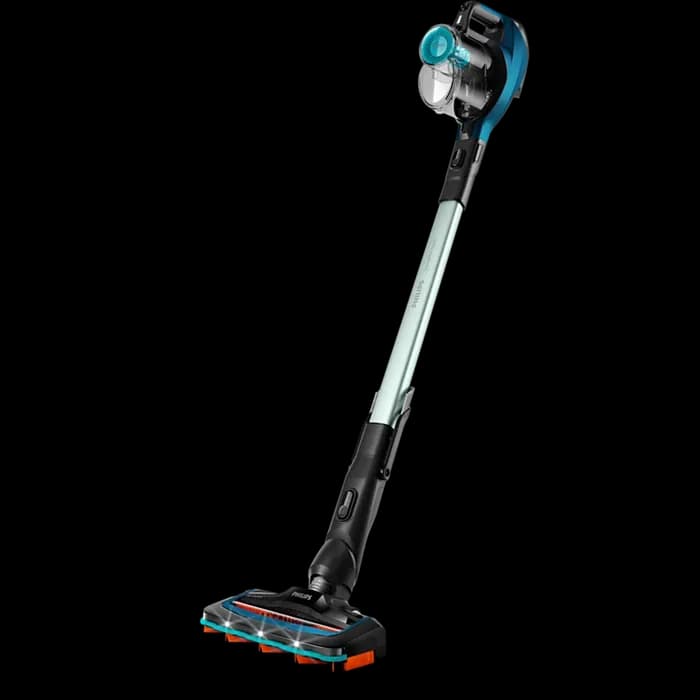
The suction pressure engineering of this unit utilizes a brushless DC motor ranging from 800W to 2500W to generate a sustained 8000 Pa vacuum. This configuration prioritizes a high motor-to-airway ratio, allowing for consistent static pressure even as the 0.25 L bin fills. While 8000 Pa is optimized for surface debris like fine dust and pet hair on hard tiles or wood flooring, it maintains a specific airflow trade-off that favors runtime over industrial-grade carpet extraction. This makes the motor ideal for daily maintenance in Indian apartments where dust accumulation is constant but floor types are primarily hard surfaces.
The filtration architecture employs a 3-stage HEPA and sponge system designed for the high particulate matter found in Indian cities. The primary sponge filter captures larger debris, while the HEPA element is calibrated to trap particles as small as 0.3 microns, including pollen and dander. Because both stages are fully washable, the system avoids the suction drop-off typical of clogged disposable bags. This construction is vital for Indian daily use, as it allows users to maintain peak pneumatic efficiency without recurring expenditures on replacement filters, ensuring the internal motor components remain shielded from abrasive road dust.
The battery and power system is engineered for endurance, providing a significant 90-minute runtime from a single charge. This is achieved through a multi-cell lithium-ion configuration that utilizes CC-CV charging protocols to ensure cell longevity over hundreds of cycles. The 4-5 hour charging time is a calculated trade-off to prevent heat build-up within the 2.5 kg chassis during the replenishment phase. For Indian users, this means a single session can cover a full 2BHK apartment floor, followed by detailed cleaning of upholstery, without the voltage sag that often affects cheaper, brushed-motor alternatives.
Liquid management is handled via a specialized wet and dry separation mechanism within the 0.25 L bagless bin. A series of internal baffles prevents moisture from entering the motor housing, allowing the unit to safely lift spilled tea or wet kitchen messes from cement or tile floors. The inclusion of a water tank and mop pad attachment transforms the vacuum from a dry extractor to a moisture-based surface cleaner. Post-wet-use maintenance is streamlined by the washable nature of the internal components, which prevents the growth of mold or odors in humid Indian climates.
While this model lacks a blower function, it compensates through advanced control systems, including a dedicated remote control for automated navigation logic. This technical mechanism allows the user to direct the cleaning path toward high-traffic areas like AC vents or under-keyboard gaps where dust density is highest. The integration of a side brush set works in tandem with the primary suction inlet to sweep corner debris into the path of the vacuum. This mechanical synergy ensures that the lack of a blower does not compromise the ability to clear dust from tight architectural corners.
The chassis is constructed from high-impact ABS plastic, keeping the total weight at 2.5 kg to facilitate easy maneuverability across different floor levels. The ergonomic handle design and parking position logic ensure that the unit can be stored in small utility closets typical of urban Indian flats. The low 65 dB noise profile is achieved through acoustic dampening around the brushless motor, preventing high-frequency resonance during operation. Ultimately, the MyRobo represents a sophisticated blend of energy-efficient motor control and practical filtration that addresses the specific environmental challenges of the Indian domestic landscape.