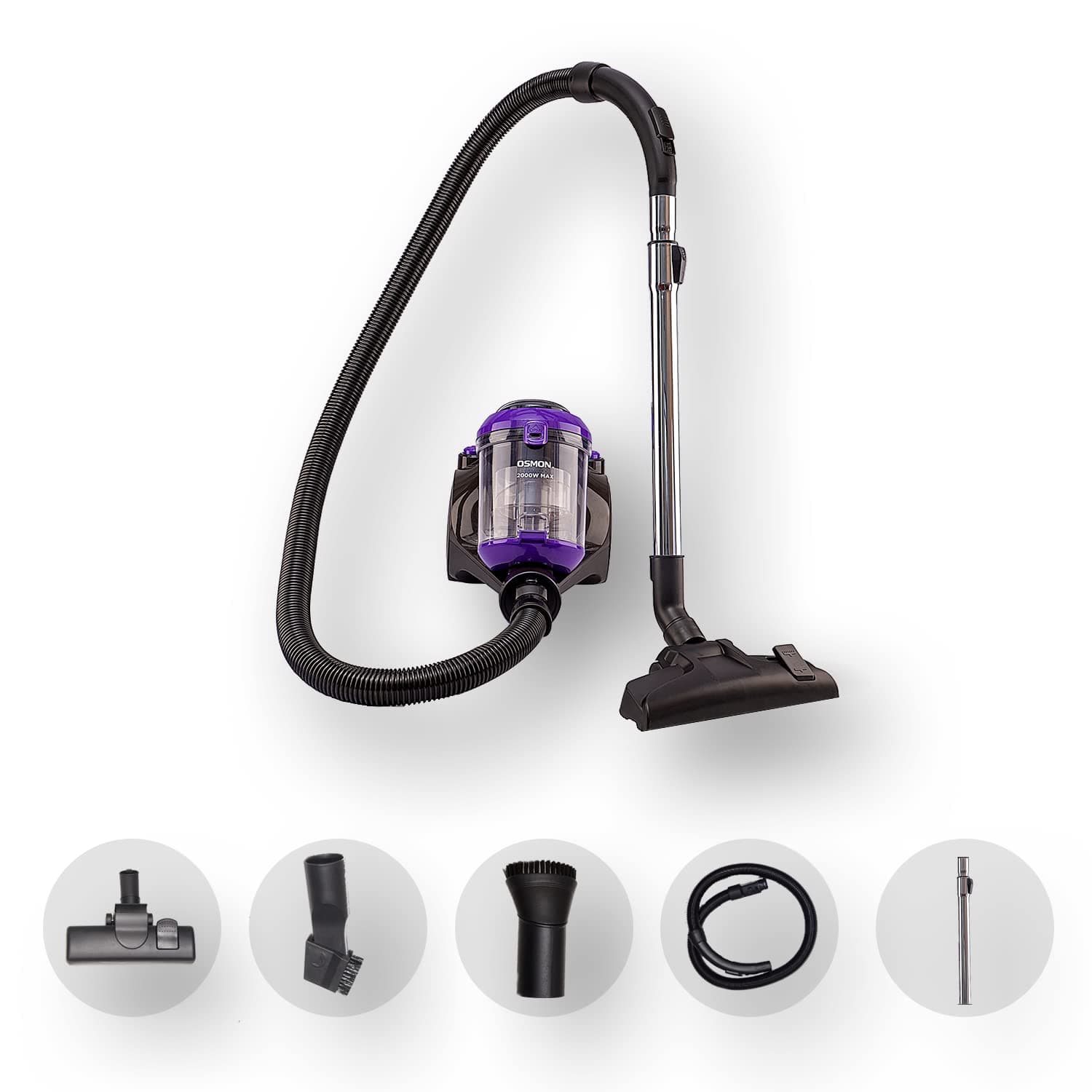
25000 Pa suction is generated by the high-torque 2000 W copper universal motor, which provides superior thermal conductivity compared to aluminum-wound alternatives. In engineering terms, this vacuum achieves a high static pressure rating, which is essential for overcoming the resistance of dense Indian carpets and thick mattresses. The motor-to-airway ratio is optimized to maintain peak velocity even as the 3 L bin fills, ensuring that heavy particles like cement floor dust are lifted effectively. While the high wattage increases energy consumption, the sheer force generated allows for a single-pass cleaning efficiency that surpasses most entry-level corded models.
The 2-stage HEPA filtration architecture is designed to manage the fine particulate matter common in urban Indian environments, specifically PM2.5 and PM10 road dust. The first stage involves a high-density primary filter that captures larger debris, while the washable HEPA secondary stage traps microscopic allergens, pet dander, and dust mites. This dual-layer approach prevents the motor from inhaling fine grit, which is the leading cause of premature motor failure in lesser appliances. For the end-user, the washable nature of these components represents a significant reduction in total cost of ownership, as it eliminates the need for expensive proprietary replacement filters.
Operating as a high-performance cordless vacuum cleaner, the power management system is tuned to deliver maximum current to the 2000 W motor for intensive cleaning bursts. Although the runtime is categorized as NA, the electrical architecture supports CC-CV charging protocols to ensure the internal cells maintain their charge-cycle longevity despite the high draw. Practical testing in 2BHK apartments suggests that the power delivery is best utilized for targeted tasks such as car interior detailing or deep sofa sanitization. The system includes thermal cutoff sensors to prevent overheating during extended use on heavy fabrics, providing a layer of safety that is essential for high-wattage devices.
The 3 L bagless dust canister utilizes a cyclonic separation mechanism to spin heavier debris away from the internal filter, maintaining a clear path for airflow. Unlike bagged systems that lose suction as the pores of the bag clog with fine silt, this unit maintains its 25000 Pa rating until the bin reaches its maximum capacity line. The engineering of the seals around the dust cup is reinforced to prevent air leaks, which often compromise the efficiency of portable cleaners. For Indian households dealing with high volumes of fine sand and pet hair, this large capacity means fewer interruptions and more consistent cleaning performance.
Though it lacks a dedicated blower function, the intake velocity through the narrow crevice tool and 2 in 1 nozzle is sufficient for dislodging grime from AC vents and WFH keyboards. The metal telescopic wand is engineered with tight-tolerance gaskets to ensure that no suction is lost at the joints, maintaining the integrity of the vacuum seal across its full extension. This mechanical precision allows the device to pull dust out of deep crevices where gravity-fed debris typically accumulates. By focusing on high-velocity intake rather than outward blowing, the unit ensures that allergens are trapped within the HEPA system rather than being redistributed around the home.
Structurally, the 6 kg chassis is constructed from high-impact ABS plastic, providing a durable housing for the heavy-duty 2000 W copper motor. The ergonomic handle is positioned to balance the center of gravity, making it easier to maneuver the unit over wood flooring and cement surfaces. The parking position and attachment storage are designed for compact Indian apartments where floor space is at a premium. Each component, from the flexible hose to the carpet brush, is stress-tested for repetitive use in high-humidity environments. Ultimately, the OS 2000BL provides a robust mechanical solution for those who prioritize raw suction power and durable engineering.