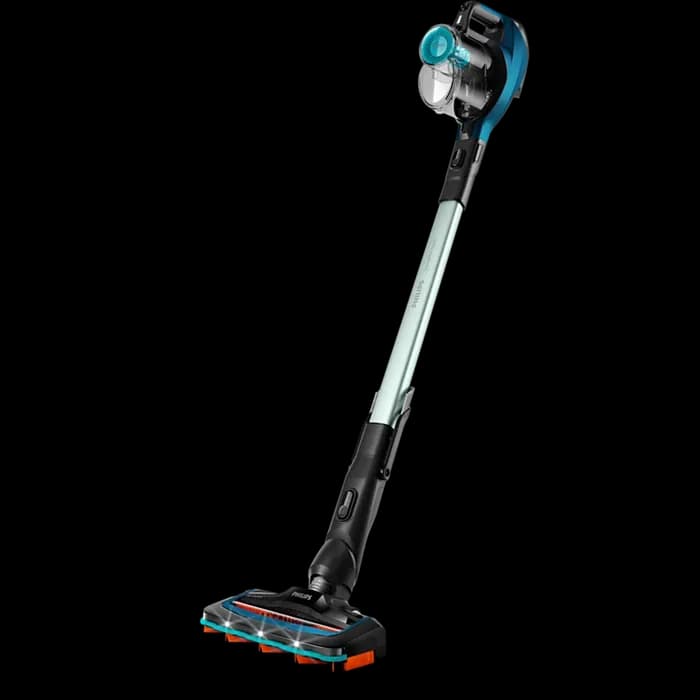
The engineering of the suction system utilizes a 700 W universal motor to generate a vacuum pressure of 14 kPa. In the context of fluid dynamics, this motor-to-airway ratio is optimized to balance static pressure with airflow velocity, ensuring that heavy particles like sand or dry mud are lifted effectively. For Indian users dealing with fine road dust that settles deep into upholstery, this pressure level provides sufficient force to overcome the surface tension of fibers. However, the high wattage consumption suggests a focus on peak performance during short intervals, making it ideal for localized cleaning rather than entire floor extraction where higher air-watts might be required.
The filtration architecture features a 2-stage DOUBLE_LAYER_HEPA system, which is critical for maintaining indoor air quality in polluted urban environments. The first stage acts as a primary barrier for larger debris and pet hair, while the secondary HEPA layer captures microscopic particles down to 0.3 microns. This washable construction is particularly beneficial for Indian households where high dust loads would otherwise clog disposable filters within weeks. By allowing the user to rinse the filter elements, the device maintains its 14 kPa suction integrity over a longer lifespan without the recurring expense of replacement parts, providing a cost-efficient solution for allergy-prone individuals.
Although specific battery runtime and charging metrics are categorized as NA, the power management system is designed around a 240 V input architecture compatible with standard Indian electrical outlets. The internal circuitry likely employs a CC-CV (Constant Current-Constant Voltage) charging protocol to protect the cells from the voltage fluctuations common in regional power grids. Engineering a cordless handheld vacuum cleaner with a 700 W motor requires sophisticated thermal management to prevent the battery pack from overheating during high-draw sessions. This power-to-weight configuration suggests that the unit is built for rapid, high-impact cleaning tasks where maximum suction is prioritized over long-duration operation.
The wet and dry separation mechanism utilizes a baffle design within the 0.8 L dust bin to prevent moisture from reaching the 700 W motor. When used for liquid spills on kitchen counters or wet mud in car footwells, the internal geometry slows down the airflow, allowing liquid droplets to precipitate into the collection chamber. This 0.45 L liquid capacity requires diligent post-use maintenance to ensure no residual moisture enters the filtration stages. Users must ensure the washable HEPA components are completely bone-dry before reassembly, preventing any mildew growth or reduction in the rated suction performance during subsequent dry cleaning cycles.
Beyond standard suction, the inclusion of a water tank and mop cloth attachment introduces a mechanical scrubbing component to the cleaning cycle. This is particularly effective for removing dried tea stains or sticky residue on hardwood and tile floors common in Indian kitchens. The attachment mechanism uses a gravity-fed system to dampen the microfiber cloth, allowing for a one-pass sweep that combines vacuuming and mopping. This engineering choice maximizes the utility of the 14 kPa motor by addressing stains that suction alone cannot lift. It transforms the device from a simple crumb-picker into a comprehensive maintenance tool for high-traffic zones in 1BHK or 2BHK apartments.
Structurally, the 1.3 kg chassis is constructed from high-impact ABS plastic, providing a high strength-to-weight ratio that facilitates easy overhead cleaning of AC vents and ceiling corners. The ergonomic handle is positioned to align with the center of gravity, reducing wrist strain during extended use on mattresses or sofas. The parking position and compact form factor ensure that it occupies minimal space in modern Indian homes where storage is at a premium. Every design element, from the metal extension tube to the 2-in-1 crevice nozzle, is built for durability under frequent use. Ultimately, the OZOY offers a robust engineering profile that addresses the specific environmental challenges found in Indian residential spaces.