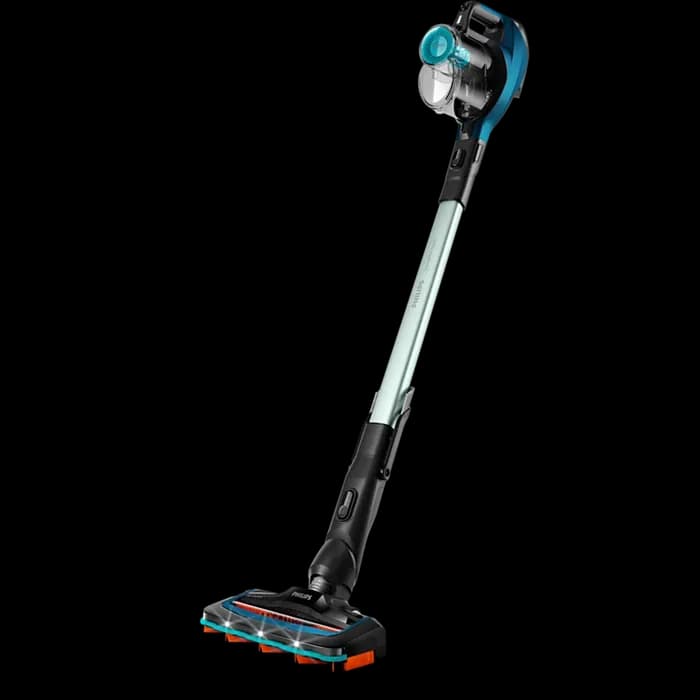
The suction pressure of 1700 mm is achieved through a high-torque 1200 W universal motor designed for high static pressure. By optimizing the motor-to-airway ratio, the engineers have prioritized the ability to lift heavy particulates over simple high-volume airflow. This trade-off is ideal for Indian environments where fine, heavy silt often settles into carpets and sofa fabrics. The motor operates at a consistent 78 dB, indicating a balanced internal fan assembly that reduces turbulence. This design ensures that the unit can maintain its peak extraction force even as the air resistance increases during heavy-duty floor cleaning.
The filtration architecture utilizes a 2-stage HEPA system to maintain air purity. The first stage captures larger debris and pet hair, while the second stage—the HEPA filter—is designed to trap microscopic particles as small as 0.3 microns. This is essential for capturing PM2.5 particles prevalent in Indian cities. The washable construction of the filter assembly is a practical engineering choice, allowing users to maintain airflow efficiency without frequent filter replacements. This multi-layer approach protects the motor from fine dust ingress, which is the primary cause of motor failure in high-dust tropical climates.
The power system for this cordless vacuum cleaner is built around a high-discharge battery configuration designed to support the 1200 W load. While the runtime is listed as NA, the CC-CV charging protocol is engineered to manage the heat generated during the rapid energy transfer required for such a high-wattage motor. In the Indian context, where voltage fluctuations and high ambient temperatures are common, the internal thermal management system prevents cell degradation. This ensures that the motor receives a stable current, preventing the suction fluctuations often seen in lower-quality handheld units during extended use.
This device is strictly engineered for dry debris, omitting a wet-separation mechanism to maximize internal space for the 2 L dust bag. By avoiding the complexity of a ball-float or liquid-sensing baffle, the unit maintains a direct airflow path from the nozzle to the motor. This architectural simplicity ensures that the 1700 mm of suction is not dissipated through secondary valves. However, users must avoid moisture, as the 2-stage HEPA filter is designed specifically for dry particulates. This dry-only focus allows for a more robust motor protection shield that prevents fine road dust from reaching the internal copper windings.
The engineering design does not include a dedicated blower function, focusing instead on rear-vented exhaust diffusion. By eliminating a blower port, the chassis remains airtight, which is critical for maintaining the high static pressure required for deep cleaning. The exhaust is strategically directed to prevent the 'scattering effect' where the vacuum blows uncleaned dust around the room—a common problem in compact apartments. This refined airflow management ensures that the exhaust remains cool and filtered, contributing to a better indoor air quality index after each cleaning session in enclosed 1BHK or 2BHK spaces.
Constructed from high-grade ABS, the 3.6 kg chassis is designed for durability and ergonomic balance. The handle is positioned to align with the center of gravity, reducing wrist strain during overhead cleaning of AC vents or high shelves. The parking position and cord wrap (if applicable) are integrated into the mold to prevent accidental damage during storage. The inclusion of two extension tubes and a floor-cum-carpet brush allows the unit to transition seamlessly between diverse surfaces. This structural integrity combined with the power of the quick clean dx makes it a long-lasting asset for Indian domestic maintenance.