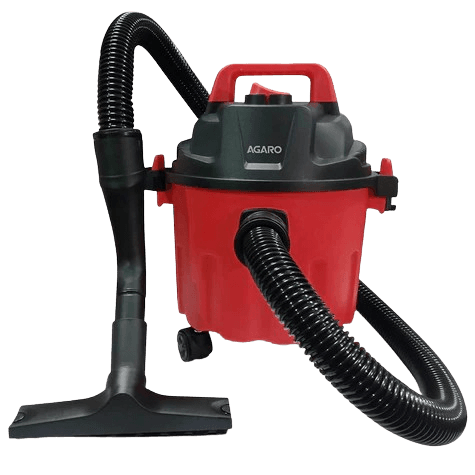
The engineering of this unit centers on its 1000 W universal motor, which generates a static pressure of 16.5 kPa. This motor-to-airway ratio is optimized for high-volume air displacement, making it capable of lifting heavier particles like construction dust or spilled grains. Unlike low-wattage cordless sticks, the universal motor design focuses on torque, ensuring that suction remains constant even as the dust bin fills. This makes it ideal for heavy dry debris removal on hard floors, though the higher weight reflects the copper-heavy motor construction required for such power. This architecture ensures the motor does not overheat during intensive cleaning cycles in high-ambient Indian temperatures.
Filtration is handled by a Single-stage-stage CARTRIDGE system designed for longevity and airflow efficiency. This cartridge filter captures larger dust particles and fine pet dander, preventing them from recirculating into the living space. Because the filter is washable, it addresses the common Indian issue of filter clogging due to high particulate matter in urban air. Users can rinse the cartridge under tap water to restore full airflow, which is critical for maintaining the 16.5 kPa suction rating. The single-stage design reduces air resistance compared to multi-cyclonic systems, allowing the 1000 W motor to maximize its cleaning energy at the nozzle.
The power system architecture is tailored for high-wattage discharge. Even with runtime and charging times listed as NA, the 240 V internal configuration is designed to handle the high current draw of a universal motor. This setup typically utilizes a high-discharge cell arrangement to ensure that the 1000 W motor receives consistent voltage. For Indian users, this means the unit provides short bursts of extreme cleaning power rather than low-power sustained operation. Engineering a cordless system to support a 1000 W motor requires robust heat sinks and a high-current battery management system to prevent thermal throttling during use.
The wet and dry separation mechanism utilizes a specialized baffle system within the 10 L bagless container. This allows the unit to ingest liquid spills, such as spilled milk or floor wash water, without moisture entering the motor housing. The 10 L capacity is significantly higher than the 0.4L bins found on typical handhelds, making it suitable for larger residential spillages. Post-wet use, the internal drum requires a simple rinse to maintain hygiene. This versatility is achieved through a gravity-based separation design where heavier liquids settle at the bottom of the canister while air is filtered through the upper cartridge.
A key technical differentiator is the blower function, which redirects the motor's exhaust through a concentrated nozzle. In the Indian context, this is essential for clearing AC vent grime and cleaning keyboards where suction cannot reach deep crevices. The blower mechanism bypasses the primary filtration stages to maximize exit velocity, providing a high-speed air stream for outdoor balcony cleaning or dusting delicate electronics. This mechanical redirection of airflow demonstrates the unit's versatility, as it uses the same 1000 W motor power to push air out as effectively as it draws it in during suction mode.
Constructed from high-grade ABS plastic, the 7.18 kg chassis provides the durability needed for heavy-duty household tasks. The weight is distributed to ensure stability when the 10 L bin is at maximum capacity, preventing the unit from tipping during operation. The handle design and nozzle attachments are ergonomically shaped to reduce wrist strain during spot cleaning of sofas or car interiors. The parking position allows for compact storage in tight 1BHK or 2BHK apartment closets. Ultimately, the rapid(33398) is engineered for users who prioritize industrial-strength suction and wet-dry capability in a portable format over lightweight minimalist designs.