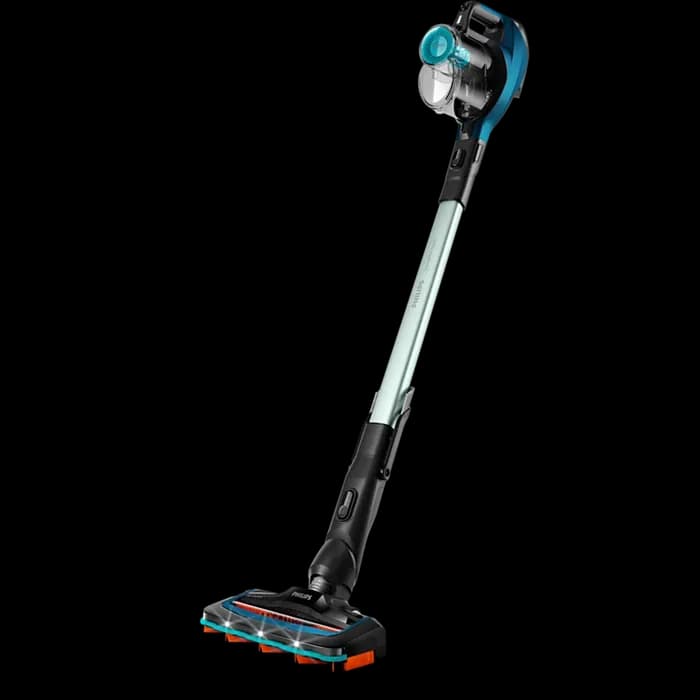
The suction pressure of this cordless vacuum cleaner is derived from a 50W brushless DC motor that optimizes the motor-to-airway ratio for consistent performance. By generating 3000 Pa of static pressure, the engineering focuses on high-velocity air movement through a narrow nozzle path, which is ideal for lifting particulate matter like silica dust and pet dander from hard surfaces. Unlike high-wattage corded units that rely on raw power, this system uses electronic speed control to maintain vacuum pressure even as the 0.35 L bin fills, ensuring that the airflow does not drop during extended cleaning sessions in dusty Indian conditions.
The filtration architecture employs a 3-stage HEPA system designed to capture particles as small as 0.3 microns. The first stage uses a mesh shroud for large debris, the second involves a pre-filter for medium particulates, and the final HEPA stage traps microscopic allergens. For Indian users dealing with seasonal pollen and construction dust, the washable construction of these filters is a critical engineering choice. It prevents the accumulation of grime that typically clogs disposable filters, allowing the motor to operate at peak efficiency without overheating, which significantly extends the operational lifespan of the internal components.
The power system is built around a high-capacity battery array that provides an industry-leading 300 minutes of runtime. This is achieved through a 14.4V cell configuration that balances discharge rates with the 50W motor draw. The charging circuit utilizes a CC-CV protocol, requiring 6 hours for a full cycle to ensure cell longevity and prevent thermal runaway in warmer Indian climates. This engineering trade-off prioritizes extreme endurance over rapid charging, making it suitable for users who prefer one long cleaning session per week rather than multiple short bursts throughout the day.
A key mechanical feature is the wet and dry separation mechanism which protects the electronic motor from moisture ingress. The internal baffle design redirects air so that liquid droplets are diverted into the collection chamber while the air stream continues to the exhaust. With a 0.35 L capacity, the bin is designed for quick spills on tile or marble rather than heavy industrial liquid extraction. Post-use maintenance is simplified by the modular bin design, which allows for thorough rinsing to prevent the growth of mold or bacteria after vacuuming damp kitchen spills.
The inclusion of a mop kit and side brush expands the mechanical utility beyond simple suction. The mop kit uses a capillary action system to dampen the floor surface while the 3000 Pa suction removes loosened grime. The side brush is engineered with high-tensile bristles to sweep dust from wall edges into the primary suction path, solving the common issue of corner dust accumulation in Indian flats. This combination of mechanical sweeping and vacuuming ensures that fine dust, which often resists suction alone, is physically dislodged and captured efficiently.
The chassis is constructed from high-grade ABS plastic, bringing the total weight to 3.3 kg. This provides a balance between structural durability and ergonomic handling for overhead tasks like cleaning AC vents or ceiling fans. The handle design distributes the weight toward the wrist to reduce fatigue during the 300-minute operational window. The internal components are arranged for a low center of gravity, which aids in stability during storage. Ultimately, the RMH2101 engineering reflects a focus on extreme battery life and multi-surface versatility for the specific hygiene challenges found in Indian households.