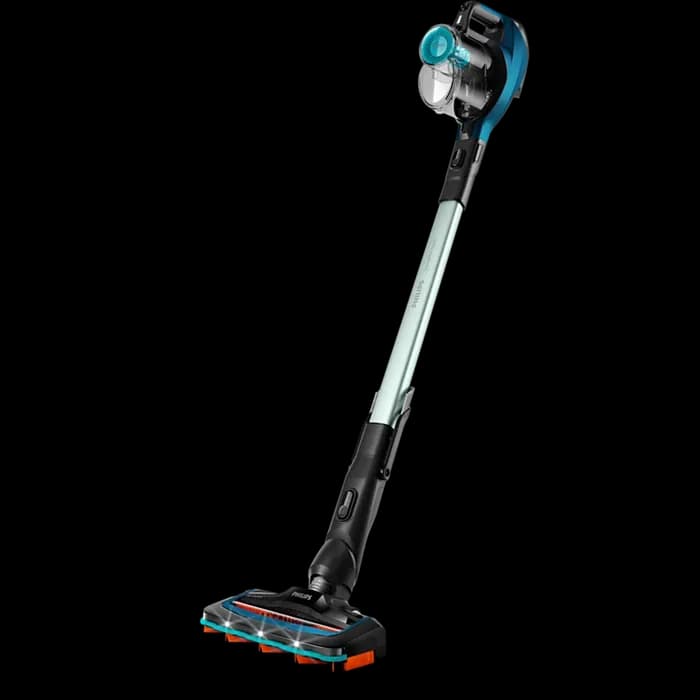
The suction performance of this device is derived from its 700 W universal motor, which is engineered to generate a vacuum pressure of 8000 Pa. This high static pressure is achieved through a high-speed impeller design that optimizes air velocity within the narrow intake manifold. For Indian homes dealing with heavy silt and fine road dust, this pressure is critical for overcoming the resistance of carpet fibers and upholstery textures. While the airflow rate is lower than industrial canisters, the concentrated suction ensures that heavy debris like tracked-in soil is lifted efficiently. This engineering trade-off prioritizes localized deep cleaning over wide-area floor coverage.
The filtration architecture utilizes a single-stage HEPA system designed to capture microscopic pollutants, including dust mites and PM2.5 particles. Unlike multi-cyclone systems that rely on centrifugal force, this unit uses a direct-path filtration method that ensures all intake air passes through the washable media. This is particularly beneficial in urban Indian environments where indoor air quality is compromised by external smog. The washable nature of the HEPA element allows users to restore airflow efficiency manually, preventing the motor from overheating due to back-pressure caused by clogged pores. This engineering choice extends the lifespan of the 700 W motor significantly.
Power management in this cordless handheld vacuum cleaner is tuned for high-burst output rather than endurance. The internal battery system supports the heavy current draw required by the 700 W motor for a duration of 5-7 minutes. This power-to-weight ratio is optimized for 1.34 kg of mass, ensuring the user does not experience muscle fatigue during elevated cleaning tasks like ceiling fans or AC vents. The charging circuitry follows a standard protocol to ensure cell longevity, although the rapid discharge rate suggests that the unit is best suited for targeted spot-cleaning. Engineering the battery for higher runtime would have increased the weight beyond ergonomic limits.
The airflow path is specifically optimized for dry debris recovery, using a 1.5 L bagged system that acts as a secondary filter stage. By utilizing a bagged design, the unit prevents fine dust from leaking back into the room, a common failure in low-end bagless models. The internal bag chamber is pressurized to ensure that the 8000 Pa suction remains constant even as the bag fills. This is crucial for maintaining hygiene when cleaning mattresses or sofas in humid Indian climates where dust can clump. The mechanical seal around the intake port is reinforced to prevent air bypass, ensuring maximum efficiency from the impeller.
The dual-functionality blower system is a critical engineering addition, utilizing the exhaust air from the 700 W motor. By redirecting the high-velocity air through a specialized blower nozzle, the device can clear debris from inaccessible crevices like sliding window tracks or electronic components. This mechanism relies on the same motor-to-impeller efficiency that drives the suction side. In Indian households, this is particularly effective for removing spider webs from corner moldings or dust from heavy drapes. The transition between suction and blower modes is seamless, utilizing the chassis's rear port to maximize the kinetic energy of the exhausted air.
Ergonomically, the chassis is constructed from high-grade ABS plastic, balancing structural rigidity with a low weight of 1.34 kg. The handle is positioned at the center of gravity to reduce wrist strain during vertical cleaning operations. The attachment interface uses a friction-fit system reinforced with locking tabs to ensure no suction loss at the joints. Every accessory, from the hose to the crevice nozzle, is designed to maintain the integrity of the 8000 Pa air stream. Ultimately, the sure active clean represents a focused approach to portable cleaning, prioritizing raw motor power and filtration efficiency over the extended runtimes found in heavier, more expensive alternatives.