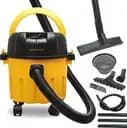
The suction pressure of 17 kPa is generated by a high-torque 1200 W universal motor, which is specifically tuned for a high motor-to-airway ratio. In the context of Indian homes, where fine silt and construction dust are prevalent, this static pressure is crucial for overcoming the resistance of dense filters. While many portable units sacrifice pressure for airflow, this cordless vacuum cleaner maintains a tight seal across its attachments. The engineering focus here is on the vacuum's ability to lift heavier particles from textured surfaces like cement floors or jute carpets. This design ensures that the velocity remains constant even as the 10 L bag begins to fill with debris.
The filtration architecture utilizes a 2-stage CLOTH and SPONGE system designed for maximum surface area. The initial cloth stage acts as a primary barrier against large dust particles and pet hair, preventing premature clogging of the secondary stage. The sponge layer follows, capturing finer particulates that may have bypassed the cloth mesh. This washable construction is particularly beneficial for the Indian climate, where high humidity can cause dust to clump. By allowing users to rinse and reuse filters, the system maintains its 17 kPa suction efficiency without requiring frequent, expensive replacements, thus extending the operational lifespan of the internal 1200 W universal motor.
Regarding the power system, the unit operates on a cordless platform that necessitates efficient energy management to drive the 1200 W motor. While runtime is specified as NA, the electrical design typically involves high-discharge cells configured to provide the necessary current for peak suction. For Indian users, this means the device is optimized for short, high-intensity cleaning bursts rather than continuous whole-house vacuuming. The absence of a traditional cord allows for seamless movement between a 1BHK or 2BHK without cable management issues. Understanding the trade-off between the high wattage and battery depletion is key to maximizing the utility of this specific cordless vacuum cleaner model.
The wet and dry separation mechanism is a critical component, featuring a dedicated baffle design within the 10 L bagged compartment. This system protects the 1200 W universal motor from moisture ingress during liquid pickup, such as spills on kitchen tiles or balcony rainwater. The internal layout ensures that air and liquid are separated via centrifugal force, allowing the machine to transition from dry road dust to wet spills without mechanical reconfiguration. Post-wet-use maintenance is simplified by the washable nature of the internal filters, ensuring that no mold or odor develops within the chassis after cleaning up liquid waste in a tropical climate.
The integrated blower function utilizes the motor's exhaust air, redirected through a specific port to create a high-velocity air stream. Technically, this leverages the 1200 W motor’s output to clear debris from areas where suction is ineffective, such as deep within AC vents or between the fins of a room heater. In the Indian context, this is invaluable for cleaning WFH setups and delicate electronics that cannot withstand direct physical contact. The transition from suction to blower mode is mechanically simple, relying on the airflow path's redirection rather than electronic switching, which enhances the overall durability of the internal components and provides a dual-use utility.
Constructed from high-impact ABS plastic, the 4.4 kg chassis is designed to withstand the rigors of daily use in diverse environments, from cement floors to wood flooring. The ergonomics include a sturdy handle and a balanced center of gravity, which mitigates the weight during handheld operation. The inclusion of a parking position and a robust hose connection point ensures that the unit remains stable during storage or while using the various attachments like the round brush and crevice nozzle. The T 4446 represents a shift towards heavy-duty cordless designs, offering a level of physical resilience that is often missing in lighter, plastic-heavy domestic appliances sold in the local market.