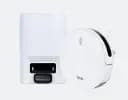
The core of the TRV 10P Max is its 15 W brushless dc motor, which is engineered to maximize torque-to-power efficiency. To achieve 5000 Pa suction from a relatively low wattage, the internal airway is strictly sealed to prevent pressure drops. This high static pressure is optimized for lifting fine particles like silt and road dust common in Indian cities, rather than moving massive volumes of air. While the 15 W rating might seem low compared to AC-powered units, the direct-drive mechanism ensures that the suction remains constant throughout the 140-minute runtime, providing a stable vacuum floor that is ideal for hard surfaces.
The filtration stack utilizes a 3-stage HEPA configuration designed for high-density particulate environments. The first stage involves a primary mesh to catch larger hair and debris, followed by a secondary pre-filter that protects the main HEPA element. The final washable HEPA stage is rated to capture 99.97% of particles down to 0.3 microns, which is crucial for neutralizing PM2.5 levels indoors. For Indian users, the washable nature of these filters is a critical engineering choice, as it prevents the rapid clogging typically seen in dry-climate dust conditions, maintaining airflow without necessitating frequent, expensive filter replacements every few months.
Power management is handled by a high-density lithium-ion array configured for a 140 min runtime. The charging circuitry employs a Constant Current-Constant Voltage (CC-CV) protocol, which optimizes the 3-5 hour charging window while preserving cell longevity against the voltage fluctuations common in many Indian residential grids. By balancing the 15 W motor draw against the battery capacity, the engineers have prioritized endurance over raw peak wattage. This allows for comprehensive cleaning of large 2BHK flats on a single charge, provided the user utilizes the suction modes effectively based on the floor type and debris density.
The wet and dry separation mechanism is built around a specialized baffle design within the 0.3 L robot bin. This system prevents moisture from entering the motor assembly, which is a common failure point in cheaper cordless models. When the mopping pad is engaged, the liquid flow is regulated to ensure even dampness without saturating the internal electronics. Users must adhere to post-wet-use maintenance by emptying and drying the bin immediately to prevent odors, especially given the high humidity in coastal Indian regions. This dual-functionality provides a comprehensive floor-care solution that replaces the traditional mop and bucket.
Rather than a blower function, this model utilizes advanced laser navigation sensors to map home layouts with centimeter-level accuracy. This engineering choice focuses on systematic coverage rather than random bouncing, which is essential for navigating the complex furniture layouts found in Indian homes. The sensors detect obstacles like floor cushions or stray footwear, adjusting the path in real-time. This precision ensures that the 5000 Pa suction is applied consistently across every square inch of the floor, maximizing the efficiency of the 3 L auto-dust station by ensuring only concentrated debris is deposited into the bagged system.
The chassis is constructed from high-grade ABS plastic, providing structural rigidity while housing the 9.2 kg total system weight. The weight distribution is centered over the drive wheels to maintain traction during mopping cycles. Ergonomically, the design focuses on low-profile clearance, allowing the unit to reach under Indian-style beds and sofas where dust bunnies often accumulate undisturbed. The auto dust station serves as a secondary chassis component, providing a sealed environment for the 3 L bag to prevent secondary pollution during the emptying process. Ultimately, the TRV 10P Max represents a robust engineering solution for long-term household hygiene.