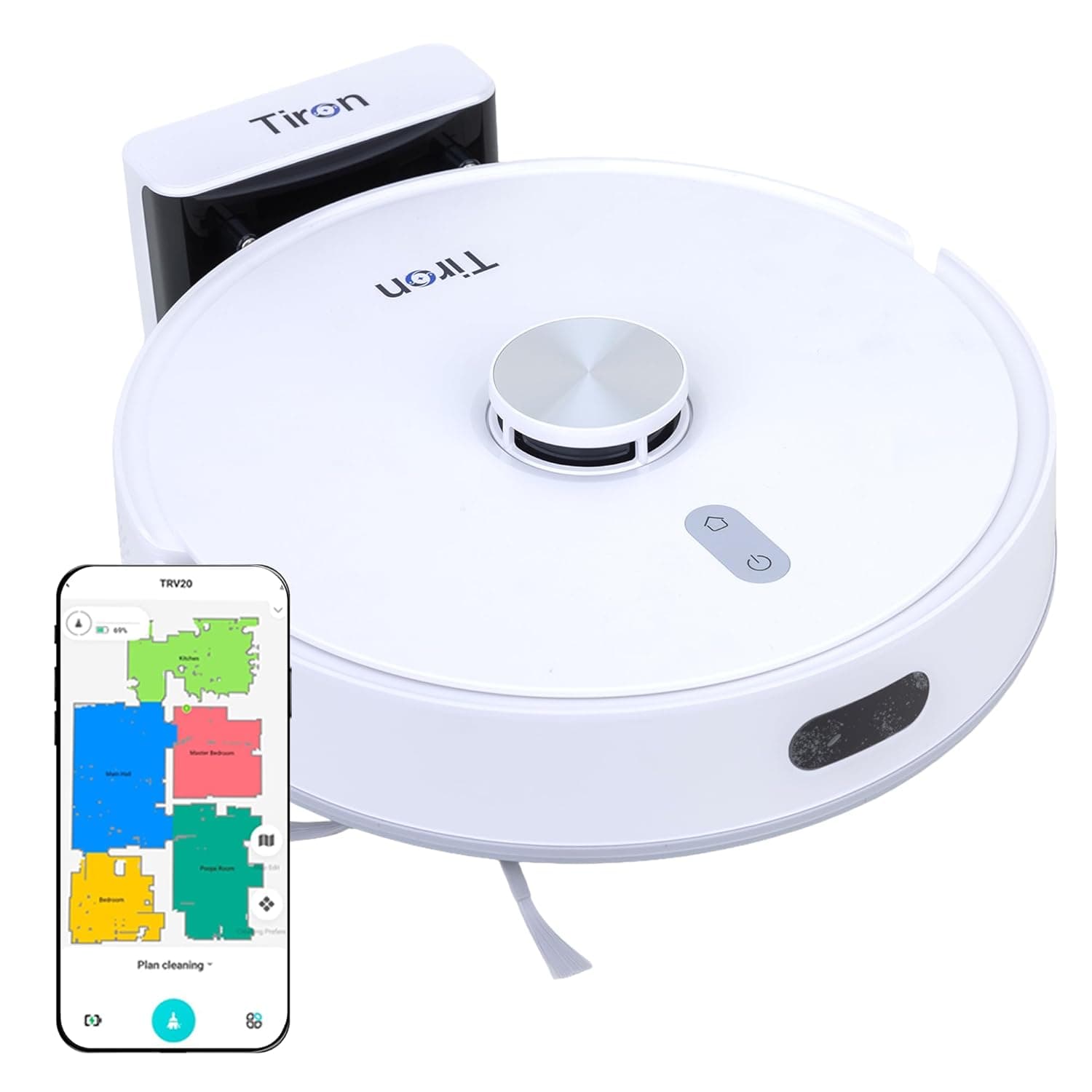
The engineering behind the TRV 20 focuses on maximizing its 45 W brushless dc motor to generate a specific suction pressure of 5000 Pa. This is achieved through a high-efficiency fan assembly that optimizes the motor-to-airway ratio, ensuring minimal static pressure loss across the internal conduits. While 45 W is relatively low power consumption, the brushless design allows for higher RPMs, creating the necessary vacuum for lifting fine road dust from hard surfaces. However, there is a technical trade-off: this setup prioritizes static pressure for surface lifting over high-volume airflow. Consequently, while it is ideal for tile and low pile carpets, it is less suited for heavy debris extraction compared to high-wattage corded alternatives.
The filtration architecture utilizes a 3-stage HEPA system designed to maintain indoor air quality in dust-prone Indian cities. The first stage involves a primary mesh that traps larger particles like pet hair and lint, while the second stage uses a micro-filter for smaller debris. The final HEPA stage is engineered to capture 99.97% of particles as small as 0.3 microns, including PM2.5 road dust and pollen. Because the filter is washable, users can maintain peak suction without the frequent purchase of consumables. This is particularly beneficial for pet owners in India, where dander and dust mites can accumulate rapidly on soft furnishings. Regular washing ensures that the 5000 Pa suction remains unhindered by clogged filter pores.
The battery and power system are configured to support the extended 140 min runtime, a rarity in this segment. This is likely achieved through a high-density lithium-ion cell arrangement, typically utilizing a 14.4 V configuration to balance weight and discharge efficiency. The system employs a CC-CV (Constant Current-Constant Voltage) charging protocol, requiring 3-5 hours for a full cycle. To protect the motor draw, the power management unit regulates output to prevent overheating during long sessions. For Indian users, this means the unit can handle extensive 2BHK floor cleaning and upholstery sessions without power fade. Practical advice involves avoiding deep discharge cycles to maintain the chemical health of the cells over several years of daily use.
The wet and dry separation mechanism is a critical component for Indian households where liquid spills often occur alongside dry dust. The 0.3 L bagged system is designed to isolate moisture from the 45 W motor, using a series of baffles to prevent liquid ingress into the electrical components. This bagged approach ensures that wet waste is contained securely, reducing the mess associated with emptying the dust bin. However, users must perform post-wet-use maintenance by drying the mopping pad and checking the HEPA filter to prevent mold growth. This architecture is optimized for cleaning minor spills on tile floors or damp footprints in entryways, providing a cleaner finish than traditional dry-only handheld units.
The integration of lidar navigation sensors represents a sophisticated approach to spatial awareness, even within a handheld-capable chassis. This system allows the cordless vacuum cleaner to map cleaning paths with high precision, avoiding obstacles like furniture legs in cluttered 1BHK apartments. By combining this with the mopping pad attachment, the unit transitions from a dry suction device to an active floor scrubber. This dual-action mechanism is specifically designed to tackle the fine layer of road dust that settles on Indian floors daily. Such multi-functional engineering ensures that the device maintains surface hygiene without the need for manual pre-sweeping, maximizing the efficiency of every 140-minute cleaning cycle.
The chassis of the TRV 20 is constructed from high-grade ABS plastic, providing the structural rigidity needed to house the lidar sensors and the 5.2 kg internal assembly. The ergonomic design incorporates a balanced handle to offset the unit's weight, reducing wrist strain during extended sofa or car cleaning sessions. A dedicated parking position allows the unit to remain upright or docked securely during the 3-5 hour charging window. The integration of washable components, including the 3-stage HEPA filter, highlights a focus on sustainable engineering and reduced total cost of ownership. Ultimately, the robust build quality and technical precision of this unit make it a durable solution for the varied cleaning demands of modern Indian households.