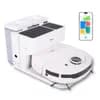
The engineering behind the 12000 Pa suction is centered on a 50 W brushless DC motor that optimizes the motor-to-airway ratio for consistent static pressure. While 50 W may seem modest, the internal fan geometry is calibrated to maximize lift on hard surfaces like tile and marble, which are prevalent in Indian architecture. The trade-off between high static pressure and absolute airflow means this device excels at pulling fine road dust from floor grout rather than lifting heavy industrial debris. This makes it a highly efficient tool for daily maintenance in urban 1BHK or 2BHK apartments where surface-level dust is the primary concern.
The filtration architecture employs a 2-stage HEPA system designed to capture particles as small as 0.3 microns with high efficiency. The first stage acts as a primary barrier for larger debris like pet hair and lint, while the secondary HEPA stage traps finer PM2.5 particles often found in smog-heavy Indian cities. Because the filters are washable, the system maintains its pressure integrity over time, preventing the suction drop-off common in disposable filter models. This design is crucial for Indian users who clean daily, as it ensures that the exhaust remains free of allergens and fine dust mites without requiring frequent replacement parts.
Power management is handled by a lithium-ion cell configuration that provides a 120-minute runtime, a significant figure for cordless models in this segment. The charging system utilizes a CC-CV (Constant Current-Constant Voltage) protocol, requiring 4 hours for a full cycle to preserve battery longevity. The 50 W motor draw is balanced against battery capacity to ensure that suction does not diminish as the charge level drops. For the average Indian household, this runtime allows for multiple cleaning sessions across different rooms, including sofas and car interiors, before needing a recharge, making it a reliable tool for deep-cleaning weekends or daily touch-ups.
The wet and dry separation mechanism is a standout technical feature, utilizing a baffle design within the 0.5 L bagged compartment to protect the motor from moisture. The inclusion of a mopping pad allows the unit to transition from dry vacuuming to damp surface finishing, which is essential for removing sticky residue on kitchen tiles or marble floors. After wet use, the maintenance protocol involves drying the components to prevent odor, a standard requirement for maintaining hygiene in humid climates. This engineering choice effectively replaces the need for separate sweeping and mopping tools in compact Indian homes, streamlining the cleaning process.
Noise management is a critical factor in the design, with the unit operating at a controlled 65 dB. This is achieved through acoustic dampening around the brushless motor housing, ensuring that high-frequency whines are minimized during operation. The side brush attachment is engineered with specific bristle density to sweep fine dust toward the suction inlet, compensating for the lack of a blower function by ensuring edge-to-edge cleaning along skirting boards. This technical integration ensures that the device can be used in residential environments without causing significant auditory disruption, making it suitable for early morning or late evening cleaning routines.
The chassis is constructed from high-grade ABS plastic, contributing to a total weight of 11 kg. While heavier than some ultra-light models, this mass provides the necessary stability for the robotic and mopping functions, ensuring the device maintains firm contact with the floor surface. The ergonomic handle design allows for controlled movement when used in handheld mode for cars or sofas, distributing the weight to reduce wrist strain. This robust construction is tailored for the rigors of Indian households, where frequent use on hard surfaces is common. Ultimately, the TRV 40 pro Robotic stands as a durable engineering solution for comprehensive home hygiene.