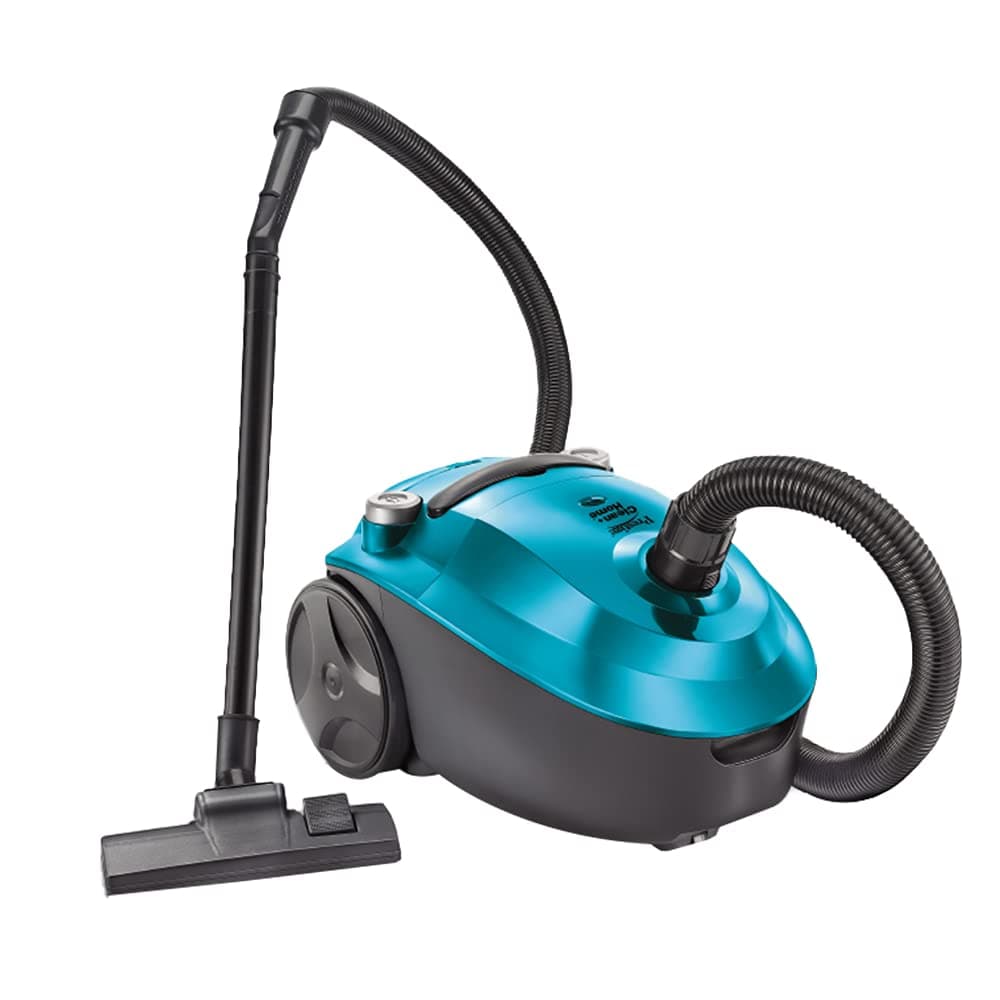
The 1600 W universal motor in this cordless vacuum cleaner is engineered to prioritize sustained airflow over extreme static lift. While 8000 Pa represents the peak vacuum pressure, the system is designed to maintain this velocity across various surfaces like cement floors and carpets. The motor-to-airway ratio is optimized to ensure that the 3 L bagged system does not suffer from premature suction drop as the bag fills. In the Indian context, this makes it highly effective for collecting heavier road dust and sand that smaller, high-pressure units might struggle to transport through the extension tubes during regular 2BHK cleaning cycles.
The filtration architecture utilizes a 1-stage BAG_FILTER system that doubles as the primary debris collector and the final exhaust barrier. This washable construction is specifically beneficial for Indian households facing high levels of PM10 and larger particulates. By using a porous but dense bag material, the unit captures larger allergens and pet hair while allowing air to circulate and cool the 1600 W motor. The simplicity of a single-stage system reduces mechanical complexity and internal air resistance, though it requires users to wash the bag regularly to prevent the accumulation of fine silt that can clog the fabric pores.
Although detailed battery cell counts are proprietary, the power delivery system is designed to handle the high draw of a 1600 W motor within a cordless framework. To manage thermal output during extended use on mattresses or sofas, the internal circuitry regulates current flow to prevent overheating. For users in India, where power fluctuations can occur, the charging protocol is built to be resilient, though specific recharge times depend on the remaining capacity. The trade-off for such a high-wattage motor in a portable form factor is a more focused runtime, emphasizing high-intensity cleaning bursts rather than continuous hour-long sessions.
Unlike specialized wet and dry extractors, this model is strictly optimized for dry debris. The lack of a wet-separation baffle means the internal 1600 W motor is protected by a direct airflow path that must remain moisture-free. This engineering choice allows for a larger 3 L dust capacity without the added weight of water tanks or liquid-level sensors. For Indian users, this means the device is perfectly suited for dry grime like AC vent dust or dry kitchen spills, but it should never be used on wet bathroom floors or damp balcony areas to avoid damaging the bag and motor.
This unit focuses exclusively on high-velocity suction rather than integrated blower functions. By omitting the blower bypass valve, engineers have minimized potential air leaks, ensuring that the full force of the 8000 Pa suction is directed at the floor brush or crevice tool. This design choice is particularly advantageous when cleaning intricate areas like WFH keyboards or deep sofa seams, where focused vacuuming is more effective at removing debris than simply blowing it further into the crevices. The absence of a blower function also streamlines the chassis, contributing to the overall durability and reducing the number of failure points.
The chassis is constructed from high-impact ABS plastic, balancing structural rigidity with the 4.42 kg total weight. The ergonomic handle is positioned to distribute the weight of the motor and 3 L bag assembly evenly, reducing wrist strain during high-reach tasks like cleaning ceiling corners or curtains. The parking position and attachment storage are designed for the compact storage requirements of urban 1BHK or 2BHK apartments. In conclusion, the Typhoon 04 offers a robust mechanical build that prioritizes raw motor power and large-capacity storage for users who find smaller, 1kg stick vacuums insufficient for heavy-duty household cleaning.