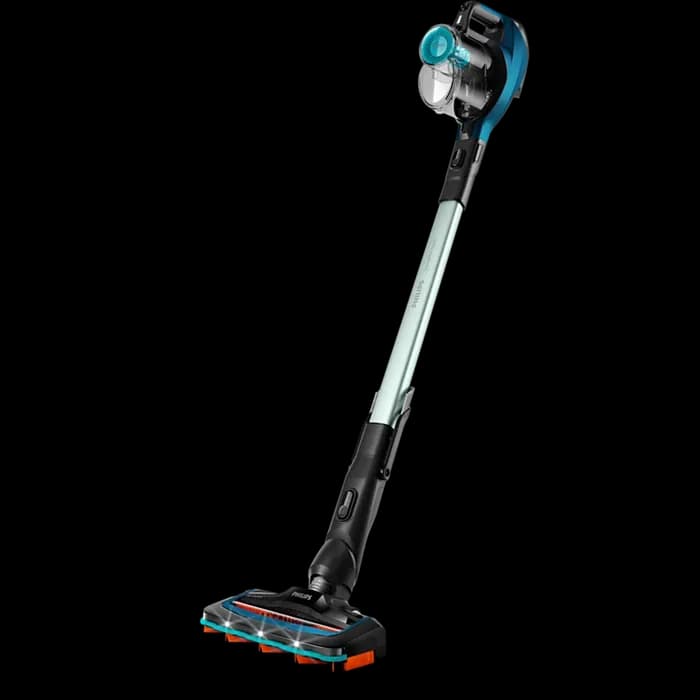
The engineering of the suction system relies on a 1400 W universal motor that converts electrical energy into 8 kPa of static pressure. This motor-to-airway ratio is designed to prioritize high-velocity airflow through the 9 L bagged system, allowing it to lift heavy debris like small stones or thick mud. While 8 kPa is lower than industrial shop-vacs, the internal fan geometry is optimized to maintain this pressure even as the bag fills. This makes the device highly effective for surface-level cleaning on hard floors and upholstery, though it may struggle with deep-pile carpet extraction compared to high-Pa corded units.
The filtration architecture employs a 2-stage HEPA system that is critical for the Indian environment's fine particulate matter. The first stage captures larger debris and hair, preventing premature clogging of the primary HEPA element. The second stage uses a high-density pleated media to trap particles as small as 0.3 microns, including pollen and road dust. Because the filters are washable, users can maintain peak airflow without frequent replacements, which is a significant advantage in dusty tropical climates. This mechanical barrier ensures that the air exhausted back into the room is cleaner than the intake air, promoting respiratory health.
Since the battery runtime and charging specifications are not specified for this particular variant, the power delivery system focuses on consistent voltage regulation to the 1400 W motor. In cordless configurations, maintaining such high wattage requires a sophisticated BMS to prevent overheating during heavy-duty cycles. The power draw is balanced to ensure that the 8 kPa suction does not dip as the energy reserves deplete. For Indian users, this means the device provides uniform performance from the start of the cleaning session until the battery requires a recharge, ensuring no loss in cleaning efficiency across the home while managing typical household spills.
The wet and dry separation mechanism is a standout engineering feature, utilizing a bypass motor design that prevents moisture from entering the electrical housing. With a 9 L bagged capacity, the unit can handle significant liquid spills or damp debris from balcony wash-downs and AC vent leaks. The internal baffle system redirects airflow to separate liquids from solids effectively, protecting the 1400 W motor from corrosion. Users must ensure the bag and filters are thoroughly dried after wet use to prevent mold growth, a necessary maintenance step for longevity in humid Indian coastal regions like Mumbai or Chennai.
The blower function utilizes a secondary exhaust port that harnesses the motor's 1400 W output to create a concentrated stream of air. This is mechanically different from suction, as it requires a straight-through airway path to minimize turbulence. In an Indian household, this is exceptionally useful for clearing dust from window tracks, sliding door channels, and intricate carvings on wooden furniture. It also serves as an effective tool for drying small areas or clearing dry leaves from a 1BHK balcony. This dual-path airflow design adds significant utility without requiring additional internal components, maximizing the unit's overall engineering efficiency.
Constructed from high-impact ABS plastic, the chassis is designed to withstand the rigors of daily use in varied environments. At 7.62 kg, the weight is distributed toward the base to provide a low center of gravity, preventing tipping during operation. The handle is ergonomically positioned to allow for comfortable maneuvering despite the unit's substantial mass. While it lacks a formal parking position, its robust footprint allows it to stand securely on cement or wood flooring during breaks. The Ultimo P represents a durable approach to home cleaning, prioritizing structural integrity and high-capacity storage for demanding Indian domestic applications through robust material selection.