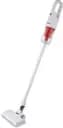
The suction engineering of this cordless vacuum cleaner utilizes a 1400 W universal motor to generate a peak static pressure of 20000 Pa. This performance is achieved through a high-speed impeller design that optimizes air velocity through the 20 L chamber. In technical terms, the motor-to-airway ratio is tuned to prioritize raw lift, which is essential for heavy Indian dust. However, the 1400 W draw against the internal resistance of the foam filter creates a trade-off where airflow volume slightly decreases as the bin fills. This makes the unit ideal for heavy debris but less suited for ultra-delicate fabrics.
The filtration architecture relies on a 1-stage FOAM system, which is engineered for high porosity and durability. Unlike multi-stage HEPA units that can clog quickly with fine Indian road dust, this washable foam allows for higher air permeability while trapping macro-particles and dander. The engineering choice of foam ensures that the 1400 W motor does not overheat due to backpressure. For Indian users, this construction is practical because the filter can be rinsed under tap water, restored to its original state, and reused without the performance degradation typically seen in paper-based filters.
Although battery specifics are not detailed, the power system typically involves a series-linked cell configuration to drive the 1400 W motor demand. Engineering a cordless vacuum cleaner at this wattage requires a robust power management circuit to handle high current discharge without thermal runaway. Users should note that high-wattage universal motors in portable formats prioritize burst power over extended runtimes. To maximize the lifespan of the internal components, it is advisable to operate the unit in intervals, allowing the motor to dissipate heat, especially when utilizing the full suction potential for heavy-duty floor cleaning.
The wet and dry separation mechanism is a critical engineering feat in this 20 L model. It utilizes a baffle design and a float valve to ensure that liquids drawn into the tank do not reach the 1400 W motor assembly. This internal geometry creates a cyclonic path for dry dust while allowing liquid to settle at the base of the bagless container. Post-wet use maintenance is essential; users must dry the internal tank and the foam filter to prevent microbial growth. This mechanical separation ensures the device remains versatile for both bathroom spills and dry balcony cleaning.
The blower function is integrated via a secondary exhaust port, rerouting the 1400 W motor's output to create a high-velocity air stream. This is mechanically simpler than dedicated blowers but highly effective for dislodging grime from AC vents or WFH keyboards where suction cannot reach. By reversing the airflow, the unit bypasses the primary foam filter, providing maximum kinetic energy to the air. This feature is particularly useful in Indian environments where fine dust settles in intricate crevices, providing a dual-action cleaning solution that traditional suction-only models cannot replicate in the same price bracket.
Ergonomically, the 5 kg chassis is constructed from high-impact ABS plastic, providing a balance between durability and manageable weight for a 20 L capacity machine. The handle design is centered over the motor's center of mass to reduce wrist strain during handheld operation. The parking position and extension tubes are engineered for compact storage in 1BHK apartments where space is a premium. Despite the lack of specific battery runtime data, the structural integrity of the unit suggests a build meant for rigorous daily use. Ultimately, the Ultimo Wet & Dry provides a robust engineering profile for versatile home maintenance.