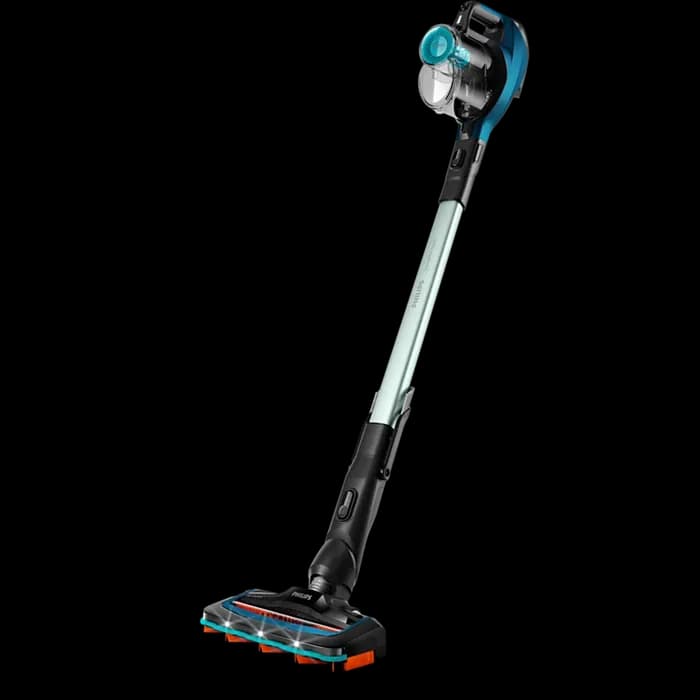
The engineering of the suction system relies on a 120 W brushless DC motor optimized for high-velocity airflow. By minimizing internal air resistance, the motor achieves a peak suction pressure of 21000 Pa, which is significantly higher than typical 5000-8000 Pa entry-level handhelds. This static pressure is essential for overcoming the resistance of thick Indian carpets and heavy road dust. While the airflow volume is concentrated for spot cleaning, the motor-to-airway ratio ensures that suction remains consistent even as the 0.18 L bin reaches capacity. This makes the device ideal for dense debris removal rather than just surface-level dusting.
The filtration architecture utilizes a 3-stage HEPA system designed to protect both the motor and the user’s respiratory health. The first stage involves a mesh pre-filter to catch larger debris like hair and crumbs, followed by a middle layer that stabilizes airflow. The final HEPA stage captures 99.97% of particles as small as 0.3 microns, including PM2.5 pollutants common in Indian metros. Because the entire filter assembly is washable, the airflow impedance caused by dust buildup can be reset easily. This eliminates the need for expensive proprietary replacements, ensuring the unit maintains peak engineering performance for years.
The power delivery system is built around high-density polymer cells that provide a consistent voltage output to the brushless motor. Operating at a 7.4 V configuration, the battery management system utilizes a CC-CV charging protocol to fully replenish the cells within 3 hours. This configuration balances weight and power, allowing for a 60-minute runtime while keeping the total chassis weight at 0.5 kg. For Indian users, this means the device provides enough endurance for a full car detailing session or a multi-room upholstery deep-clean. The polymer chemistry ensures minimal discharge when the unit is stored in varied tropical temperatures.
For wet and dry utility, the internal chamber features a dedicated baffle design that prevents liquids from reaching the motor housing. When vacuuming damp spills or condensation from AC units, the 0.18 L bin uses gravity-based separation to keep moisture contained. While the capacity is smaller than industrial wet-vacs, it is perfectly scaled for domestic accidents like spilled tea or kitchen splashes. Maintenance is straightforward, requiring a simple rinse of the bagless bin to prevent odor buildup. This mechanical isolation of the electronics from the intake path is a critical durability feature for long-term reliability in unpredictable household environments.
The integrated blower function works by redirecting the motor's exhaust through a narrowed nozzle, converting wasted kinetic energy into a high-velocity air jet. This technical mechanism is superior to standard suction for clearing fine dust from mechanical keyboards and complex AC vent fins. In an Indian context, where dust often cakes into hard-to-reach corners due to humidity, the blower provides a mechanical agitation that loosens grime before suction is applied. This dual-function airflow engineering replaces the need for compressed air cans, further reducing the total cost of ownership for electronics maintenance and car detailing.
The chassis is constructed from high-impact ABS plastic, providing a lightweight yet rigid frame that weighs only 0.5 kg. The ergonomic handle is balanced at the center of gravity, reducing wrist strain during extended overhead cleaning of ceiling fans or curtain rods. The inclusion of a plastic tube extension and a crevice tool allows the user to leverage the motor's power in tight architectural gaps. Every component, from the latching mechanism of the dust bin to the nozzle fitments, is designed for high-frequency use. Ultimately, the Vacuum with A+ Polymer Batteries represents a highly specialized tool for those prioritizing localized power and long-term maintenance savings.