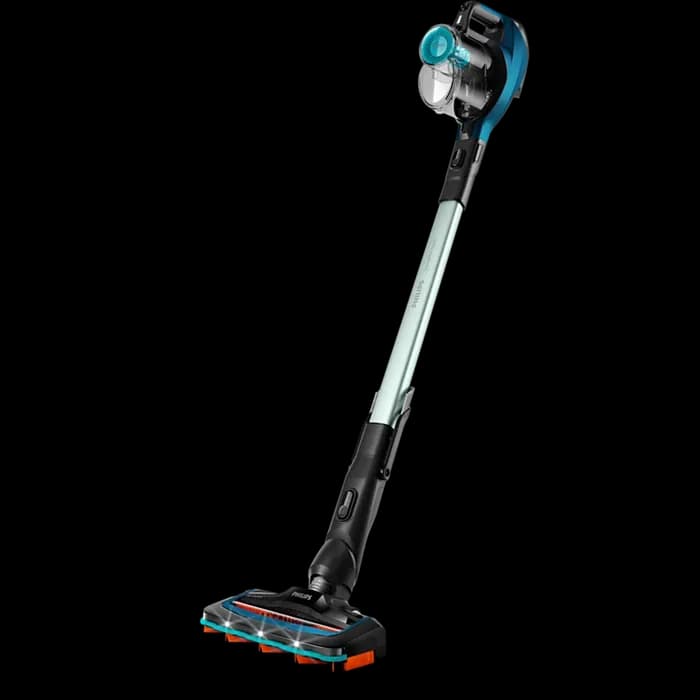
The suction pressure of this device is derived from a 120 W brushless DC motor, which is specifically tuned to generate 6 kPa of static lift. In vacuum engineering, the motor-to-airway ratio determines how effectively air is moved through the filtration stack. By utilizing a brushless configuration, the unit minimizes friction losses and heat generation, allowing for a more consistent torque output compared to traditional brushed motors. This makes the device highly effective for lifting fine road dust from cement floors, though it is optimized for high-velocity surface pick-up rather than deep carpet agitation.
The filtration architecture employs a 2-stage DISK_HEPA system designed for the high particulate matter levels common in Indian metropolitan areas. The first stage acts as a primary barrier for larger debris, while the secondary HEPA disk captures microscopic allergens and dust mites. A significant engineering advantage is the washable construction of the filter, which prevents the pore-clogging typically seen after cleaning post-renovation dust. For Indian users, this reduces the total cost of ownership by extending the life of the consumable components without compromising the 99.9% filtration efficiency required for healthy indoor air.
The power system utilizes a high-capacity lithium-ion cell configuration that supports a 45-minute runtime, a figure that is superior for this weight class. The 3-hour charging cycle is managed by a CC-CV (Constant Current-Constant Voltage) charging protocol, which protects the battery chemistry from the voltage fluctuations frequently encountered in Indian electrical grids. There is a calculated trade-off between the 120 W motor draw and the discharge rate, ensuring that suction does not drop as the battery depletes. This makes the device dependable for completing a full 2BHK cleaning circuit on a single charge.
This model is strictly a dry-use device, omitting a wet/dry separation mechanism to prioritize a more compact 0.3 L bagless bin and higher airflow velocity. By avoiding the complexities of liquid-sealed baffles, the engineering team maximized the internal space for air expansion, which helps maintain the 6 kPa pressure even as the bin fills with dry debris. Users must ensure the motor remains dry to protect the high-speed bearings. This focused dry-suction design is ideal for managing dry kitchen spills, textile fibers, and the fine grey dust that settles on furniture daily.
While the device lacks a dedicated blower function, it compensates with a 360-degree flexible head and an integrated LED torch. The flexible head uses a pivot-ball joint to maintain a seal against uneven surfaces, ensuring that the 6 kPa of suction is not lost through air gaps. The torch light is strategically positioned to illuminate low-contrast dust on dark car upholstery or under mattresses. These features are highly relevant for the Indian context, where furniture is often heavy and difficult to move, requiring the vacuum to reach into dark, tight spaces effectively.
The chassis is constructed from high-grade ABS plastic, achieving a remarkably low weight of 0.6 kg. This ergonomic design reduces wrist strain during vertical cleaning of AC vents or ceiling fans. The handle is balanced against the motor housing to provide a neutral center of gravity, which enhances maneuverability. The compact parking position allows for easy storage in small Indian apartments where floor space is at a premium. Consequently, the VC03_TOR3 represents a refined balance of portable ergonomics and industrial-grade motor durability for long-term household utility.