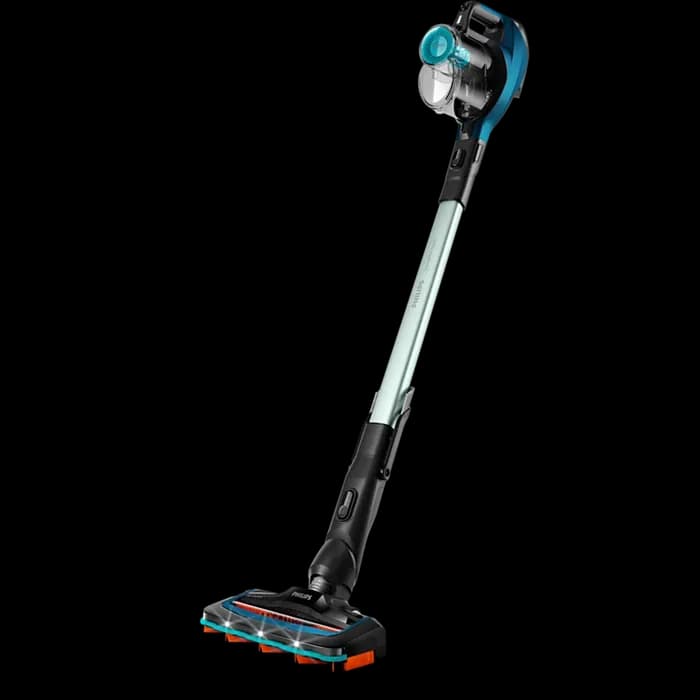
The suction pressure engineering of this unit utilizes a 10.8 W DC motor to generate a localized vacuum of 8000 Pa. This is achieved through a high-speed impeller design that optimizes the motor-to-airway ratio, focusing on static pressure rather than high-volume airflow. In practical terms, this allows the device to lift dense particles like sand or spilled lentils from hard floors, though it is less suited for deep-pile carpet extraction. The engineering balance ensures that the motor does not overheat during its 12-minute discharge cycle, maintaining consistent velocity until the battery voltage drops below the operational threshold.
Filtration architecture in this model relies on a Single Stage-stage HEPA system that is specifically calibrated for domestic dust profiles. The pleated HEPA media captures particles down to 0.3 microns, including PM2.5 soot often found in Indian metropolitan areas. Because the filter is designed with a washable construction, users can rinse away accumulated grime to restore airflow impedance to factory levels. This design is critical for longevity in dusty environments, as it prevents the motor from laboring against a blocked intake, which is a common failure point in non-HEPA handheld units.
The battery and power system consists of a 7.2V cell configuration that supports the 10.8W draw. It utilizes a CC-CV charging protocol via the included adapter, requiring a 10-hour duration for a full chemical recovery of the cells. While the 12-minute runtime may appear brief, it is engineered for high-intensity bursts rather than continuous floor cleaning. For Indian users, this necessitates a workflow of targeted spot-cleaning. The engineering choice to prioritize a 0.67 kg total weight over a larger battery pack ensures that wrist fatigue is minimized during overhead tasks like cleaning ceiling fan blades.
Wet and dry separation is managed through a specialized internal baffle design within the 0.39 L dust bowl. When liquid is ingested, the airflow path is diverted to prevent moisture from entering the motor housing, utilizing gravity to settle fluids at the base of the canister. This allows for the safe pickup of spilled milk, tea, or rainwater near window sills. Engineering tolerances in the seals ensure that no leakage occurs during vertical operation, provided the maximum liquid fill line is respected and the bin is emptied immediately after wet use.
In terms of acoustic engineering and intake mechanics, the device operates at a noise level of 65 dB. This is achieved through internal sound-dampening foam around the DC motor housing, which absorbs high-frequency vibrations. The bagless intake uses a direct-path suction nozzle, reducing turbulent air loss and maximizing the energy transfer from the motor to the cleaning surface. For Indian households, this means cleaning AC vents or keyboards can be done without significant noise disruption to other family members or WFH meetings, making it a socially considerate appliance choice.
Weight, chassis, and ergonomics are centered around a high-impact ABS plastic construction. The handle is positioned to align the center of gravity directly under the palm, reducing the lever effect on the forearm. This ergonomic layout is particularly beneficial for cleaning vertical surfaces like curtains or wall-mounted shelves. The parking position allows the unit to be stored upright, minimizing its footprint in small 1BHK apartments. Ultimately, the WDC215WA QW represents a calculated engineering trade-off that favors extreme portability and specific task-based suction over the bulk of a full-sized corded vacuum.