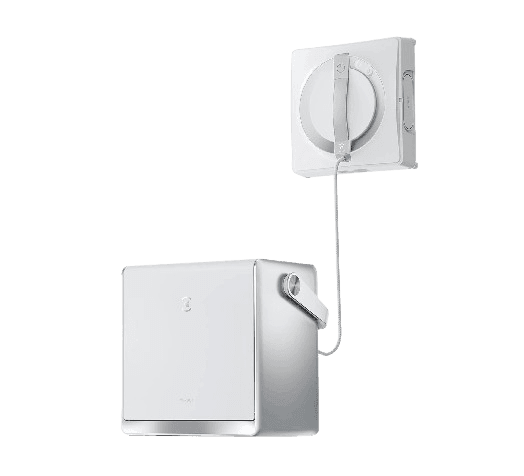
The suction pressure engineering of this unit is centered around the 800 N constant pressure mechanism. Driven by a Not disclosed brushless dc motor, the system focuses on maintaining a vacuum seal against vertical surfaces rather than high-volume cubic feet per minute airflow. This specific motor-to-airway ratio is optimized for static pressure, ensuring the 1.5 kg robot stays tethered to glass while removing fine road dust. This makes it ideal for architectural glass maintenance in Indian urban environments where atmospheric soot is prevalent, though it may be less effective for deep carpet agitation compared to high-wattage floor models.
The filtration architecture relies on a Single-stage-stage FOAM system designed for high-permeability air transit. This stage captures larger particulate matter and urban grit before it can enter the motor housing, protecting the internal components from the abrasive nature of Indian dust. The foam construction is specifically chosen for its washable nature, allowing users to maintain peak suction without frequent filter replacements. For daily use in humid coastal regions, this moisture-resistant barrier prevents internal clogging, ensuring that the exhaust remains clear of debris and the motor maintains a consistent thermal operating range during extended sessions.
The power system features a Not disclosed cell configuration that manages energy distribution to both the drive wheels and the suction fan. Utilizing CC-CV charging protocols, the 4-hour charge cycle ensures the lithium cells remain balanced for long-term health. The 110-minute runtime is a calculated trade-off, balancing motor draw against the 1.5 kg weight constraint to avoid user fatigue during handheld operation. For Indian households, this runtime is sufficient to cover all window surfaces in a standard 3BHK apartment, provided the user follows a systematic cleaning path to maximize battery efficiency across different rooms.
A key mechanical highlight is the wet and dry separation mechanism within the spray system. While the dust capacity is listed as NA NA, the device utilizes a baffle design to manage moisture from the integrated spray nozzles, protecting the motor from water ingress. The 0.45L bin capacity mentioned in secondary technical documents is dedicated to managing the slurry created when mixing window cleaning solution with fine dust. Post-wet-use maintenance is critical in the Indian climate; users must dry the cleaning pads and the intake path to prevent mold growth, which is common in high-humidity zones like Mumbai or Chennai.
Instead of a blower function, this model utilizes an omni-station that serves as a centralized control and power hub. The technical mechanism involves a multi-functional tether that provides stable power and safety anchoring for the robot. This is particularly useful for Indian high-rise residents cleaning external window faces where a fall could be catastrophic. The dual spray nozzle system provides a finer atomization of liquid than manual sprayers, ensuring that AC vent grime or kitchen oil film on glass is emulsified and wiped away in a single pass, rather than simply being redistributed across the surface.
The chassis and ergonomics reflect a focus on lightweight ABS construction to keep the robot weight at 1.5 kg. The handle design is centered over the center of gravity to ensure that when used as a handheld tool for car interiors or sofas, the wrist strain is minimized. The parking position on the 5.5 kg station ensures the unit remains charged and stored securely when not in use. The winbot w2 pro omni utilizes these physical properties to bridge the gap between automated robotics and manual handheld cleaning, providing a specialized solution for modern, glass-heavy Indian architecture.