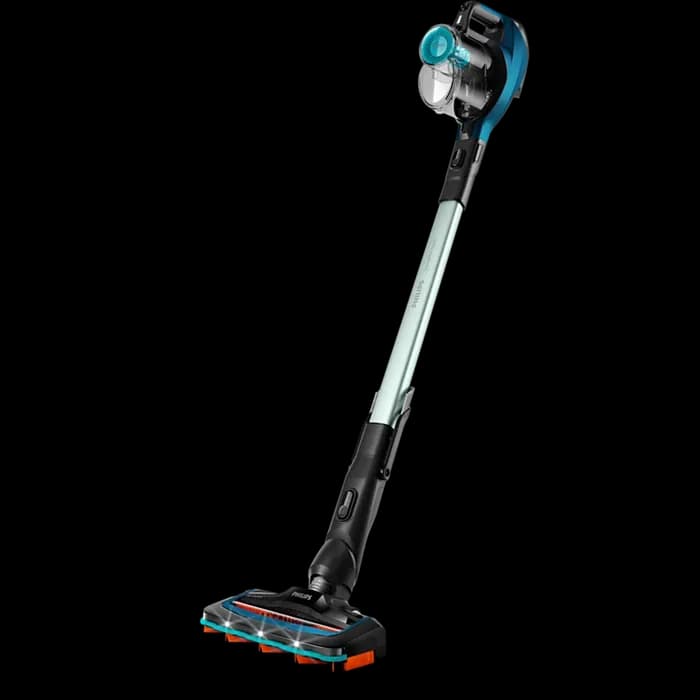
The 21000 Pa suction pressure is engineered through a 120 W brushless DC motor that operates at high RPM to create a significant pressure differential. In vacuum engineering, the motor-to-airway ratio determines how effectively static pressure translates into real-world debris lifting. This unit prioritizes high static pressure over high-volume airflow, making it exceptionally capable of pulling fine road dust from tight crevices. However, because the suction is so concentrated, it performs best on localized areas rather than large floor expanses. The brushless design reduces internal friction, ensuring that the 120 W power draw translates directly into cleaning performance without excessive heat.
The filtration architecture employs a 3-stage HEPA system designed for the heavy dust loads found in Indian cities. The first stage captures larger debris like hair and crumbs, while the subsequent sponge layer prevents medium particles from clogging the final HEPA membrane. This HEPA stage is rated to capture particles as small as 0.3 microns, including pollen and PM2.5. A critical engineering advantage is the washable construction of the filter assembly. By allowing users to rinse the filter, the unit maintains its 21000 Pa performance over time, preventing the suction drop-off common in disposable-filter models used in dusty environments.
Powering this cordless handheld vacuum cleaner is a 7.4 V battery system configured to provide a steady discharge rate for 20 minutes. The engineering trade-off involves balancing the high 120 W motor draw against battery weight to maintain the 0.5 kg ergonomics. Using a CC-CV (Constant Current-Constant Voltage) charging protocol, the unit reaches a full 100% charge in 3 hours. For Indian users, this runtime is ideal for quick daily maintenance of a sofa or car but requires tactical use for deep-cleaning tasks. The circuitry includes overcharge and thermal protection to ensure battery longevity despite the high-current demands.
The wet and dry separation mechanism utilizes an internal baffle design within the 0.18 L dust bin to prevent liquid from reaching the motor housing. When vacuuming spills, the airflow path is diverted so that liquids drop into the collection chamber while air continues through the filtration stages. This engineering prevents the internal corrosion typically seen in dry-only vacuums when exposed to moisture. Maintenance is straightforward; users must empty and dry the bin immediately after wet use to maintain hygiene. The tight seals around the bagless container ensure no leakage occurs during high-pressure suction or blowing modes.
A dual-purpose impeller design enables the blower function, which redirects the motor’s exhaust through a narrow-diameter nozzle. This technical mechanism converts the 120 W motor’s output into a high-velocity air stream, perfect for dislodging grime from Indian AC vents and intricate keyboard keys. Unlike pure-suction models that struggle with sticky dust in tight corners, the blower function uses kinetic energy to move debris into the open where it can be vacuumed. This architectural choice makes the unit a hybrid tool, bridging the gap between a maintenance blower and a high-suction vacuum cleaner.
The chassis is constructed from high-grade ABS plastic, selected for its impact resistance and light weight. At 0.5 kg, the center of gravity is positioned near the handle to reduce wrist fatigue during overhead cleaning of curtain rods or ceiling fans. The ergonomic grip features a single-button trigger system for immediate power control. The internal layout includes acoustic dampening materials to keep the noise level at 80 dB, which is respectable for a motor of this power density. Ultimately, the Wireless Handheld Air Blower & Vacuum Cleaner represents a focused engineering effort to deliver maximum suction in a portable, multi-functional Indian household tool.