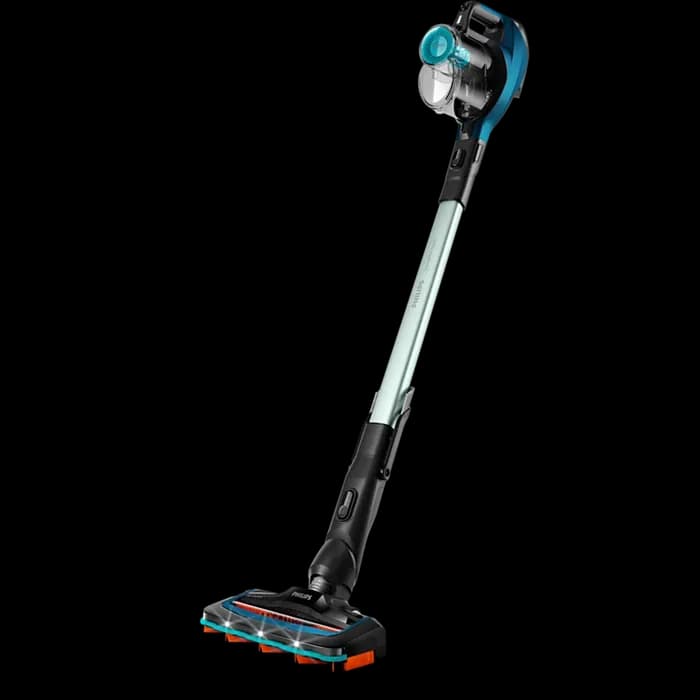
The 21000 Pa suction pressure is achieved through a high-RPM 120 W universal motor calibrated for high static pressure rather than raw volume airflow. In the context of the Wireless Mini Vacuum Cleaner architecture, this creates a concentrated vacuum stream ideal for lifting heavy particulate matter like sand or road grit from floor mats. Unlike corded machines that rely on high wattage, this 0.5 kg unit uses a streamlined internal airway to reduce friction loss. While it excels at surface debris and crevice extraction, the motor-to-airway ratio is tuned specifically for short-burst high-intensity tasks rather than continuous large-area floor sweeping.
Filtration is managed by a 3-stage HEPA system designed to handle the diverse dust profiles found in Indian cities. The primary stage uses a coarse mesh to catch larger debris, followed by a secondary density layer, and finally, a washable HEPA element that traps 99.9% of microscopic particles. This multi-layered approach prevents the 120 W motor from overheating by maintaining consistent airflow even as the 0.18 L bin fills. For users in high-pollution zones, the ability to wash the filter is crucial, as it restores suction efficiency without the recurring cost of replacement bags or expensive aftermarket filters.
The power system utilizes a specific cell configuration to deliver a stable voltage to the 120 W motor, providing a consistent 20-minute runtime. Charging is handled via a 3-hour cycle using a standard CC-CV protocol to preserve lithium-ion longevity. In practical Indian usage, where power fluctuations are common, the internal charging circuit provides basic overcharge protection. Users should note that the 20-minute limit is optimized for spot cleaning; attempting to use the unit beyond its thermal limits or without proper charging intervals will degrade the battery's chemical lifecycle prematurely. Timely recharging ensures the motor maintains peak torque during use.
The wet and dry separation mechanism is a critical architectural feature of this cordless handheld vacuum cleaner. It employs a physical baffle design within the 0.18 L dust chamber to prevent liquid ingress into the 120 W motor assembly. While effective for small spills on dining tables or car upholstery, the 0.18 L capacity requires immediate emptying after wet use to prevent moisture-related odor. This bypass system ensures the internal electronics remain dry, providing a layer of durability that pure-dry vacuum cleaners lack, specifically when dealing with humid Indian monsoon conditions or kitchen spills.
A standout technical feature is the integrated blower function, which reverses the airflow direction to clear debris from recessed areas. By attaching the plastic tube or dust brush to the exhaust port, users can generate enough concentrated air velocity to clear AC vents or keyboard sub-frames where suction alone is ineffective. This dual-path airflow engineering makes the device more versatile than standard suction-only models. It is particularly effective for removing fine dust from electronics or intricate wood carvings common in Indian furniture, where traditional brushing might scratch the surface or push dust deeper into crevices.
The chassis is constructed from high-impact ABS plastic, contributing to its ultra-light 0.5 kg weight and ergonomic handheld balance. The handle is positioned to align the center of gravity with the user's grip, reducing the torque on the wrist during overhead cleaning of fans or curtain rods. Every attachment, from the dust brush to the plastic tube, uses a friction-fit seal to minimize air leakage, maintaining the integrity of the 21000 Pa suction. Ultimately, the engineering choices behind the Wireless Mini Vacuum Cleaner prioritize high-density power in a mobile format, offering a robust alternative to tethered cleaning appliances.