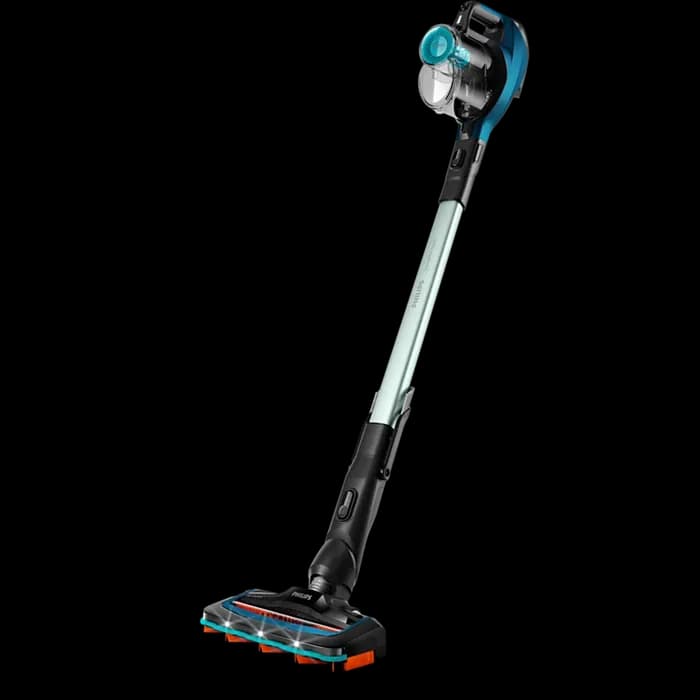
The suction pressure engineering of this unit centers on a 120 W DC motor that generates a vacuum pressure of 8000 Pa. This is achieved through a high RPM impeller design that optimizes the motor-to-airway ratio, focusing on static pressure rather than high-volume airflow. This specific calibration makes it ideal for lifting heavy particles like cement floor dust or sand from car mats, though it may struggle with deep-pile carpets that require higher CFM. The internal geometry is streamlined to reduce air turbulence, ensuring that the 120 W input is converted into effective cleaning power at the nozzle without significant thermal loss during the 30-minute duty cycle.
Filtration architecture consists of a 1-stage HEPA system that serves as both the primary barrier and the exhaust purifier. This single-stage design is critical for a 0.39 kg device, as it minimizes weight while capturing particles as small as 0.3 microns. For Indian users dealing with daily pollen and fine road dust, the washable construction is a vital engineering choice, allowing the filter to be restored to peak permeability without the recurring cost of replacements. By washing the filter regularly, users prevent the motor from straining against a clogged membrane, which preserves both suction consistency and long-term motor health in dusty environments.
The battery and power system utilizes a 12 V cell configuration designed for a balanced discharge rate. The system employs CC-CV (Constant Current-Constant Voltage) charging via a standard interface, requiring 3 hours to reach full capacity. This charging profile is optimized to protect the lithium-ion cells from the heat spikes common in Indian summers. While 30 minutes of runtime may seem modest, the motor draw is regulated to ensure that suction does not drop as the battery depletes. Users are advised to utilize the full charge for focused tasks like car detailing or mattress cleaning to maximize the efficiency of each power cycle.
Regarding the wet and dry separation mechanism, the unit features a specialized internal baffle that prevents liquid ingress into the motor housing. This design allows the device to safely suction small liquid spills from hard surfaces or upholstery. The bagless bin acts as a physical sediment trap; however, the engineering limits the capacity for liquids to avoid overflow into the HEPA stage. In practical Indian scenarios, this is perfect for cleaning kitchen counter spills or monsoon mud, provided the bin is emptied immediately. The moisture-resistant seals around the motor compartment ensure that humidity does not lead to internal corrosion over time.
The pet hair tool and flat lance attachments are engineered with specific orifice sizes to maintain air velocity. The pet hair tool uses concentrated suction points to lift fibers from fabric, while the extension tube allows for ergonomic access to ceiling corners and fans. These attachments are molded from high-impact ABS plastic, providing a rigid seal against the vacuum inlet. The absence of a blower function is a deliberate design trade-off to prioritize the internal vacuum seal, ensuring that the 8000 Pa pressure is directed entirely toward debris extraction. This focus makes it superior for cleaning keyboards and AC vents where blowing dust would only redistribute the allergens.
The chassis is constructed from lightweight ABS, chosen for its high strength-to-weight ratio and resistance to impact. The ergonomic handle is positioned at the center of gravity, allowing for one-handed operation without wrist fatigue, even when reaching for high curtains or draperies. The parking position is stable, and the overall compact footprint allows for storage in small 1BHK apartments or car glove boxes. By integrating these specific mechanical choices—from the 120 W motor to the washable HEPA stage—the WIRELESS Pro Vacuum Cleaner provides a robust engineering solution for localized cleaning challenges that bulky corded units cannot address effectively.