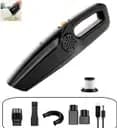
The suction performance of this cordless handheld vacuum cleaner is derived from a 120 W high-speed motor that creates a high-pressure differential of 12000 Pa. Engineering this level of static pressure from a compact motor requires a precise motor-to-airway ratio, ensuring that the velocity of incoming air is sufficient to lift heavy particles like cement dust or gravel without overloading the circuit. While many handhelds focus purely on airflow, this unit prioritizes suction depth, making it significantly more effective at extracting embedded dirt from fibrous surfaces than standard low-wattage alternatives. This makes the unit ideal for intensive spot-cleaning tasks.
Filtration is handled by a sophisticated 2-stage HEPA architecture designed for longevity and environmental resilience. The primary stage intercepts larger debris and hair, preventing the secondary high-efficiency particulate air filter from clogging prematurely. The HEPA media is specifically calibrated to capture particles as small as 0.3 microns, which includes common Indian indoor pollutants like fine road dust and pollen. Because the filter is washable, users can maintain peak airflow without the recurring cost of replacements, which is a critical consideration for daily cleaning in dust-heavy urban environments. This dual-stage design ensures consistent motor protection and cleaner exhaust air.
Power management is facilitated by a multi-cell battery configuration providing 30 minutes of continuous runtime under standard loads. The 12 V power system utilizes a CC-CV charging protocol via a 3-hour recharge cycle, balancing battery longevity with user convenience. This 30-minute window is strategically optimized for Indian use cases, such as deep-cleaning a 5-seater vehicle or a large sectional sofa, where a corded unit would be cumbersome. The motor draw is regulated by an intelligent chip that prevents overheating during sustained operation, ensuring that the 120 W output remains stable throughout the entire discharge cycle.
The wet and dry separation mechanism is a key engineering highlight, featuring an internal baffle design that prevents moisture from entering the motor housing. With a 0.5 L capacity, the bin is designed for quick disposal of both liquid spills and dry waste. Post-wet use maintenance is straightforward; the bagless compartment is built from high-density ABS plastic that resists staining and odors. For Indian households, this functionality is particularly useful during the monsoon season for cleaning damp entryways or kitchen spills, provided the filter is dried thoroughly after each wet session to maintain its structural integrity.
Rather than including a blower, the engineering team focused on specialized suction attachments to maximize the 12000 Pa potential. The flat lance attachment narrows the aperture to increase air velocity, which is necessary for extracting grime from deep keyboard recesses or narrow AC vent fins. The pet hair tool uses a friction-based design to lift stubborn fibers from upholstery before the suction stream carries them into the bin. This mechanical assistance ensures that the vacuum cleaner performs effectively on difficult surfaces like velvet or heavy cotton drapes, where simple suction often fails to remove entangled pet dander or fine lint.
The chassis of the unit is constructed from lightweight, impact-resistant materials, resulting in a total weight of just 0.4 kg. This ergonomic design reduces wrist strain during overhead cleaning of ceiling corners or fans. The handle is shaped to provide a secure grip, accommodating various hand sizes common in the Indian demographic. The parking position and compact footprint allow for easy storage in small apartment cupboards or car glove boxes. Ultimately, the engineering behind the Wireless Scientific Vacuum Cleaner reflects a focused attempt to provide industrial-grade suction in a highly portable format, bridging the gap between toy-like mini-vacuums and heavy corded machines.