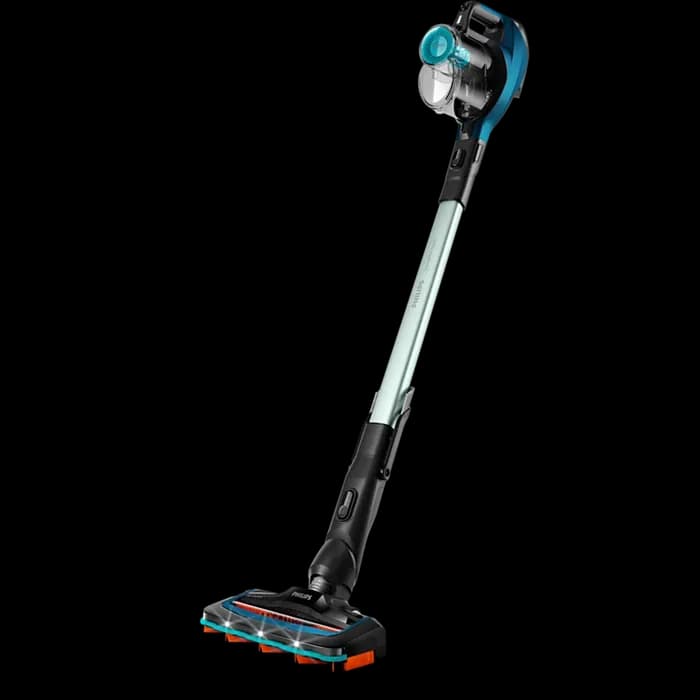
The suction pressure engineering of this unit relies on a 1200 W universal motor designed to generate significant static pressure. Achieving 17 kPa requires a high motor-to-airway ratio where the fan blades are optimized for vertical lift rather than just raw volume. This specific engineering choice makes the unit ideal for pulling heavy road dust from deep within floor crevices or tile grout common in Indian homes. While high airflow is great for surface dust, the static pressure here ensures that heavier particulates like sand or wet mud are successfully transported into the 15 L collection bag. It balances motor draw with airflow resistance for consistent performance.
The filtration architecture utilizes a 2-stage HEPA system that is critical for maintaining indoor air quality in polluted urban environments. The first stage captures larger debris and pet hair, while the secondary HEPA element traps microscopic particles down to 0.3 microns. Because the system is washable, Indian users can maintain peak suction without the frequent cost of replacement filters, which is a major advantage given the high ambient dust levels in most cities. This washable construction ensures that the 1200 W motor does not overheat due to airflow blockages, extending the operational life of the internal components during long cleaning sessions.
The power system of this cordless vacuum cleaner uses a high-capacity cell configuration to drive the 1200 W motor. While the universal motor is traditionally an AC component, the internal power management system converts the stored DC energy to meet the high-current demands of the suction fan. This requires sophisticated CC-CV charging protocols to ensure the cells remain balanced over hundreds of cycles. For Indian users, this means the device can handle intense spot-cleaning tasks without the hassle of a power cord. Practical use suggests charging the unit in a cool, ventilated area to maintain battery health against the high Indian ambient temperatures.
The wet and dry separation mechanism is engineered around a protective baffle design that prevents moisture from reaching the motor housing. With a 15 L bagged capacity, the unit manages liquid spills on kitchen tiles or rainwater tracked into the entryway with ease. The separation logic ensures that even when the tank is near capacity, the 17 kPa suction remains stable. Maintenance after wet use is straightforward; the bag and filters must be dried completely to prevent mold growth, a necessary step in the humid climates of coastal India. This robust design protects the 1200 W motor from short-circuiting during liquid pickup.
The blower function operates by redirecting the motor exhaust through a narrowed nozzle, creating a high-velocity air stream. This is technically distinct from suction and is particularly useful for clearing dust from sensitive electronics like WFH keyboards or deep within AC vent slats. In the Indian context, where fine dust penetrates every corner, the ability to blast debris out of reach is invaluable. The mechanical switch between suction and blowing is designed for durability, ensuring that the internal seals remain airtight. This dual-functionality increases the utility of the device beyond simple floor cleaning, making it a comprehensive maintenance tool for the home.
The chassis is constructed from high-impact ABS plastic, providing a balance between durability and the 5 kg weight. The ergonomic handle is positioned to distribute the mass evenly, reducing wrist strain during extended use in 2BHK or 3BHK apartments. A dedicated parking position allows the unit to stand upright when not in use, which is a space-saving feature for compact Indian homes. The engineering of the floor brush and extension rods ensures that the 17 kPa suction is delivered directly to the surface with minimal air leakage. Ultimately, the YOVER YO1200 represents a sturdy, multi-functional design tailored for the rigors of local household cleaning.