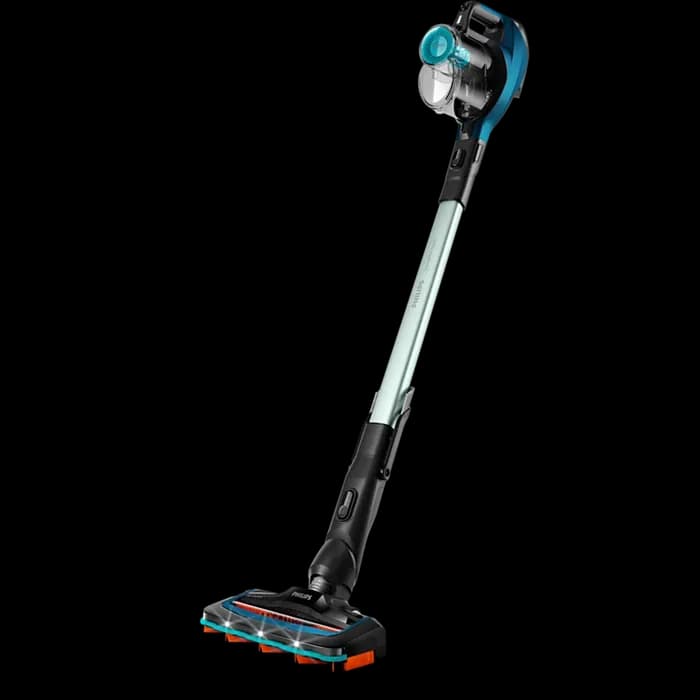
The 350W powerblade motor is engineered to generate a static pressure of 22000 Pa, a high metric for a cordless handheld vacuum cleaner. This suction is achieved through a high-RPM brushless design that minimizes internal friction while maximizing air velocity. The motor-to-airway ratio is optimized for peak performance on hard floors and upholstery, prioritizing lift over raw airflow volume. This makes the unit exceptional for extracting fine road dust and heavy particles from tile or wood surfaces. However, for thick pile carpets, the static pressure might face resistance, making it better suited for surface cleaning. The engineering focuses on maintaining this pressure consistently throughout the battery discharge cycle for uniform cleaning results.
The filtration architecture utilizes a 4-stage cyclonic system to separate debris from the air stream without clogging. The primary cyclone handles large particles like hair and food crumbs, while the subsequent stages target fine dust and allergens. Because the construction uses a washable mesh and foam filter, the long-term cost of ownership is significantly reduced for Indian users who clean daily. This system effectively captures PM2.5 particles, which is critical in urban environments with high pollution levels. The airtight seals around the motor housing prevent secondary contamination, ensuring that the air exhausted back into the room is cleaner than the air entering the intake nozzle.
The power system relies on a lithium-ion battery array configured for a 25.5V output to sustain the 350W motor draw. The charging circuit uses a CC-CV protocol that takes 4 hours to reach full capacity from a depleted state. This setup provides a 40-minute runtime in standard mode, which is the result of balancing current discharge rates against thermal management. In high-power mode, the discharge rate increases, shortening the runtime but providing maximum torque for stubborn dirt. For Indian users, the 40-minute window is calibrated to allow for a full car interior detail or a complete cleaning of a 1BHK apartment without requiring a mid-session recharge.
The dust management system features a 0.8 L bagless bin that employs centrifugal force to keep the primary filter clear of debris. This separation mechanism ensures that the 22000 Pa suction remains stable as the bin capacity reaches its limit. The bottom-release latch is designed for hygienic disposal, allowing users to empty the contents directly into a trash bin without making contact with the dust. The bin material is made of high-impact transparent polycarbonate, allowing for easy visual monitoring of the fill level. This mechanical design prioritizes airflow path efficiency, reducing turbulence within the chamber to maintain high velocity from the nozzle tip to the exhaust port.
The integrated blower function works by redirecting the motor exhaust through a specialized rear port rather than the standard side vents. This technical mechanism converts the 350W motor's air output into a concentrated stream of high-velocity air. It is particularly useful in the Indian context for clearing dust from AC vents, ceiling fan blades, and intricate wood carvings where suction brushes cannot reach. Unlike dedicated blowers, this integrated feature saves space and provides a dual-purpose utility for dry cleaning tasks. The switch between suction and blower modes is mechanical, ensuring that the motor's thermal safety sensors remain active during both types of high-load operation.
The chassis is constructed from high-grade ABS plastic, keeping the total weight at 1.67 kg for improved maneuverability. The handle is ergonomically balanced to place the center of gravity near the wrist, reducing user fatigue during overhead cleaning of curtain rods or cobwebs. A parking position is built into the design, though it is primarily a handheld unit, allowing it to rest securely on flat surfaces between tasks. The attachment interface uses a secure click-lock mechanism that prevents air leaks, ensuring that every watt of motor power is directed through the cleaning head. This focus on physical ergonomics and build quality confirms the Zerobend Z10 as a durable tool for frequent household use.