

Why Washing Machines Wear Out Faster in Certain Water Conditions and Cities
Why Washing Machines Wear Out Faster in Certain Water Conditions and Cities
You're using your washing machine normally… so why is it breaking down early?
At first, it's easy to ignore. Clothes aren't as fresh. There's a slight smell. The machine runs a bit longer.
But soon, it gets worse — noise, vibrations, poor cleaning, frequent repairs.
👉 The same machine works fine in another home, even across Hyderabad households.
So what's different?
👉 It's not the machine. It's the water and environment.
Let's break it down.
The difference most people overlook
A washing machine doesn't function in isolation. Every time you run it, it reacts to:
- The type of water flowing in
- The pressure of that water
- The minerals and impurities it carries
- The surrounding climate
Unlike a fan or light, it doesn't consume or perform in a fixed way. It constantly adjusts based on these external conditions. Over time, this continuous adjustment leads to extra effort — and extra effort leads to faster wear.
1. Hard water: The most common hidden reason
In many urban areas, especially in cities like Hyderabad, water contains high levels of dissolved minerals such as calcium and magnesium. This is known as hard water.
At first, hard water doesn't seem like a problem. You can't always see it, and your machine continues to function normally.
But internally, something else is happening. Each wash cycle leaves behind tiny mineral deposits. These deposits slowly accumulate inside pipes, drum surfaces, and internal components.
Over time, this buildup begins to affect performance. You may start noticing:
- Clothes feel slightly stiff after washing
- White residue on the drum or garments
- Increased detergent usage for the same result
What's important to understand is this — the machine isn't failing suddenly. It's gradually losing efficiency.
👉 Hard water doesn't damage your washing machine overnight. It wears it down slowly.
2. Limescale buildup: The damage you don't see
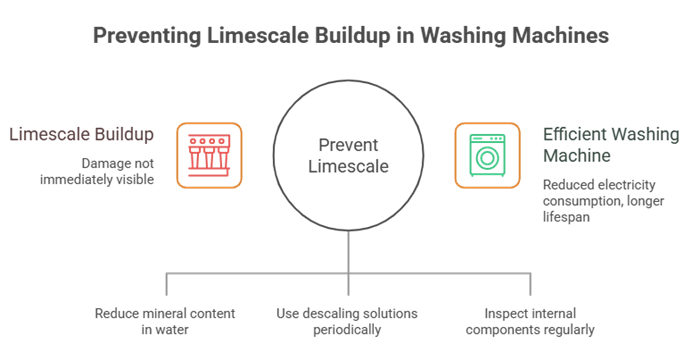
Hard water leads to limescale formation, which is one of the most damaging long-term effects on washing machines.
This chalky residue builds up inside critical areas like heating elements and pipes. As the layer thickens, it reduces the efficiency of these components.
This creates a chain reaction. The machine takes longer to heat water. It consumes more electricity. It runs longer cycles. And all of this puts additional strain on internal parts.
What makes limescale particularly tricky is that it's not immediately visible.
👉 By the time you notice performance issues, the buildup is already significant.
3. Water pressure: A factor most people ignore
Water pressure plays a silent but important role in how your washing machine operates.
When pressure is too low, the drum may not fill properly. This affects detergent mixing and leads to incomplete washing cycles.
On the other hand, high pressure can stress internal valves and connections, increasing the risk of leakage and long-term damage.
In many apartment setups, especially in growing urban areas, pressure fluctuates depending on floor level and water supply systems.
👉 Inconsistent pressure forces your machine to compensate, and that constant adjustment adds wear over time.
4. Impurities in city water
Even when water looks clean, it may contain fine particles such as sand, rust, or organic impurities.
These enter your washing machine through regular usage and begin to accumulate in filters and internal pathways.
Over time, this leads to: Reduced water flow, Clogged filters, Increased strain on the machine.
👉 Your machine ends up working harder just to maintain normal performance.
5. Detergent behaves differently depending on water quality
This is something most people don't consider. The effectiveness of a detergent depends heavily on the type of water being used.
In hard water conditions, detergent doesn't dissolve as efficiently. Instead of forming proper lather, it leaves behind residue.
This creates buildup inside the drum and pipes, which affects both cleaning quality and machine health. You may feel like using more detergent solves the problem, but it actually makes things worse over time.
👉 More detergent doesn't mean better cleaning — especially in hard water conditions.
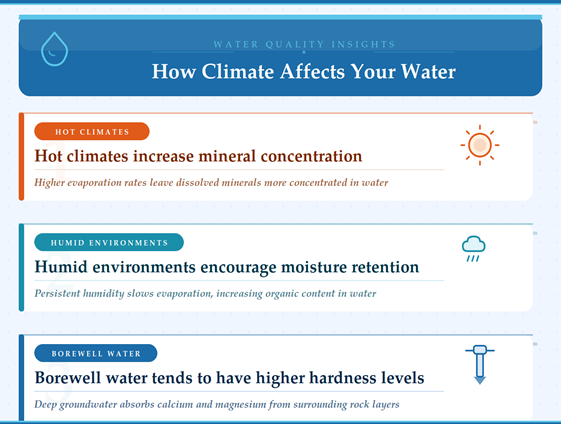
6. Climate and environmental conditions
Your city's climate also influences how your washing machine performs.
In Hyderabad, for example, a combination of heat and mineral-heavy water can accelerate internal buildup and wear. These factors don't act alone. They combine to create a unique operating environment for your machine.
👉 The same appliance behaves differently depending on where it's used.
7. Maintenance habits: The part you can control
While you can't always change water conditions, you can control how well your machine is maintained.
Small, consistent habits make a significant difference over time. Instead of waiting for problems, preventive care helps reduce long-term damage.
For example, regular cleaning removes buildup before it becomes serious. Proper detergent usage prevents residue formation. Periodic servicing ensures that internal components remain efficient.
👉 Maintenance doesn't eliminate external factors, but it helps your machine handle them better.
What you can do to prevent early damage
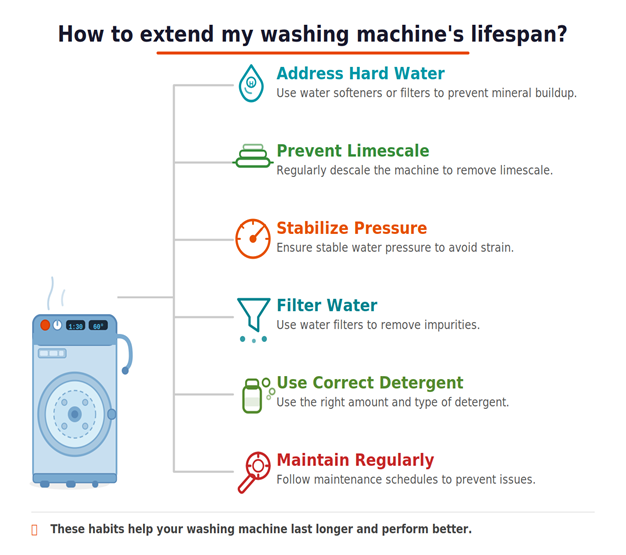
The good part is that you don't need major changes to improve your washing machine's lifespan. Simple adjustments can make a noticeable difference.
Start with:
- Installing a basic water softener if needed
- Cleaning filters and the drum regularly
- Using the correct amount of detergent
- Avoiding overloading
- Scheduling periodic servicing
These steps don't require much effort, but they significantly reduce long-term wear.
When should you take action?
Your washing machine usually gives early warning signs before serious issues appear. Pay attention to:
- Reduced cleaning performance
- White residue on clothes
- Unusual sounds or vibrations
- Longer washing cycles
- Drainage problems
👉 These are early indicators — not minor issues.
If you're in Hyderabad and noticing these signs, there's a high chance water conditions are playing a role. Acting early can prevent bigger and more expensive problems later.
Is your technician actually qualified?
If your washing machine issues are not just due to water conditions, the problem may also come from how it's being serviced.
Here's a simple guide to help you check if your appliance technician is actually qualified.
The Fatafat Service advantage
Understanding the issue is one part. Fixing it at the right time is what actually helps you avoid repeated repairs and costs. Fatafat Service makes this easier by connecting you with verified washing machine technicians who understand local conditions.
Here's how it helps:
- Access to trusted professionals
- Faster diagnosis of water-related issues
- Reduced time spent searching for reliable help
- Preventive servicing before major breakdowns
👉 It simplifies something that should have always been simple — finding the right help when you need it.
The bottom line
Washing machines don't wear out randomly. They respond to the conditions they operate in.
Two homes may use the same machine. But they don't use the same water.
👉 And that's exactly why their outcomes are different.
If you're noticing early signs of wear in your washing machine in Hyderabad homes, it's better to get it checked early than wait for a breakdown.
Book Fatafat Service today
FAQs
1. Why do washing machines wear out faster in some cities?
Washing machines wear out faster due to hard water, mineral buildup, and differences in water quality across cities.
2. How can Fatafat Service help with washing machine issues in Hyderabad?
Fatafat Service connects you with verified technicians in Hyderabad who can identify water-related problems and provide reliable servicing.
3. Does Fatafat Service offer quick and reliable washing machine repair?
Yes, Fatafat Service helps you find trusted professionals quickly, reducing delays and ensuring your appliance is serviced efficiently.
4. Why should I choose Fatafat Service for washing machine repair?
Fatafat Service reduces guesswork by connecting you with verified experts, helping ensure consistent and dependable repair solutions.