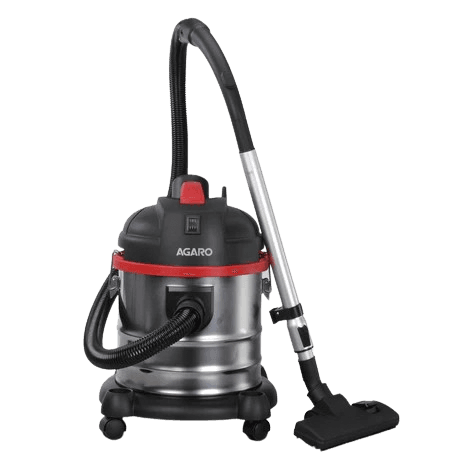
The suction pressure engineering of this unit centers on its 1600 W universal motor, which is specifically tuned to generate a peak vacuum of 21.5 kPa. This is achieved through a high-speed impeller design that optimizes the motor-to-airway ratio for maximum static pressure. While many cordless models sacrifice pressure for airflow, this configuration prioritizes the ability to lift heavy debris and fine silt common in Indian construction dust. The high wattage ensures that even as the 3 L dust bag fills, the drop in suction is minimized compared to lower-powered motors. This makes the unit highly effective for deep-cleaning carpets and hard floors alike.
The filtration architecture utilizes a comprehensive 5-stage system, incorporating FOAM and HEPA components to ensure environmental safety. The initial stages involve inertial separation within the 21 L tank, followed by FOAM layers that capture larger particulates. The final barrier is a washable HEPA filter, designed to trap particles as small as 0.3 microns, including pollen and fine road soot. This multi-layered approach prevents motor clogging and ensures that the air expelled into your living room is cleaner than the intake. For Indian users, the washable nature of these filters is crucial for maintaining performance without frequent, expensive replacements.
Power management is handled by a battery system providing a 30-minute runtime, tailored for high-intensity burst cleaning rather than whole-house marathons. The system likely employs a series-cell configuration to drive the 1600 W motor requirements, balancing current draw against thermal limits. While the runtime is finite, the CC-CV charging protocol ensures battery longevity by managing heat during the replenishment cycle. Indian households with 240 V mains will find the charging interface stable. For optimal performance, users should plan their cleaning path to leverage the high-power bursts for heavy soilage areas like entrance mats or pet corners, ensuring efficient use of the 30-minute window.
The wet and dry separation mechanism is engineered around a protective baffle design within the primary 21 L tank. This system prevents liquid ingress into the motor housing by utilizing centrifugal force to deposit fluids at the bottom of the container. Unlike small handhelds, this unit can handle significant spills, from kitchen leaks to rainwater seepage in balconies. Post-wet use, the internal tank and FOAM filters must be dried to prevent odor-causing bacteria, a critical maintenance step in India’s humid climates. The 3 L dust bag serves as an alternative for dry-only modes, providing a hygienic disposal method for fine allergens.
The integrated blower function is a technical addition that reverses the airflow path, turning the device into a high-velocity air mover. This is particularly useful for dislodging grime from AC vents, window channels, and electronics like WFH keyboards where suction cannot reach into crevices. The 1600 W motor provides enough pressure to clear dry leaves from verandas or dust from heavy curtains before vacuuming them. This mechanical versatility differentiates it from pure-suction models by offering a solution for non-floor surfaces. In the Indian context, this dual-functionality is invaluable for deep-cleaning tasks that occur during festive seasons or post-monsoon maintenance.
Ergonomically, the chassis is constructed from high-impact ABS plastic to withstand the rigors of Indian household use. Weighing 7.2 kg, the unit features a stable wheelbase and a top-mounted handle for mobility between rooms. The parking position and attachment storage on the base allow for a compact footprint when not in use. While heavier than stick-style vacuums, this weight contributes to a lower center of gravity, preventing tipping during high-suction tasks. The flexible hose and adjustable tube provide an ergonomic reach for ceiling fans and cobwebs. Ultimately, the engineering of the ace reflects a focus on durability and industrial-level performance for demanding domestic environments.