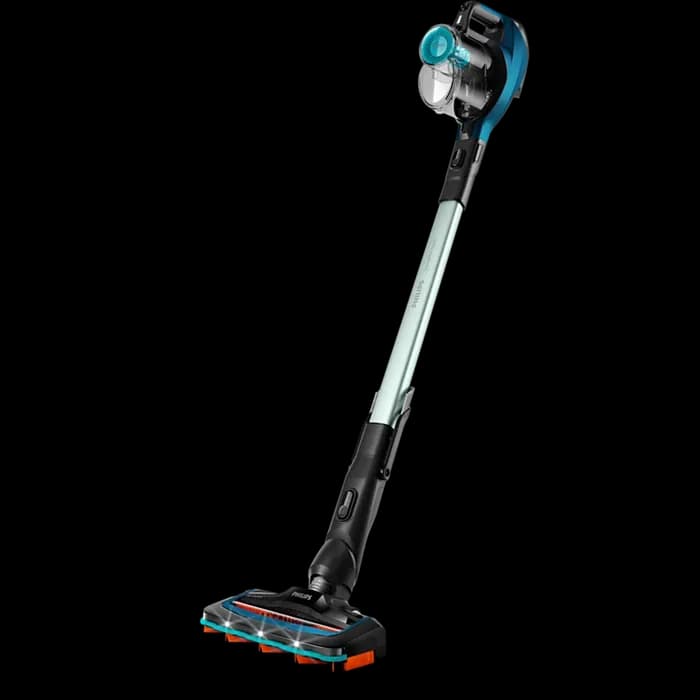
The suction pressure engineering of this device centers on a 120 W dc motor that generates a consistent 8000 Pa of static pressure. This motor-to-airway ratio is optimized for localized debris recovery rather than bulk floor cleaning. By focusing on high velocity through a narrow aperture, the engineering team has prioritized the removal of fine road dust and grit from deep crevices. While the airflow volume is lower than industrial units, the static pressure remains high enough to overcome the resistance of carpet fibers and upholstery textures. This makes it particularly effective for Indian environments where fine particulate matter is common.
The filtration architecture utilizes a single-stage HEPA system designed for high retention of micro-particles. This washable construction is vital for the Indian market, where high dust loads can quickly clog standard filters. The HEPA media is pleated to increase the surface area, allowing for efficient particle capture down to 0.3 microns, including pet dander and pollen. Because the filter is washable, users can restore original airflow levels after cleaning AC vents or soot-heavy surfaces. This design eliminates the recurring cost of replacement bags, making it a sustainable choice for daily residential hygiene management.
Regarding the power system, the unit features a lithium-ion cell configuration that supports a 30 min continuous runtime after a 3 hr charging cycle. The charging protocol follows a standard CC-CV (Constant Current-Constant Voltage) curve to preserve battery health over long-term use. For Indian users, this runtime provides ample capacity for spot-cleaning a 1BHK apartment or a full car interior. The 120W draw is balanced against the battery discharge rate to prevent overheating, ensuring that suction performance does not drop significantly as the battery voltage tapers. This thermal management is critical for maintaining durability in warmer climates.
The wet and dry separation mechanism employs a physical baffle within the dust chamber to prevent liquid ingress into the motor housing. With a 0.45L bin capacity, the internal geometry is designed to swirl air and drop heavier debris or liquid droplets into the collection area via centrifugal force. This protects the internal 120W motor from moisture damage during the suction of minor kitchen spills or wet footwear tracks on tile flooring. After any wet use, the internal components should be dried to prevent mold, which is a common maintenance requirement in humid coastal regions across India.
The blower function is a technical addition that reverses the airflow path, utilizing the high-speed motor exhaust to create a concentrated air stream. This mechanism is specifically engineered to clear debris from areas where a suction nozzle cannot physically fit, such as the internal gaps of a computer keyboard or the recessed grilles of a split AC unit. Unlike pure-suction models, this dual-mode capability allows for a 'dislodge and capture' cleaning strategy. It is particularly effective for dislodging the fine silt that accumulates in window tracks during the Indian monsoon and dry seasons alike.
The chassis ergonomics are defined by a 0.4 kg ABS plastic construction, providing a high strength-to-weight ratio that resists impact damage. The handle is positioned to align with the center of gravity, reducing the torque applied to the user's wrist during overhead tasks like cleaning ceiling fans. The parking position and compact profile allow it to be stored in small kitchen drawers or car glove boxes. This engineering focus on portability ensures that the Pro+ WIRELESS Car Vacuum Cleaner serves as a highly mobile tool for immediate domestic interventions rather than a cumbersome piece of equipment.