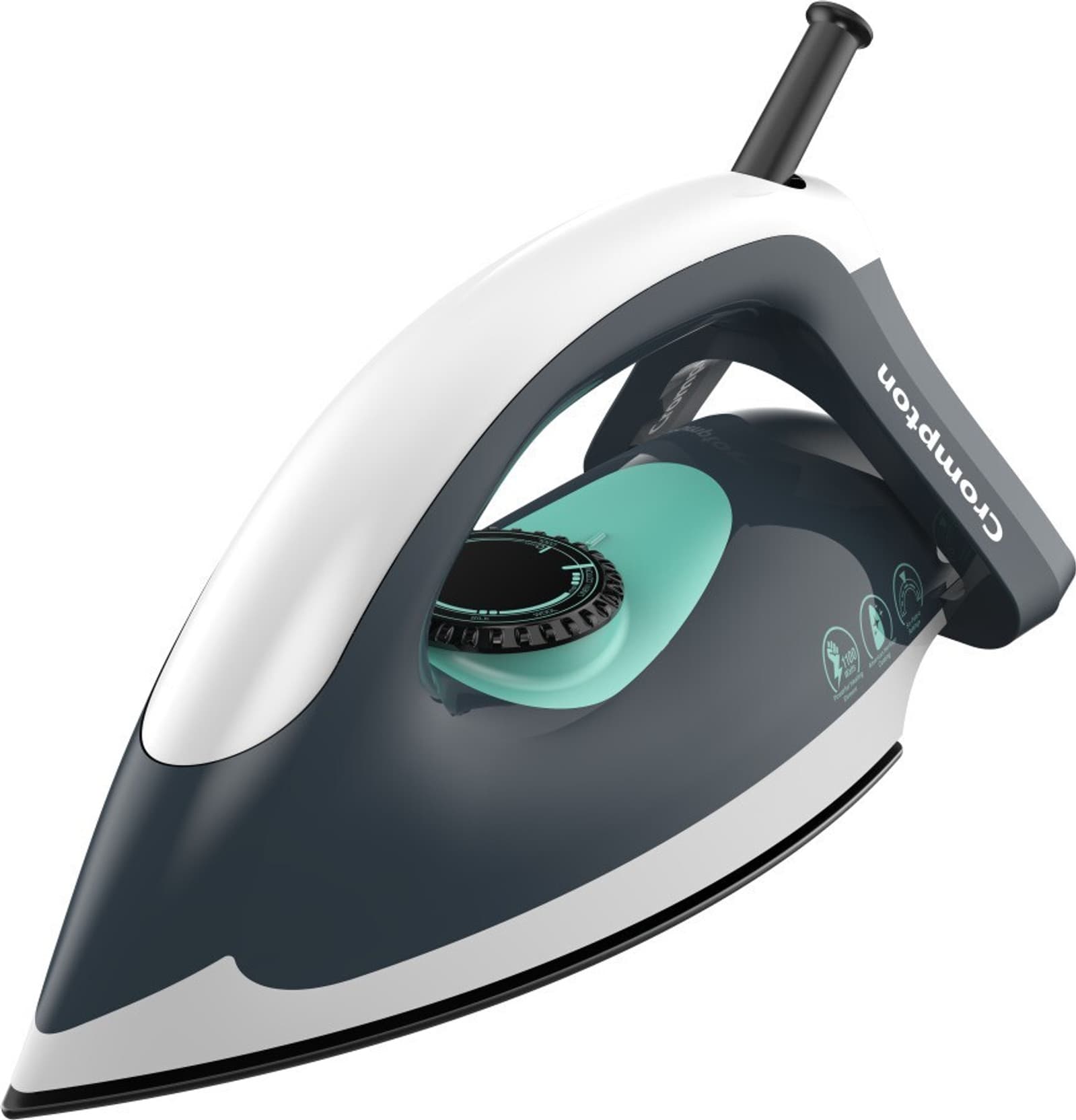
The engineering of the non-stick soleplate on this dry iron is optimized for the varied textures of Indian textiles. The coating is applied with a high-density process to ensure that the 1100 heating element transfers thermal energy uniformly across the entire pressing surface. This uniformity prevents hot spots that typically cause damage to synthetic blends or rayon. Furthermore, the soleplate is designed with a specific edge radius to navigate around traditional embroidery and buttons found on kurtas without snagging. This technical focus on surface friction reduction allows the dry iron to glide effortlessly, significantly reducing the physical effort required for a perfectly smooth finish on stubborn linen.
Precise temperature management is achieved through a calibrated manual dial featuring six distinct settings that correspond to seven specific fabric modes. This mechanical thermostat utilizes a high-sensitivity bimetallic strip to regulate the power flow from the 1100 source, ensuring the base temperature stays within a narrow tolerance range. For fabrics like silk or nylon, the dry iron maintains a lower, stable heat, whereas the cotton and linen settings push the thermal limits to penetrate thick fibers. This mechanical precision is vital for Indian wardrobes that often mix traditional natural fibers with modern polyester blends, requiring frequent and accurate temperature shifts during a single session without any lag.
The safety architecture of this dry iron is purpose-built for the 220–240V electrical environment common in Indian homes, where voltage fluctuations can occur. By integrating an ISI certified thermal fuse and an overheat protection circuit, the unit automatically interrupts power if the internal temperature exceeds safe thresholds. This multi-layered defense is complemented by the auto shut-off mechanism, which provides a critical fail-safe if the dry iron is left unattended. The shockproof body construction adds another level of insulation, protecting the user from potential leakage currents. These engineering choices prioritize long-term component health and user safety, making the unit resilient against typical power-related stresses found in urban and rural grids.
Ergonomic efficiency is a core pillar of the design, centered around a 0.85kg lightweight chassis that reduces musculoskeletal strain during extended ironing tasks. The handle is contoured to provide a secure grip, allowing for better downward pressure distribution when tackling heavy denim or cotton sarees. Complementing this is the 1.8-meter cord, which offers superior reach compared to standard 1.2-meter cables, reducing the need for extension boards. Every aspect, from the weight to the pivot point of the cable, is engineered to facilitate a fluid range of motion. Ultimately, the 5.Desire represents a balanced approach to industrial design, making it a highly effective tool for maintaining a well-pressed Indian wardrobe daily.