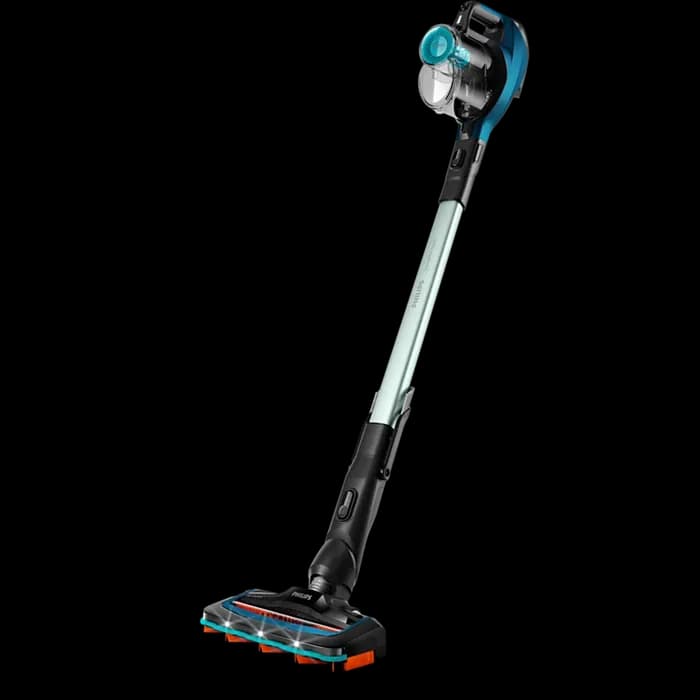
The suction profile of this unit is driven by a 45 W high speed motor optimized for sustained static pressure rather than sheer air volume. Achieving 6000 Pa involves a calibrated motor-to-airway ratio that minimizes turbulence within the primary intake. For Indian users, this pressure level is specifically tuned to lift fine silt and road dust which often settles in floor crevices. While it does not match the 20,000 Pa of industrial corded units, the 45 W draw provides a calculated trade-off between battery longevity and effective debris lift for daily 1BHK or 2BHK upkeep. This engineering ensures the motor operates within safe thermal limits during extended cleaning.
The filtration architecture utilizes a 3-stage HEPA system designed to capture 99.97% of particles down to 0.3 microns. The first stage involves a mesh pre-filter for large debris, followed by a secondary density layer to protect the main HEPA element. This washable construction is vital for the Indian market, where high dust density would otherwise lead to frequent and expensive filter replacements. By allowing users to rinse the filter, the device maintains peak performance over longer cycles. This multi-layered approach ensures that the exhaust air is cleaner than the ambient room air, which is essential for households with respiratory sensitivities or infants.
Powering the unit is a lithium-ion cell configuration that supports a substantial 120 min runtime, a rarity in the portable segment. The system employs a CC-CV (Constant Current-Constant Voltage) charging protocol to protect cell health over its lifespan, requiring a 4-hour window for a full recovery from zero percent. For the Indian user, the 120-minute window allows for the cleaning of a full car interior, multiple mattresses, and all sofa sets without interruption. The engineering balance between the 45 W motor draw and the battery discharge rate ensures that suction does not fade as the battery depletes, providing a consistent cleaning experience.
The wet and dry separation mechanism utilizes an internal baffle design within the 600 ml bagless bin to prevent liquid ingress into the motor housing. This allows the unit to safely recover small liquid spills on marble or tile flooring, which is a common requirement in Indian kitchens. The electronic water tank attachment further enhances this by regulating moisture flow during mopping tasks. Maintenance is straightforward, as the bin can be detached and rinsed to prevent bacterial growth from damp debris. This dual-functionality design simplifies the appliance cabinet, replacing separate wet wipes and dry brushes with a single, engineering-hardened solution for daily household mishaps.
Rather than a blower, this model focuses on the precision of the electronic water tank and roller brush system. The electronic tank uses a solenoid valve to control water distribution, ensuring that wood flooring is not oversaturated, which is a major concern in modern Indian apartments. The roller brush is engineered with high-tensile bristles to agitate pet hair and fine dust from carpets and rugs, directing them into the high-velocity air stream. This combination of mechanical agitation and regulated moisture provides a deeper clean than suction alone. These attachments are designed for quick-swap deployment, making the transition from floor mopping to sofa dusting nearly instantaneous.
The chassis is constructed from high-impact ABS plastic, providing a balance between durability and the 3.5 kg weight. The ergonomic handle is positioned to distribute the weight closer to the user’s wrist, reducing fatigue during long 120-minute sessions. While it is heavier than a basic stick vacuum, this weight is necessary to house the high-capacity battery and the 600 ml bin. The unit features a stable parking position for storage in compact Indian homes where wall mounting may not be an option. Every structural joint is sealed with silicone gaskets to prevent suction leaks, ensuring the RoboEase M2 delivers maximum efficiency during every single use.