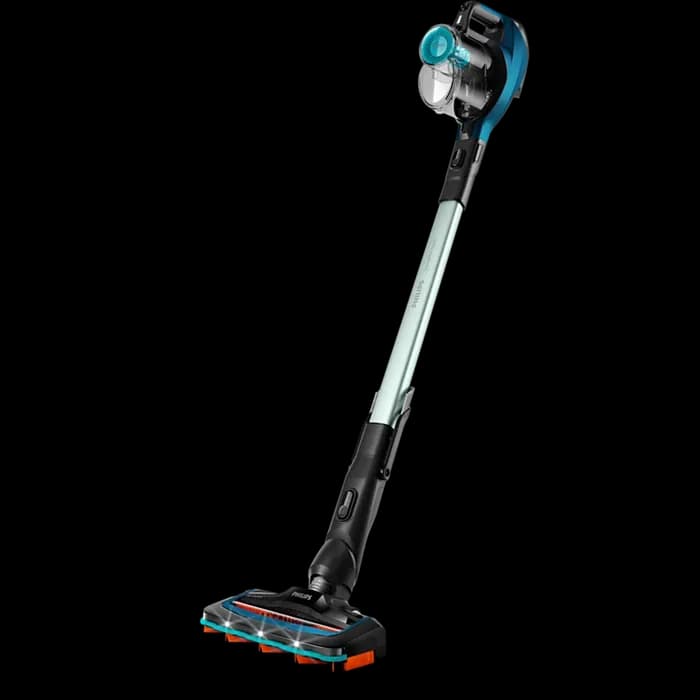
8000 Pa from a 30W motor is achieved through high-velocity impeller design that optimizes air speed over raw volume. In handheld engineering, the motor-to-airway ratio is critical; here, the tight seals around the 0.3L bin minimize pressure drops. This static pressure is sufficient for surface-level lifting of fine silt and hair but trades off the high airflow required for deep-pile carpet extraction. For Indian users dealing with fine road dust on hard surfaces or tight upholstery, this balance ensures the motor does not overheat while maintaining consistent pull during the 15-minute operational window.
The filtration architecture utilizes a single-stage HEPA system designed for durability and high-efficiency particulate air retention. Unlike multi-cyclone systems that add significant weight, this linear path allows the 30W motor to breathe easily while capturing 99.9% of particles down to 0.3 microns. This is particularly effective against Indian environmental pollutants like PM2.5 and fine construction dust. The washable construction is an engineering necessity for the local market, as it prevents the pore-clogging common in humid regions. Regular washing maintains the pressure differential across the filter, ensuring peak rated capacity.
The power system is built around a lithium-ion cell configuration that delivers a steady 12V output to the DC motor. Utilizing a CC-CV (Constant Current-Constant Voltage) charging protocol via a 3-hour cycle ensures battery longevity and prevents thermal runaway. The 15-minute runtime is a calculated engineering trade-off to keep the total mass at 0.4 kg, preventing wrist fatigue during extended overhead use. For the Indian consumer, this means the device is best used in short, focused bursts rather than continuous operation. This management of power density allows for a compact form factor without sacrificing the structural integrity of the housing.
The dust management system features a 0.3 L bagless bin with a transparent chassis for immediate visual feedback on fill levels. The internal baffle design is engineered to prevent dust backflow when the motor is deactivated, a common flaw in entry-level handhelds. While this model is strictly for dry debris, the airflow path is streamlined to reduce turbulence and noise, keeping the output at a manageable 70 dB. This noise level is significantly lower than most corded alternatives, making it suitable for early morning cleaning in shared apartment buildings. The secure latching mechanism ensures airtight seals during operation.
Attachments like the crevice tool and brush are designed with friction-fit connectors to maximize the concentrated 8000 Pa suction at the tip. The crevice tool’s narrow aperture increases air velocity, which is essential for dislodging grime from sliding window tracks or car seat rails. The brush attachment serves as a mechanical agitator, lifting stubborn pet hair from sofas before the suction pulls it into the HEPA chamber. These tools are engineered from high-grade ABS plastic to withstand the heat generated by friction during use. This specialized toolkit allows the device to perform tasks that a standard wide-nozzle vacuum would struggle to complete.
The structural design of the chassis emphasizes ergonomics through a balanced center of gravity located near the handle. Constructed from impact-resistant ABS, the 0.4 kg body is light enough for elderly users or children to operate safely. The trigger-based power control allows for precision usage, conserving battery life between different cleaning zones. The compact footprint also means it can be stored in a drawer or a car side-pocket, unlike the bulky storage requirements of corded units. Ultimately, the 001 represents a shift toward specialized, task-oriented cleaning tools that prioritize maneuverability and user comfort in the modern, fast-paced Indian household environment.