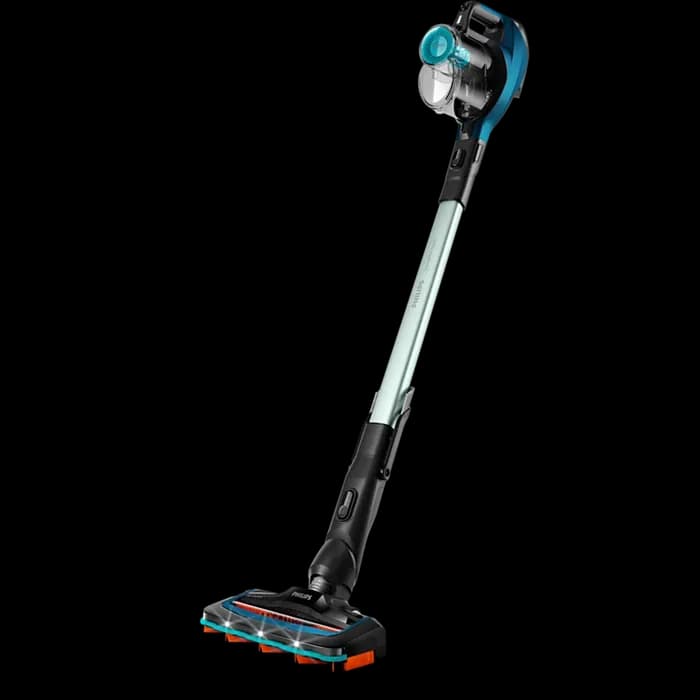
The engineering behind the 5300 Pa suction is a result of the 50 W brushless DC motor, which is optimized for high static pressure rather than sheer air volume. In a cordless vacuum cleaner of this weight class, the motor-to-airway ratio is calibrated to maintain consistent flow even as the 570 ml dust bag fills. The 50 W power draw is relatively low, suggesting a highly efficient impeller design that maximizes vacuum pressure. While this configuration is ideal for lifting fine dust from hard floors like marble or tile, it may face limitations in deep-pile carpet extraction compared to high-wattage corded units.
The filtration architecture relies on a single-stage HEPA system that is specifically designed to be washable, addressing the high dust loading common in Indian urban environments. This 1-stage setup simplifies the internal air path, reducing the pressure drop usually associated with multi-stage cyclonic systems. The filter is rated to capture particles as small as 0.3 microns, including PM2.5 pollutants, pollen, and dander. For Indian users dealing with seasonal allergies or fine construction dust, the ability to rinse the filter ensures that the 5300 Pa suction remains uncompromised over the product's lifespan without needing frequent, expensive replacements.
The power system utilizes a high-capacity battery array that delivers a remarkable 210-minute runtime, a necessity for deep-cleaning large Indian homes. This is achieved through a controlled 14.4 V cell configuration managed by a CC-CV (Constant Current-Constant Voltage) charging protocol. The 5-hour charging window allows for overnight replenishment, ensuring the device is ready for daily cycles. Engineering trade-offs involve the significant weight of the battery pack, which contributes to the unit's 15.4 kg mass. For the user, this means a steady discharge rate that prevents the suction drop-off often seen in smaller, less thermally stable lithium-ion configurations.
Integrating wet and dry capabilities into a cordless vacuum cleaner requires a sophisticated baffle design within the 570 ml container to prevent moisture from reaching the 50 W motor. The separation mechanism ensures that liquid spills are diverted into a dedicated section of the bagless bin, while dry debris is trapped by the HEPA filter. Post-use maintenance is critical; users must empty and dry the bin components to prevent mold growth, a common issue in humid Indian coastal cities. This engineering choice allows the unit to replace both a traditional broom and a mop for minor spills on hard flooring.
The pet hair tool utilizes a motorized brush roll designed to agitate fibers on sofas and mattresses, facilitating the 5300 Pa suction in lifting stubborn fur. This mechanical agitation is essential because suction alone often fails to dislodge hair from textured fabrics. Furthermore, the multi-surface versatility is supported by the main brush and mop pads, allowing for a seamless transition between wood flooring and tile. The absence of a blower function is mitigated by the high-velocity intake, which can clear AC vent grime effectively. This targeted engineering approach focuses on extraction efficiency rather than air displacement, suiting the needs of indoor hygiene.
The chassis of this cordless vacuum cleaner is constructed from high-impact ABS plastic, providing the structural integrity required to support its 15.4 kg weight. The handle design is ergonomically positioned to balance the center of gravity, although the mass suggests it is better suited for floor-based or supported cleaning rather than extended overhead reach. The inclusion of a stable parking position allows users to pause cleaning without leaning the device against walls. This robust construction ensures durability against the accidental bumps typical in cluttered 1BHK or 2BHK apartments. Ultimately, the RLS6LADC_L10S Ultra represents a heavy-duty engineering solution for sustained cleaning performance in challenging environments.