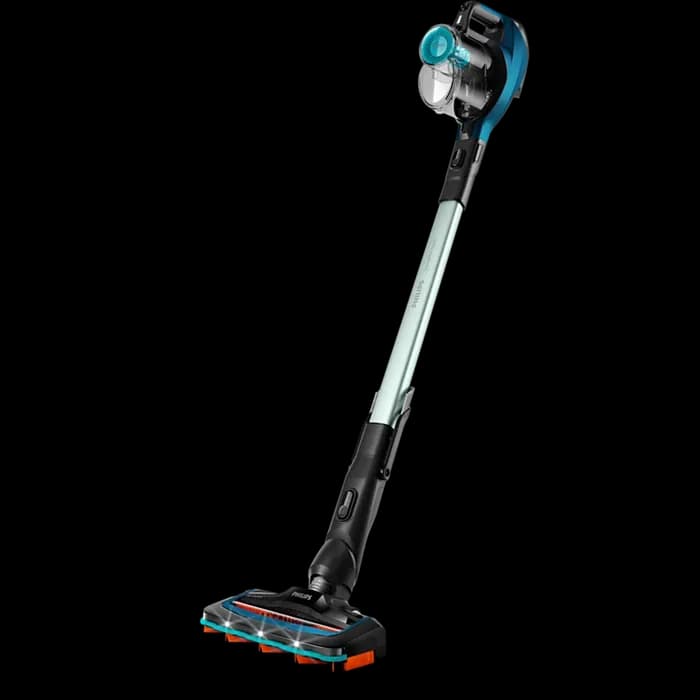
The 20000 Pa suction pressure is achieved through a 1000 W copper universal motor that prioritizes high static pressure over simple airflow volume. By utilizing a high-torque motor-to-airway ratio, the unit maintains a steady vacuum even when tackling dense particles like sand or heavy road dust found in Indian cities. The engineering focuses on a direct-drive fan system that minimizes internal turbulence, ensuring the energy from the copper windings translates into maximum lift at the floor brush interface. This design makes it particularly effective for pulling deep-seated dirt from tile grouting, although the raw power requires careful handling on delicate surfaces. This balance of motor wattage and suction output defines its cleaning efficiency.
The filtration architecture utilizes a 1-stage HEPA system designed specifically for the heavy particulate matter found in local environments. This washable filter is engineered to capture 99.97% of particles down to 0.3 microns, including fine soot from traffic and microscopic allergens. Unlike multi-stage systems that can restrict airflow, this single-stage configuration allows the 1000 W motor to breathe freely, maintaining optimal suction for longer periods. The use of a washable material is a critical engineering choice for the Indian market, as it allows users to maintain peak performance without the frequent overhead of purchasing replacement filters. This design ensures that the exhaust air remains clean, preventing secondary pollution during operation.
Power management in this cordless vacuum cleaner relies on a robust battery system capable of sustaining a 90 min runtime. The engineering involves a high-density cell configuration that manages the significant draw of the 1000 W motor through efficient heat dissipation pathways. By employing a Constant Current-Constant Voltage (CC-CV) charging protocol, the battery life is preserved over hundreds of cycles, which is vital given the power-intensive nature of the suction hardware. The 90-minute window is calibrated to allow for a full 2BHK cleaning cycle, including detailed upholstery work. This power-to-weight management ensures that the user can complete comprehensive tasks without the abrupt power drops often seen in lower-capacity battery architectures.
The wet and dry separation mechanism is built around a 30 L bagless container, utilizing a baffle design to protect the motor from moisture intake. Engineering a 17 kg unit with such a large capacity involves a reinforced chassis that can support the weight of collected liquids without compromising structural integrity. A safety float valve is integrated to automatically cut off suction once the liquid reaches a certain level, preventing motor damage. This system is essential for Indian homes dealing with kitchen spills or balcony wash-downs. The 30-liter volume reduces the frequency of disposal, allowing for large-scale cleanup operations that would overwhelm standard domestic cordless units with smaller, more fragile dust bins.
The blower function is powered by redirecting the exhaust from the 1000 W motor through a specialized blower adapter. Technically, this leverages the high-velocity air movement created by the universal motor to clear debris from areas where suction is ineffective, such as deeply recessed AC vents or complex keyboard layouts. In the Indian context, this function is invaluable for clearing dust from window tracks and balcony corners where road grime accumulates. The engineering ensures that the air used for blowing has already passed through the HEPA filter, ensuring no dust is recirculated into the room. This dual-purpose airflow engineering maximizes the utility of the internal motor without requiring additional heavy components.
Structurally, the EVC 30 is built with high-impact ABS plastic to house its 17 kg mass and 1000 W motor. The ergonomics are centered around a rugged handle and extension tubes that allow for upright tile cleaning, minimizing the strain of the unit's weight. The chassis includes dedicated parking positions for the floor brush and crevice tool, ensuring all attachments are within reach during intensive cleaning sessions. While the weight is higher than standard handhelds, the engineering prioritizes durability and large-scale capacity over lightweight portability. This focus on industrial-grade construction ensures that the unit can withstand the rigors of daily use in diverse Indian household conditions. The EVC 30 represents a shift toward heavy-duty cordless utility.