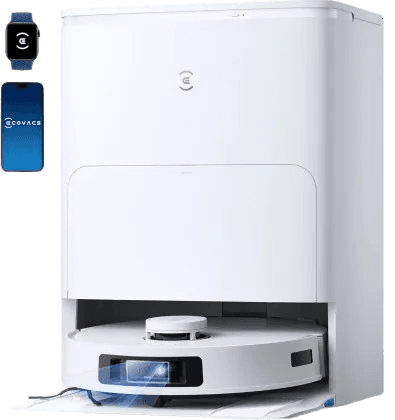
The 11000 Pa suction is generated by a 60 W high-speed motor that optimizes the motor-to-airway ratio for maximum static pressure. In a robot chassis, achieving this pressure requires a sealed airflow path to minimize vacuum leaks during floor contact. While 60 W seems lower than upright corded motors, the proximity of the motor to the floor surface reduces suction loss significantly. This engineering allows the unit to lift heavy debris and fine silt from deep tile grooves. However, the trade-off involves higher noise levels at peak power, though the 63 dB rating remains manageable. This balance makes it ideal for hard floors but less effective for ultra-plush carpets.
The filtration architecture employs a 3-stage-stage HIGH_EFFICIENCY_FILTER system designed for the high dust loads found in Indian environments. The first stage uses a mesh to capture large debris like hair and food crumbs, while the second stage targets mid-sized particles. The final stage is a high-efficiency filter that traps microscopic allergens and fine road dust. Because the filter is washable, users can maintain high airflow without the thermal stress caused by clogged pathways. This is crucial for Indian homes where fine dust can rapidly degrade motor performance. The bagless design in the robot unit further ensures that suction remains consistent as the 300 ml bin fills.
Power management relies on a high-density lithium-ion battery array delivering 210 minutes of runtime. The system utilizes CC-CV (Constant Current-Constant Voltage) charging protocols to preserve cell health over many discharge cycles. With a 5-hour charging window, the battery is optimized for once-daily deep cleaning sessions across large floor plans. The engineering challenge involves managing the 60 W draw alongside the power requirements of the navigation sensors and mopping motors. For Indian users, this means the device can cover a 3BHK apartment multiple times on a single charge. Efficient power distribution prevents premature battery degradation even during high-suction mopping tasks.
The wet and dry separation mechanism is integrated into the mopping pad assembly and the dual comb arrays. The mopping system uses a controlled water flow to dampen pads, while the 11000 Pa suction simultaneously removes loosened grime. A baffle design within the robot prevents liquid ingress into the suction motor, a critical safeguard for wet-use durability. The dual comb arrays act as a mechanical separator, untangling hair before it reaches the main brush, which prevents motor stalling. Post-wet-use, the OMNI station handles the cleaning of pads, though users must ensure the 2.5 L station tank is maintained to prevent bacterial growth.
Unlike manual handheld units, this model does not feature a dedicated blower function, focusing instead on high-vacuum extraction for AC vents and keyboard areas via its edge-cleaning brushes. The technical mechanism relies on the side brushes to flick dust into the main suction path rather than blowing it into the air. This engineering choice prioritizes air quality, as blowers often redistribute fine PM2.5 particles throughout the room. For Indian households dealing with heavy WFH desk dust, the high static pressure at the floor level effectively clears peripheral grime. The lack of a blower is compensated by the superior 63 dB quiet operation and refined edge-to-edge suction capability.
The chassis is constructed from high-grade ABS plastic to withstand the 15 kg weight of the OMNI station while ensuring the robot unit remains agile. The ergonomics are centered around the OMNI station's docking and self-emptying heights, designed for easy access without excessive bending. The 15 kg mass provides a stable base for the 2.5 L dust bag and water reservoirs, preventing tipping during the 5-hour charging cycle. The parking position is precision-engineered for inductive charging contacts to align perfectly every time. Ultimately, the deebot t30s pro omni represents a pinnacle of structural durability and automated convenience for modern Indian homes seeking a long-term cleaning partner.