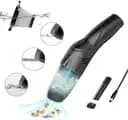
The 4500 Pa suction pressure is generated by a high-torque 60 W motor spinning at optimized RPMs to maximize static pressure within a compact housing. Unlike larger corded motors that rely on brute wattage, this motor-to-airway ratio is tuned to handle high-density particles like road grit and fine dust common in urban India. The internal impeller design prioritizes airflow velocity over volume, which is why it excels at surface-level pick-up on hard surfaces and tightly woven fabrics. This specific pressure rating ensures that the unit can maintain lift even as the 200 ml dust compartment reaches capacity.
The filtration architecture utilizes a 1-stage HEPA system designed to intercept particulates as small as 0.3 microns. By placing the HEPA element directly after the primary intake, the system ensures that motor components are shielded from abrasive dust, extending the operational lifespan. For the Indian user, the washable nature of this filter is a critical engineering choice, as it prevents the pore-clogging typically caused by high humidity and fine clay-based dust. Regular washing maintains the pressure differential across the filter, ensuring the motor does not overheat during its 15-minute operational window.
Power delivery is managed by a high-density lithium-ion battery array configured to provide a stable 8.4V output. The system employs a CC-CV (Constant Current-Constant Voltage) charging protocol via a 1-hour rapid charge circuit, minimizing downtime between cleaning tasks. This battery-to-motor synergy is calibrated to provide a flat discharge curve, meaning the suction does not significantly drop as the battery nears depletion. While a 15-minute runtime may seem brief, the engineering focus is on high-intensity burst cleaning rather than prolonged floor scrubbing, making the energy density ideal for spot-cleaning applications.
The internal debris management system features a 200 ml bagged configuration that acts as a secondary barrier for fine allergens. This design choice differs from cyclonic bagless models by ensuring that dust is physically contained within a fabric matrix, preventing clouds of dust during the emptying process. The airflow path is engineered to create a vortex within the bag, pushing heavier debris to the bottom to prevent premature suction loss. This mechanical layout is particularly effective for trapping pet dander and fine particulate matter (PM2.5) that often infiltrates Indian homes during peak pollution seasons.
A key technical differentiator is the integrated blower function, which reverses the airflow path to exhaust air through the multi-function nozzle. This mechanism utilizes the full 60 W motor output to create a concentrated air stream capable of dislodging grime from recessed areas like AC vent fins or motherboard components. In the context of Indian maintenance, this is more effective than suction alone for cleaning intricate woodwork or window channels where dust becomes impacted. The thermal management system is designed to handle this reverse flow without stressing the motor bearings or increasing the 80 dB noise floor.
The chassis is constructed from high-impact ABS polymer, keeping the total weight at a precise 0.5 kg to ensure ergonomic balance. The center of gravity is positioned directly over the grip, reducing the torque applied to the user's wrist during vertical cleaning tasks. This lightweight build does not compromise the structural integrity of the seal around the dust bin, which is vital for maintaining the rated pressure. The lack of a cord removes electrical resistance and mechanical drag, allowing the EBVC005 to achieve cleaning efficiency that traditional entry-level corded vacuums cannot match in tight spaces.