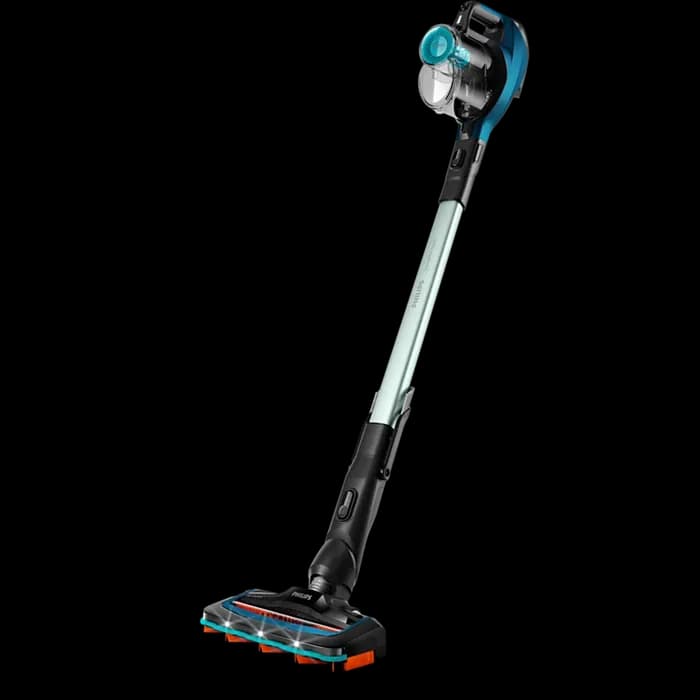
The engineering core of this device revolves around its 180 W brushless DC motor, which optimizes the motor-to-airway ratio to achieve a sustained 6 kPa suction pressure. This specific pressure level is calibrated to handle 1.5 kg of airflow resistance, ensuring that while the static pressure is lower than industrial units, the airflow velocity remains high enough to lift particles like sand or kitchen spills. By utilizing a brushless configuration, the motor minimizes frictional heat and electrical noise, which allows for a more compact chassis without risking thermal throttling during extended use in high-temperature Indian environments.
Filtration is managed through a 2-stage HEPA architecture that focuses on progressive particle capture. The first stage involves a mesh-like barrier to intercept larger debris such as hair and crumbs, while the second stage consists of a high-efficiency particulate air filter designed to trap 99.9% of microscopic allergens like PM2.5 road dust and pollen. For the Indian user, the washable nature of this construction is a critical engineering advantage, as it prevents the pore-clogging typically seen with fine tropical dust, ensuring the airflow does not drop significantly after several weeks of heavy usage.
Power management is handled by a multi-cell battery array that utilizes a CC-CV (Constant Current-Constant Voltage) charging protocol to reach full capacity in just 2.5 hours. The 180 W motor draw is balanced against the battery discharge rate to provide a 45-minute runtime, which is remarkably high for this weight class. This endurance is achieved through efficient circuit board mapping that prevents energy waste through heat. Users can expect consistent power delivery until the very end of the cycle, which is essential for maintaining suction performance during deep-cleaning tasks across various household surfaces.
While the unit is not designed for wet extraction, the 0.5 L bagless dust bin is engineered with a secure latch and seal system to prevent secondary pollution. The airflow pathway is designed to create a cyclonic effect within the bin, forcing heavier particles to the bottom while the air escapes through the HEPA stages. This mechanical separation ensures that the filter remains clear for longer periods. The transparent ABS plastic used for the bin allows for immediate visual confirmation of dust levels, preventing overfilling which could otherwise stress the motor and reduce the overall suction efficiency.
A distinct technical advantage is the integrated blower function, which reverses the airflow through a dedicated rear port. Unlike standard vacuum cleaners that only pull air, this mechanism allows the user to dislodge grime from tight crevices where a nozzle cannot reach, such as within AC vent fins or deep inside mechanical keyboards. The blower’s static pressure is sufficient to clear dry dust from intricate electronics without needing physical contact. This dual-flow engineering makes the device a versatile maintenance tool for both suction-based cleaning and air-driven dusting in a single compact frame.
Constructed primarily from high-grade ABS, the chassis is balanced to keep the center of gravity near the handle, reducing wrist fatigue during overhead cleaning of curtain rods or ceiling fans. The 1.5 kg weight is distributed across a contoured grip that facilitates one-handed operation for most adults. The nozzle interface uses a friction-fit system that maintains an airtight seal with the brush and crevice attachments, ensuring no vacuum loss at the point of contact. This focused structural design confirms that the Cyclone 180Pro is built for practical, agile deployment in modern living spaces.