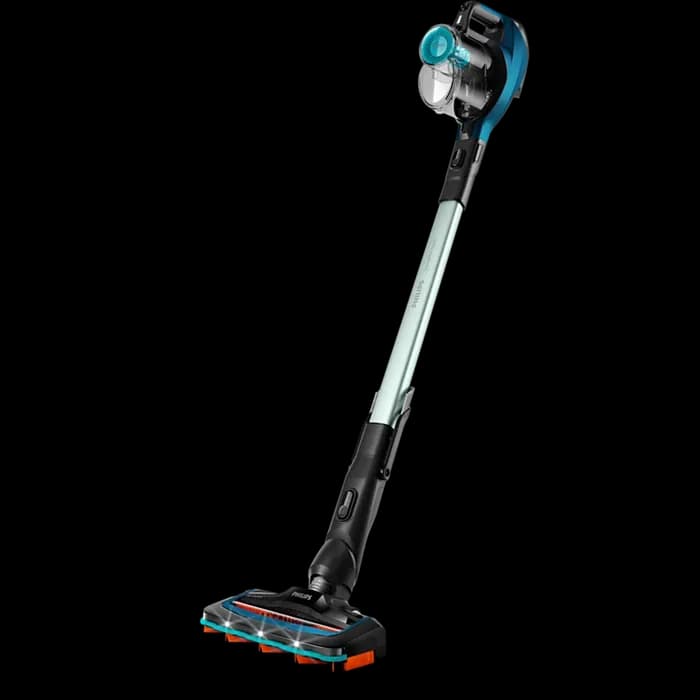
The suction pressure engineering of this unit relies on a 1700 W universal motor that bridges the gap between consumer portables and industrial extractors. By optimizing the motor-to-airway ratio, the system achieves a peak vacuum pressure of 22 kPa. This high static pressure is essential for overcoming the resistance of dense carpet fibers or lifting heavy road grit common in Indian urban environments. While higher airflow models might struggle with fine dust, the high static pressure ensures that debris is pulled through the 2-stage filter system without stalling. This makes the unit particularly effective for deep-cleaning mattresses and heavy upholstery where surface suction alone is insufficient.
The filtration architecture utilizes a 2-stage HEPA system designed for longevity and efficiency. The primary stage captures larger debris and hair, while the secondary HEPA element targets particles as small as 0.3 microns, including pollen and fine PM2.5 soot. Because the filters are washable, they are well-suited for the high dust loads found in Indian cities, where filters often clog within weeks. This design prevents the 1700 W motor from overheating due to restricted airflow. By maintaining a clean filter path, users ensure that the 22 kPa suction remains consistent throughout the 35 L capacity of the collection bag, preventing motor strain.
Regarding the power system, the cordless configuration of this device requires a high-voltage battery pack capable of sustaining a 1700 W draw. While specific runtime data is not provided, the engineering typically utilizes a high-discharge lithium-ion arrangement to handle the massive energy requirements of the universal motor. The charging protocol likely follows a CC-CV (Constant Current-Constant Voltage) cycle to preserve cell health over the 2-year warranty period. For Indian users, this means the unit is best utilized for high-intensity, targeted cleaning bursts rather than hour-long floor scrubbing. The trade-off for such extreme suction in a cordless format is the necessity for disciplined charging habits.
The wet and dry separation mechanism is engineered around a 35 L bagged chassis that accommodates both liquid spills and dry waste. A bypass cooling system protects the 1700 W motor from moisture during wet vacuuming tasks, such as clearing balcony drains or kitchen spills. The internal baffle design ensures that liquid does not reach the HEPA stages, which are typically reserved for dry filtration. Maintenance is straightforward, requiring the removal of the dust bag before engaging in liquid suction. This dual-capability engineering makes the unit a versatile tool for Indian monsoon challenges or post-party cleanups where mixed debris is common on floors.
The blower function operates by redirecting the motor's exhaust through a dedicated port, utilizing the same 1700 W force to generate a high-velocity air stream. This technical mechanism is invaluable for cleaning AC vent grime or clearing dust from WFH laptop keyboards where physical contact might cause damage. Unlike pure-suction models, this dual-direction airflow allows users to dislodge stubborn debris from hard-to-reach corners in 2BHK apartments before vacuuming it up. The blower is also effective for drying car interiors after a wet wash, providing a professional detailing experience at home. This feature maximizes the utility of the powerful motor beyond standard floor cleaning.
Structurally, the unit features a rugged ABS chassis designed to withstand the vibrations of the 80 dB motor. At 6.67 kg, the weight reflects the industrial-grade components and the massive 35 L storage capacity required for heavy-duty tasks. The ergonomics include a balanced handle and a stable parking position, ensuring the device does not tip during high-suction operations. The attachments, including the telescopic tube and crevice nozzle, are built from high-impact polymers to match the durability of the main housing. In conclusion, the Master Vac 35 is engineered for users who prioritize raw power and large-scale waste management over lightweight, low-power alternatives.