

Related Products
WD 1S Classic Specifications, Features & Compatibility Guide
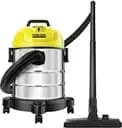
The WD 1S Classic enters the Indian market as a robust cordless vacuum cleaner designed to tackle heavy-duty 18 L cleaning tasks.Featuring a 1300 W universal motor, it generates 8000 Pa suction to lift fine road dust from cement floors and tiles.
Quick Answer
Yes, the WD 1S Classic is an excellent buy for Indian households seeking a robust, efficient cordless vacuum. Its 1300 W universal motor and 8000 Pa suction are engineered to effectively lift fine road dust from common surfaces like cement and tiles. With a BEE-rated efficiency and balanced 4.7 kg design, it delivers powerful, cost-effective cleaning specifically for residential needs, making it a sound long-term investment.
The WD 1S Classic is ideal for residential users prioritizing robust cleaning performance and long-term operational savings, especially on common Indian floor types. However, steer clear if your needs exceed standard home capacity or if initial capital expenditure trumps efficiency gains, as it's designed for sustained value over outright lowest cost.
✓ Who Should Buy
- • performance suitable for residential spaces.
- •Verified efficiency of standard rating for reduced long-term operational costs.
- •Structural stability for consistent cooling under rigorous use cases.
- •Hardware durability via premium components and advanced technology.
- •Built-in grid protection with Standard power cycle voltage management.
✕ Who Should Avoid
- •Spaces or usage requirements exceeding residential rated capacity.
- •Installations prioritizing minimum capital expenditure over high-efficiency performance.
- •Unstable grid conditions exceeding the functional threshold of Standard power cycle.
- •Environments incompatible with vacuum cleaner physical and thermal dissipation specs.
WD 1S Classic
| Country Of Origin | Germany |
| Brand | Karcher |
| Model | WD 1S Classic |
| Type | Wet & Dry |
| Color | Yellow, Black |
| Launch Year | 2023 |