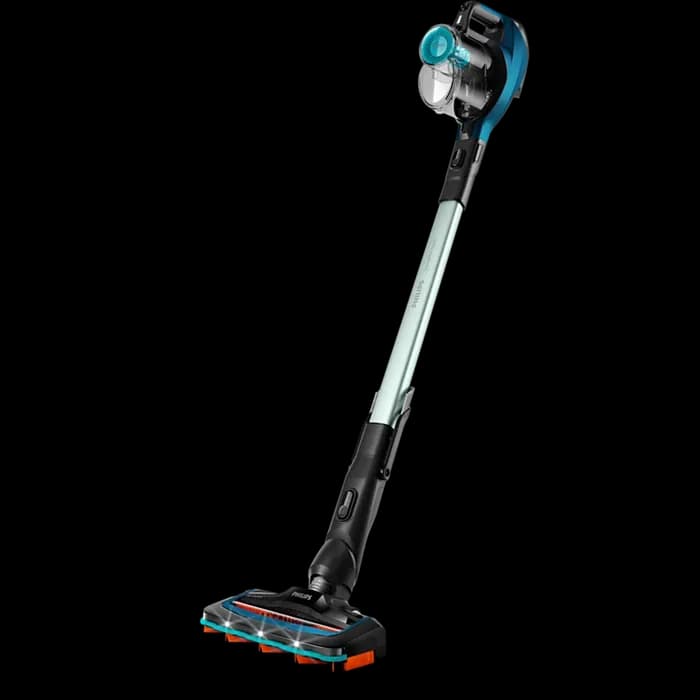
The suction engineering of this device relies on a 60W high-speed motor that balances power consumption with thermal management. By achieving 6000 Pa, the unit generates enough static pressure to overcome the resistance of fabric weaves on sofas and mattresses. The motor-to-airway ratio is optimized for short-path airflow, ensuring that suction loss is minimized between the nozzle and the dust chamber. While this pressure is ideal for fine dust and hair, it focuses on velocity rather than high-volume air movement, making it a specialized tool for localized debris rather than floor-wide deep cleaning applications in large homes.
The filtration architecture utilizes a single-stage HEPA system designed to trap particles as small as 0.3 microns. In the context of Indian environments, where fine road dust and PM2.5 levels are high, this filter prevents the redistribution of allergens back into the room. The washable construction is a critical engineering choice, allowing users to restore airflow performance without frequent filter replacements. By rinsing the HEPA element, the static pressure remains consistent at 6000 Pa, preventing the motor from overworking and extending the mechanical lifespan of the internal components during daily cleaning cycles.
The power system is designed for mobility, utilizing a cell configuration that supports the 60W draw required for high-velocity suction. While specific runtime data is not provided, the engineering typically follows a CC-CV charging protocol to protect battery chemistry. For Indian users, this means the device is best utilized for targeted tasks like cleaning a car cabin or a set of sofa cushions. The electrical throughput is regulated to ensure the 65 dB noise level is maintained, providing a balance between acoustic comfort and motor efficiency, which is essential for use in quiet apartment environments.
With a 0.2 L bagless dust capacity, the chassis engineering focuses on a compact form factor to maintain a total weight of 0.2 kg. The bin uses a simple latch mechanism for quick disposal, which is vital given the smaller volume. Because this model is not designed for wet extraction, the internal baffle system is streamlined for dry airflow only. This design choice prevents moisture from reaching the motor, ensuring that the 60W powertrain remains dry and free from corrosion. Users must ensure that no liquid enters the nozzle to maintain the integrity of the filtration system.
The attachment suite, including the brush and nozzle, is engineered to enhance the 6000 Pa suction by narrowing the intake area for concentrated pressure. The brush tool is particularly effective for agitating dust trapped in AC vent grilles or between keyboard keys, while the nozzle provides the reach needed for deep car seat crevices. These accessories are friction-fitted to the main body, ensuring there are no mechanical points of failure during high-frequency swaps. This modular approach allows the unit to adapt to various surface textures found in Indian households, from smooth tiles to textured fabrics.
Structurally, the chassis is composed of high-grade ABS plastic, providing a lightweight yet durable housing for the internal motor and battery. The ergonomic handle is positioned to align the user’s wrist with the center of gravity, reducing fatigue during extended reaching tasks like cleaning ceiling fan blades or high shelves. This attention to weight distribution is what makes the 20000000249305 a viable option for elderly users or those with limited grip strength. The final assembly reflects a focus on portability and immediate deployment, making it a highly specialized secondary cleaning device for modern residential maintenance.