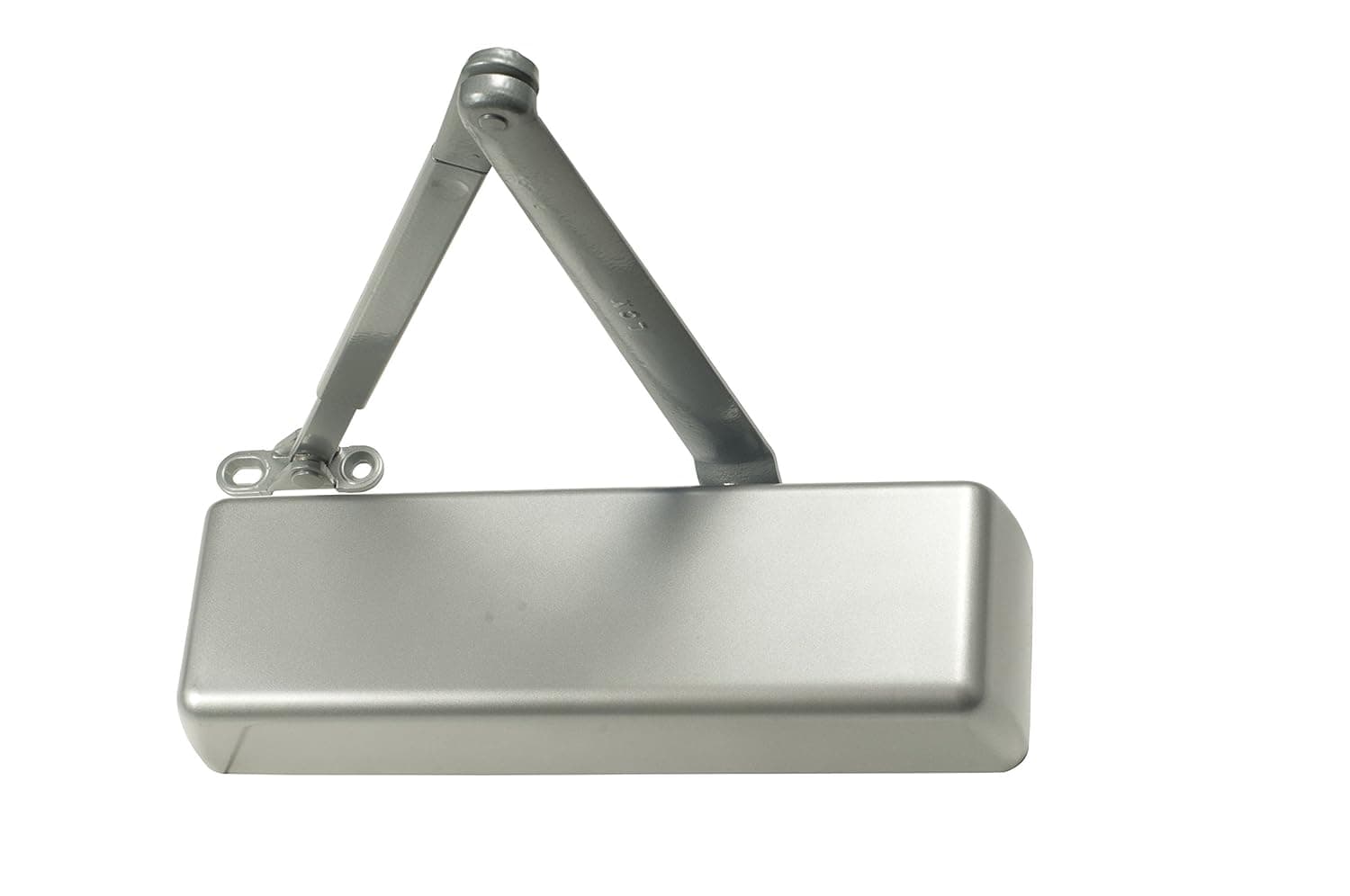
The LCN 4011RH 689 exemplifies advanced hydraulic door control, meticulously engineered to address the demanding operational parameters of commercial and institutional environments. At its core, the unit's cast iron body provides a foundation of unparalleled structural integrity and thermal stability, crucial for maintaining consistent hydraulic fluid viscosity across varying ambient temperatures. The internal hydraulic system, featuring precision-machined valves, allows for independent, infinitely adjustable control over the door's closing arc.
Hydraulic Mechanics and Precision Control: The adjustable spring mechanism permits field-tuning of the closing force across a power size range of 1 to 5. This adaptability is critical for meeting specific accessibility requirements (such as ADA compliance, which this unit achieves) and for compensating for environmental factors like wind loads on exterior installations. The independent closing speed valve governs the door's transit from its fully open position to approximately the final 10-15 degrees of closure. A separate latching speed valve then precisely controls this crucial final segment, ensuring the door overcomes any latch friction to engage securely without slamming. The integral, non-adjustable hydraulic backcheck system engages past approximately 70 degrees of opening, offering a cushioning effect that protects the door and surrounding structure from damage caused by forceful or abusive opening, a common failure point in high-traffic areas.
Compliance and Durability: While an EN1154 rating is not specified in the provided data, the LCN 4011RH 689's adherence to ANSI/BHMA A156.4 Grade 1 is a direct testament to its superior durability and performance. Grade 1 signifies the highest standard for door closers, requiring the unit to withstand millions of operational cycles under rigorous testing conditions. This certification, coupled with the robust cast iron construction and a substantial 30-year manufacturer's warranty, underscores its long-term reliability and reduced total cost of ownership in demanding applications. Furthermore, its UL 10C and fire-rated listing confirm its suitability for integration into fire-rated door assemblies, providing a critical passive fire protection component by ensuring positive latching in emergency scenarios. The absence of a specific 'cycle test rating' in the provided data is mitigated by the overarching Grade 1 certification, which inherently implies exceeding stringent cycle testing requirements for extreme longevity.