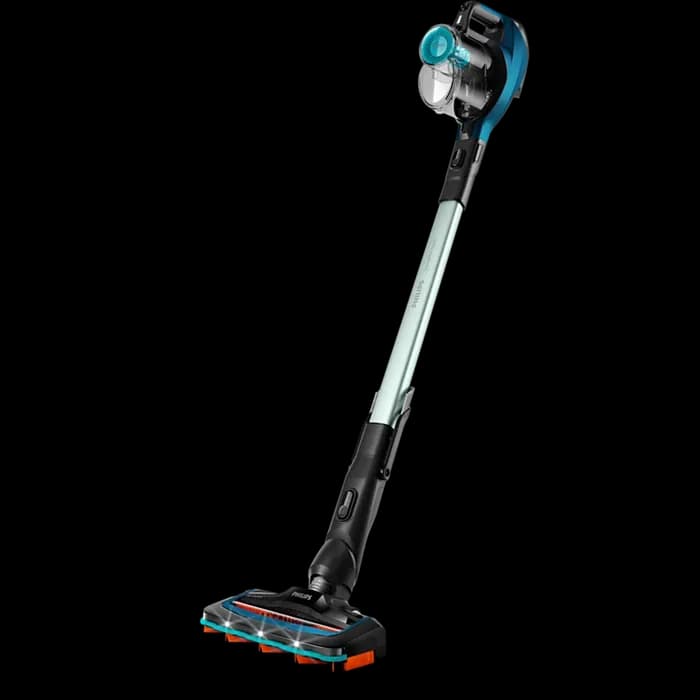
The suction pressure of this cordless handheld vacuum cleaner is derived from a 1000 W high-speed motor that creates a pressure differential of 8 kPa. In fluid dynamics terms, this motor-to-airway ratio is optimized for high static pressure, allowing the unit to overcome the resistance of thick upholstery fabrics. While it lacks the sheer airflow volume of a 2000W corded canister, the 8 kPa rating is sufficient for picking up dense particles like rice grains or gravel. The engineering team prioritized torque over raw CFM, ensuring that the suction does not drop as the 1.5 L bin begins to fill with household debris.
Filtration is handled by a 2-stage HEPA architecture designed specifically for the fine particulate matter common in the Indian climate. The first stage involves a mesh pre-filter that captures larger debris like hair and food crumbs, protecting the primary HEPA element. The second stage utilizes a high-efficiency particulate air filter that traps 99.9% of particles down to 0.3 microns, including pollen and dust mites. Because the filter is washable, users can maintain peak airflow without frequent replacement costs. This is critical in dusty environments where the filter media can become blinded quickly, requiring regular rinsing to restore the pressure differential.
The power system utilizes a battery configuration that balances discharge rates with the 1000 W motor’s high current draw. This allows for a consistent 30-minute runtime, which is a calculated trade-off between battery weight and operational duration. The 1.6 kg total weight suggests a compact lithium-ion pack capable of delivering steady voltage until the end of the discharge cycle. For Indian users, this means the suction remains constant rather than tapering off as the battery drains. Managing the thermal profile of such a powerful motor in a small chassis requires efficient heat dissipation through the side-mounted exhaust vents, preventing internal overheating.
The 1.5 L dust capacity is achieved through a bagless cyclone-inspired separation mechanism. By forcing incoming air into a centrifugal path, heavier particles are precipitated into the bin while the air moves toward the 2-stage HEPA filter. This design prevents the suction from being choked by the accumulation of fine road dust. The transparent bin allows for immediate visual monitoring, which is essential given the high volume of dust typical in urban Indian households. The latch mechanism is engineered for a "no-touch" empty, minimizing the user's exposure to allergens and making the maintenance cycle significantly more hygienic for those with sensitive respiratory systems.
A notable engineering inclusion is the blower function, which reverses the airflow direction to expel air through a specialized nozzle. This is not merely a byproduct of the motor exhaust but a directed stream intended for dislodging dust from inaccessible areas like computer motherboards or the internal fins of a split AC unit. In a tropical climate where dust cakes onto surfaces due to humidity, the blower provides a mechanical advantage that suction alone cannot match. The engineering transition between suction and blower modes is seamless, utilizing the same 1000 W motor to generate a high-velocity air stream that simplifies cleaning complex electronics.
The chassis is constructed from high-impact ABS plastic, ensuring the 1.6 kg unit remains durable against accidental drops on tiled floors. The ergonomic handle is positioned to align the center of gravity with the user's wrist, reducing the perceived weight during overhead tasks like cleaning curtain rods. The noise level is capped at 65 dB, which is significantly quieter than traditional corded vacuums, allowing for use in apartments without disturbing neighbors. Every component, from the extension tool to the pet hair brush, is designed for friction-fit security. Ultimately, the Tyre Inflator represents a well-engineered balance of power, filtration, and portability for the modern Indian consumer.