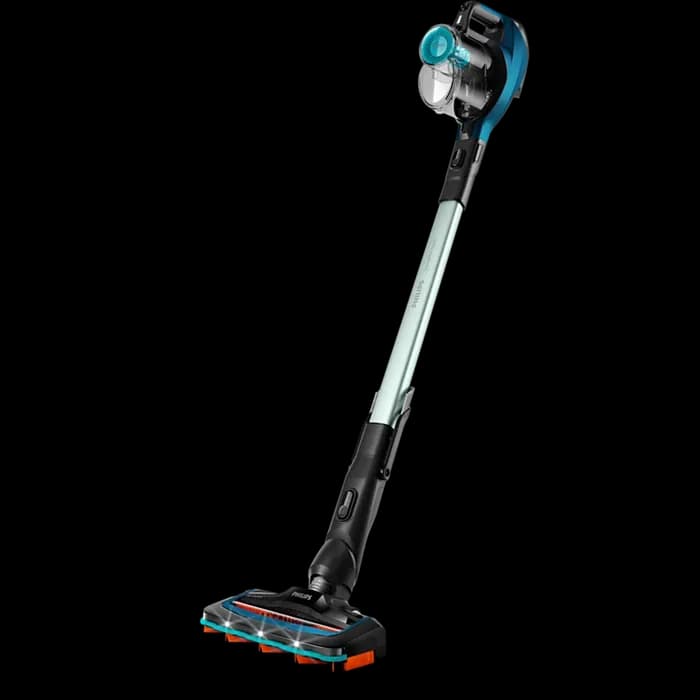
The suction pressure engineering of this unit utilizes a 1000 W universal motor to drive a high-speed centrifugal fan. This configuration focuses on generating a static pressure of 3.5 kPa, which is optimized for surface-level debris and fine dust extraction. The motor-to-airway ratio is designed to maximize airflow speed over sheer vacuum depth, making it ideal for picking up light particles from car upholstery or frames. While it may not replace high-Pa corded extractors for deep carpet pile, its ability to move large volumes of air through a 0.49 kg chassis is a result of tight housing tolerances and optimized impeller geometry.
The filtration architecture employs a 2-stage HEPA system that is essential for the high-pollution environments found in Indian cities. The first stage consists of a coarse mesh that prevents larger debris from clogging the primary filter, while the second stage uses a pleated HEPA membrane. This membrane is rated to capture microscopic particles, including dust mites and pet dander. The washable construction of these filters is a critical engineering choice, as it allows the user to maintain peak airflow performance without the recurring cost of replacement filters, which is a common pain point in the local market.
Regarding the power system, the device is engineered to provide a 30-minute runtime, balancing energy density with the high 1000 W draw of the motor. This duration is achieved through a multi-cell lithium-ion configuration that manages heat dissipation during continuous operation. Practical usage for Indian consumers suggests that while the runtime is sufficient for a 2BHK spot-clean or full car interior, the motor's power consumption requires efficient movement. The lack of a specified rapid-charge protocol suggests a standard CC-CV charging cycle, which is best suited for overnight replenishment to ensure the device is ready for the next day's cleaning tasks.
The wet and dry separation mechanism is integrated into the 1.5 L bagged chamber, using a baffle design to prevent moisture from reaching the 1000 W universal motor. This engineering feature is particularly useful for handling liquid spills on dining tables or mud tracks in car footwells. By isolating the airflow path, the unit ensures that wet waste does not contaminate the mechanical internals. However, post-wet-use maintenance is required to ensure the bag and internal pathways remain free of mold or odor, which is standard for hybrid systems designed for versatile household utility.
The blower function is a standout technical feature that redirects the motor's exhaust through a concentrated snout. In many Indian households, dust settles deep within AC vents or between computer keys where suction alone cannot reach. By switching to blower mode, the unit utilizes its 1000 W power to dislodge these particles for subsequent vacuuming. This technical mechanism relies on a reversible airflow path or an alternative exhaust port that maintains the same pressure efficiency as the suction mode, providing a dual-action cleaning solution that single-function cordless models often lack in this weight class.
The chassis and ergonomics are built from high-impact ABS plastic, keeping the total weight at a remarkable 0.49 kg despite the heavy-duty motor. The handle design is centered to balance the weight of the motor against the vacuum snout, reducing wrist strain during extended use on curtains or frames. The compact footprint allows for a convenient parking position in small utility closets or car glove compartments. This careful weight distribution and material choice ensure that the Vacuum Cleaner Home & Car Use remains durable enough for daily Indian use cases while remaining light enough for all family members to operate.