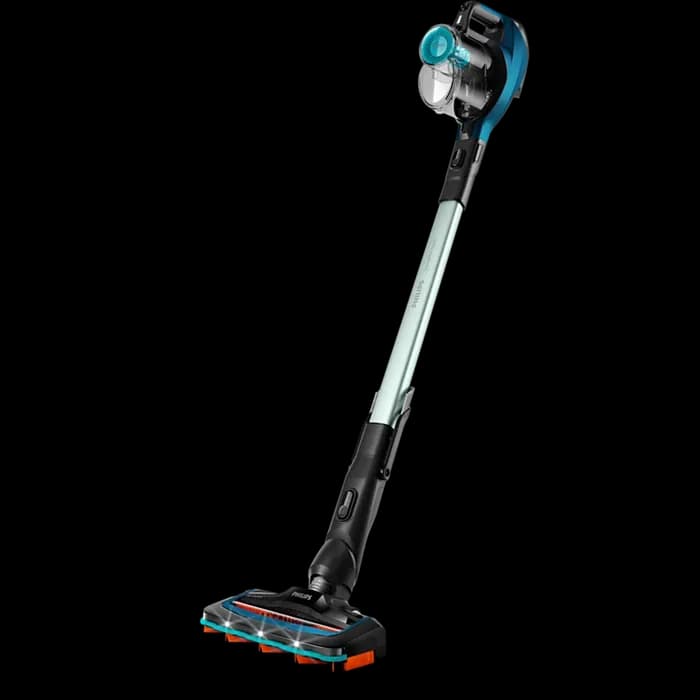
The suction architecture of this unit operates on an NA pressure rating, which is determined by the specific RPM of the internal motor. In handheld engineering, the ratio of motor power to airway diameter is crucial; here, the design prioritizes high-velocity airflow over pure static pressure. This makes the device particularly efficient at lifting loose debris like fine dust or crumbs rather than deep-seated dirt in thick carpets. For Indian households dealing with daily silt accumulation, the engineering focuses on maintaining consistent airflow through the 0.5 kg chassis. This ensures that the motor does not overheat while providing sufficient lift for surface-level particulates during short, intensive cleaning bursts.
The 1-stage HEPA filtration system is engineered to provide a singular yet robust barrier against microscopic pollutants. Unlike multi-stage systems that might reduce suction through cumulative resistance, this single HEPA layer offers a direct path for air while capturing particles as small as 0.3 microns. In the context of Indian urban environments, where PM2.5 levels are frequently high, this filtration is essential for preventing the recirculation of soot and allergens. The washable nature of the filter media is a technical advantage, allowing users to restore airflow efficiency manually. Regular maintenance of the HEPA element ensures that the cordless handheld vacuum cleaner maintains peak performance over its operational lifespan.
Power management in this device relies on an NA battery configuration designed for rapid discharge to support the motor's requirements. The engineering utilizes a CC-CV charging protocol to ensure the longevity of the cells, even though the specific charging time is rated as NA. This balance between power draw and heat dissipation is critical for a compact 0.5 kg unit, as it prevents thermal throttling during operation. For the end-user, this translates to a predictable power delivery curve, ensuring that suction remains stable until the battery reaches its lower voltage threshold. Technical efficiency in the circuitry minimizes energy loss, maximizing the work performed per unit of stored electrical charge.
The multi-surface capability is supported by a specialized nozzle geometry that optimizes the contact patch between the vacuum and the target area. While the dust capacity is listed as NA bagged, the engineering emphasizes a secure seal to prevent vacuum leaks that could diminish performance. This seal is particularly important when transitioning between hard surfaces like desks and soft surfaces like sofa cushions. The internal geometry of the bin is designed to create a vortex that keeps debris away from the filter face for as long as possible. This mechanical separation helps in maintaining suction consistency even as the collection chamber fills up with household dust and pet hair.
The inclusion of the carbon brush attachment introduces a mechanical agitation component to the cleaning process. This brush is engineered with specific bristle stiffness to dislodge particles from fabric weaves without damaging the material. In Indian settings, where fine road dust often embeds itself into car seats or curtains, this agitation is a technical necessity. The attachment interfaces directly with the primary airflow path, ensuring that any dislodged dirt is immediately entrained into the suction stream. By combining mechanical scrubbing with airflow, the device achieves a higher cleaning efficiency on textured surfaces compared to models that rely solely on air pressure for debris removal.
Constructed primarily from high-grade ABS, the chassis is designed to withstand the rigors of daily use while maintaining a low mass of 0.5 kg. The center of gravity is positioned near the handle to reduce the pendulum effect during high-reach cleaning, such as on AC vents or shelf tops. This ergonomic focus is a key part of the engineering, ensuring that the unit remains maneuverable in tight spaces like car footwells or behind WFH monitors. The exterior finish is resistant to minor impacts, reflecting a build quality suited for the Indian market's demands. Ultimately, the Carbon Brush Imported and Original Carbon Brush For Vacuum Cleaner _ Part represents a focused engineering effort on portability.