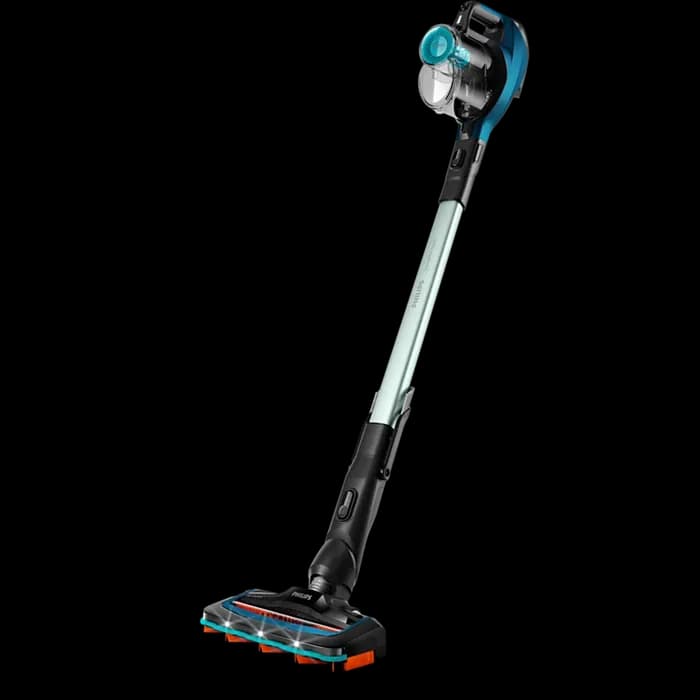
The engineering behind the 8000 Pa suction involves a 1000 W copper universal motor designed for high RPM output. This motor-to-airway ratio is optimized to provide high static pressure, which is essential for lifting heavy particles like road dust and food crumbs. While the suction pressure is lower than industrial corded units, it provides a superior balance for cordless operation where airflow velocity is prioritized over sheer vacuum force. This design makes it highly effective for surface-level debris on hard floors and upholstery but may require multiple passes on thick-pile carpets. The copper windings ensure thermal stability during the 40-minute operational window.
The filtration architecture utilizes a 2-stage HEPA system specifically engineered for fine particulate matter. The first stage acts as a centrifugal separator, removing larger debris and hair to prevent premature clogging of the primary filter. The second stage consists of a washable HEPA element that traps particles as small as 0.3 microns, including pollen and pet dander. This washable construction is vital for the Indian market, where high ambient dust levels would otherwise necessitate frequent and expensive filter replacements. Maintaining the filter through regular rinsing ensures that the 8000 Pa suction remains consistent throughout the motor's 400-hour carbon life.
The power system is built around a multi-cell configuration optimized for a 220 V charging ecosystem, providing a stable discharge rate to the 1000 W motor. Achieving a 40 min runtime requires sophisticated power management that balances current draw with heat dissipation. The use of a CC-CV charging protocol helps maintain battery health, though users should note the runtime may vary based on the attachment used. This duration is sufficient for cleaning a standard car interior or a 1BHK apartment thoroughly. Engineering trade-offs favor runtime over extreme suction peaks, resulting in a more predictable and useful cleaning experience for daily household maintenance.
The wet and dry separation mechanism employs a specific baffle design within the 5 L bagless container to protect the motor from moisture ingress. When vacuuming liquid spills, the internal geometry directs fluids away from the intake manifold, ensuring the 1000 W motor remains dry. It is critical for users to clean and dry the container and the HEPA filter after any wet use to prevent mold growth and maintain hygiene. This capability is particularly useful for kitchen spills or cleaning wet footprints in entrance hallways during the monsoon season. The large capacity allows for significant liquid recovery before the safety threshold is reached.
The pet hair tool is engineered with a specific nozzle geometry to maximize the 8000 Pa suction across a focused surface area. Unlike standard nozzles, this attachment uses specialized airflow paths to lift stubborn fibers from textile surfaces. In the context of Indian homes, where pet shedding on sofas and beds is common, this tool prevents hair from tangling in the main airway. The 72 dB noise level is also a result of acoustic dampening within the motor housing, ensuring that the high-wattage motor does not cause excessive distress to pets during operation. This focus on specialized attachments enhances the unit's utility.
The chassis is constructed from high-grade ABS plastic, providing a balance between durability and the 2.1 kg total weight. The ergonomic handle design is positioned to align the center of gravity with the user's wrist, reducing fatigue during extended 40-minute cleaning sessions. A transparent 5 L dust bin allows for immediate visual inspection of debris levels, which is a practical feature for monitoring cleaning efficiency. The VMIT_2Pcs utilizes a modular attachment interface that allows for quick transitions between the round brush and flat nozzle. This thoughtful industrial design ensures the unit remains robust enough for the rigors of daily cleaning in varied Indian environments.