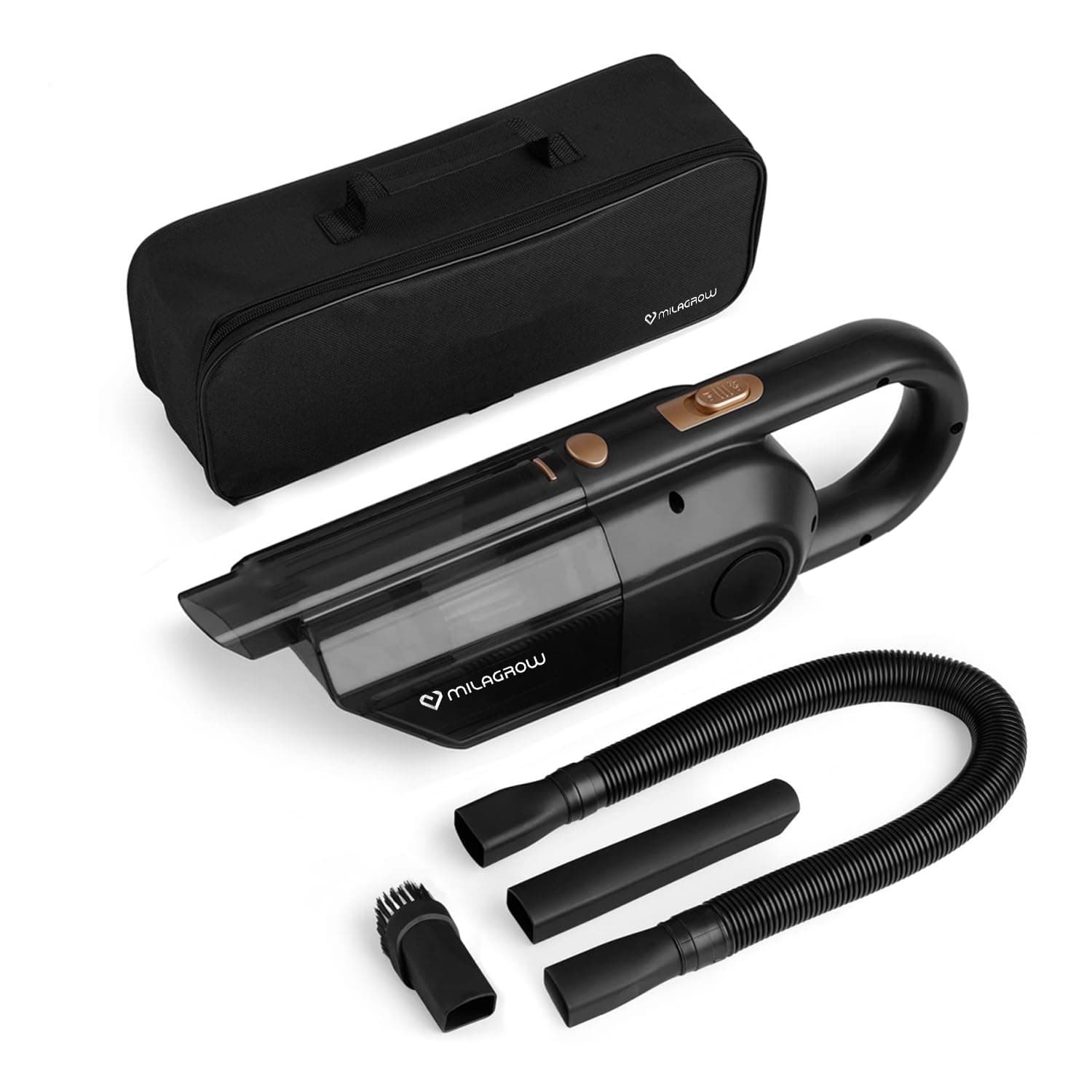
The suction pressure of this cordless handheld vacuum cleaner is a direct result of the 120 W brushless DC motor. This motor generates a rotational speed sufficient to produce 10 kPa of static pressure, which is the force required to lift dense particles like sand or small stones from flat surfaces. The engineering focuses on a tight motor-to-airway ratio, minimizing air leakage within the chassis to ensure that the kinetic energy from the motor is converted into effective suction at the nozzle tip. This design prioritizes high static pressure over high-volume airflow, making the device better suited for concentrated surface cleaning.
The filtration architecture utilizes a 2-stage HEPA system designed to mitigate the secondary pollution common in dry Indian climates. The primary stage uses a mesh to capture larger debris and hair, while the secondary HEPA element traps 99.97% of particles as small as 0.3 microns. This includes PM2.5 particles often found in road dust. Because the filter is washable, users can maintain peak airflow by removing the fine silt that typically clogs disposable filters. This engineering choice extends the life of the 120 W motor by preventing back-pressure buildup caused by dirty filtration media.
The power system is built around a lithium-ion configuration that provides a 28-minute continuous runtime. Charging is managed via a CC-CV protocol that requires 4 hours for a full cycle, ensuring the cells are balanced for longevity. The 28-minute window is optimized for the power draw of the 120 W motor, balancing the weight of the battery pack against the need for sustained suction. For Indian users, this provides enough time to clean a standard 5-seater car or multiple mattresses on a single charge. The circuit includes thermal cut-offs to prevent overheating during summer usage.
While many devices attempt to combine wet and dry functions, this model is engineered strictly as a dry suction unit to maximize motor protection. By omitting a wet-baffle system, the engineers were able to keep the weight down to 0.7 kg while maintaining a 0.5 L dust capacity. This lack of moisture-handling components ensures that there is no risk of mold growth or odor within the internal airways, which is a frequent issue in the humid coastal regions of India. The bagless bin uses a simple mechanical release for hygienic, contact-free emptying of dust.
There is no integrated blower function, which is a deliberate engineering trade-off to optimize the vacuum seal. By focusing exclusively on the intake path, the internal seals are tighter, allowing the 10 kPa pressure to remain consistent throughout the 28-minute battery discharge. A blower port would necessitate a secondary exhaust path that could compromise the static pressure levels needed for heavy dust. This makes the device a specialist in extraction tasks, such as removing fine grime from keyboard switches or AC vent slats, where negative pressure is more effective than blowing dust elsewhere.
The chassis is constructed from high-grade ABS plastic, selected for its impact resistance and low density, resulting in a total weight of 0.7 kg. The ergonomic handle is positioned at the center of gravity, reducing wrist strain during overhead tasks like cleaning ceiling fans or curtain rods. The nozzle attachments, including the flexible hose and extendable nozzle, use a friction-fit seal to prevent vacuum loss. This focus on physical ergonomics and seal integrity ensures that the CoinSucker Pro remains a durable and efficient tool for daily spot cleaning in dense urban living environments.