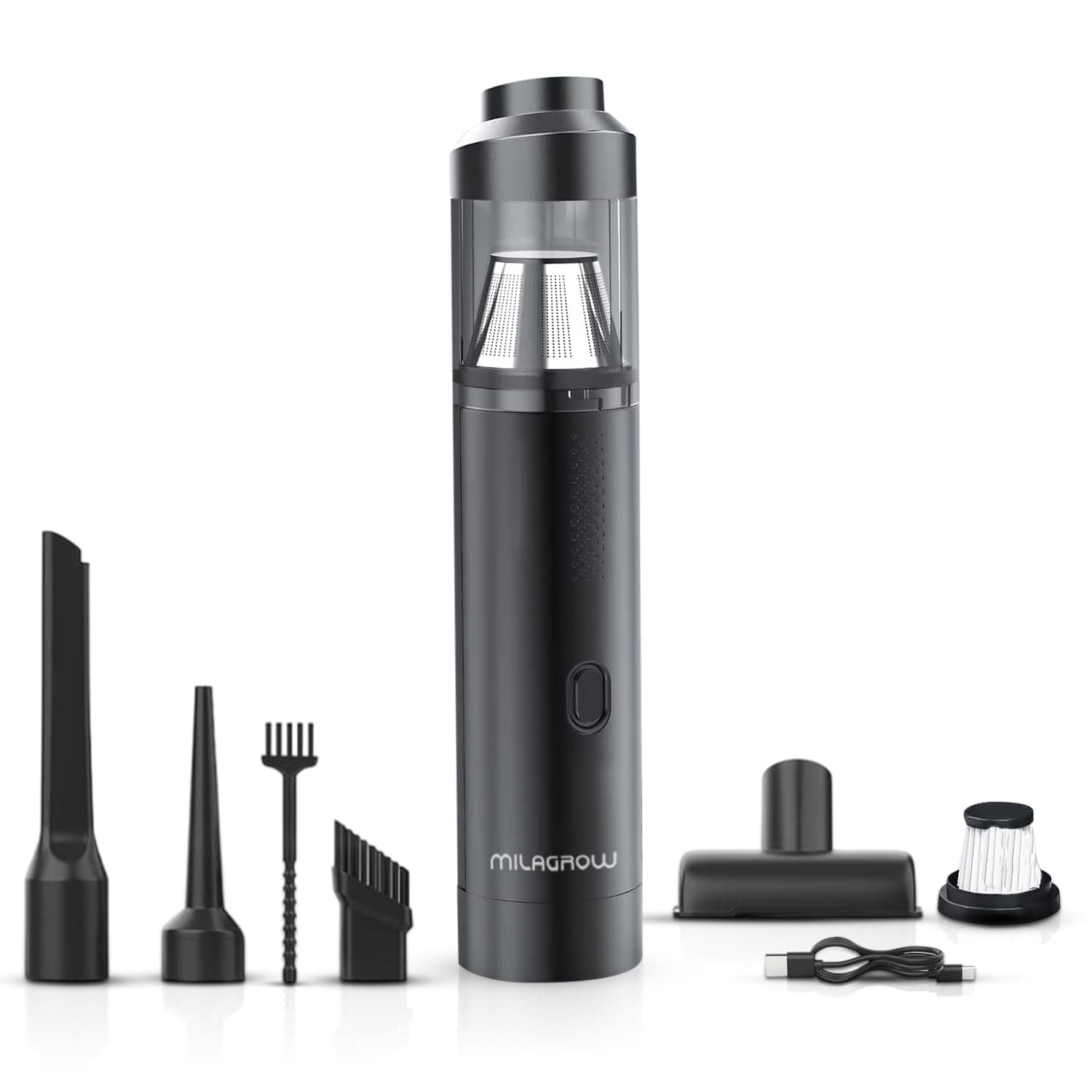
The 120 W brushless DC motor is the core of the 16 kPa suction capability. By utilizing electronic commutation rather than mechanical brushes, the motor achieves higher RPMs with lower heat generation. This mechanical efficiency allows for a high motor-to-airway ratio, translating electrical input into significant static pressure. While corded canisters provide higher peak airflow, this specific pressure level is optimized for surface-to-nozzle contact cleaning. It excels at extracting fine silt from upholstery where high static lift is more critical than raw air volume. This makes it particularly effective for Indian homes facing high levels of suspended particulate matter and road dust.
The filtration architecture employs a 2-stage HEPA system designed for durability and fine particle retention. The first stage consists of a high-density primary mesh that captures larger debris like hair and crumbs, preventing premature clogging of the secondary media. The second stage is a HEPA-rated filter that traps particles as small as 0.3 microns, including pollen and dust mite excrement. Because the filter is washable, it maintains optimal airflow over time without the need for expensive replacements. For Indian users dealing with seasonal allergies, this dual-layered approach ensures that exhausted air is significantly cleaner than the ambient room air.
Power management is handled by a lithium-ion cell configuration delivering a 28-minute runtime. The system uses a CC-CV (Constant Current-Constant Voltage) charging protocol via a 4-hour cycle to maximize battery health and longevity. The 7.4V architecture is balanced to provide sufficient current to the 120 W motor without excessive thermal throttling. During operation, the power delivery remains flat, ensuring suction does not drop as the battery depletes. This makes it reliable for cleaning a 2BHK apartment's upholstery in a single session. Users should follow the recommended charging cycle to maintain the chemical stability of the internal cells.
Although not designed for wet extraction, the internal airflow path is engineered for maximum dry debris separation. The 0.5 L bagless bin uses a centrifugal separation logic where heavier particles are spun to the outer walls, allowing air to pass through the central filter with minimal resistance. This design protects the motor from fine dust ingress, which is the leading cause of motor failure in cheaper handhelds. The transparent dust cup allows for immediate visual confirmation of bin capacity, which is essential when cleaning high-traffic areas like entrance mats. Proper maintenance involves emptying the bin before it reaches the maximum fill line.
The integrated blower function utilizes a dedicated exhaust port redirection mechanism. By focusing the motor's exhaust air through specialized blower nozzles, the device converts its internal pressure into a high-velocity air stream. This is technically distinct from the suction mode and is ideal for clearing dust from sensitive electronics like keyboards or cleaning intricate AC vent slats. In the Indian context, where fine dust often settles in hard-to-reach crevices, the blower provides a touchless cleaning solution. It effectively replaces compressed air cans, offering a more sustainable and cost-effective method for maintaining home office equipment and household fixtures.
The chassis is constructed from high-grade ABS plastic, achieving a total weight of just 0.495 kg. This lightweight build reduces wrist strain during extended overhead cleaning of ceiling corners or fans. The handle is ergonomically shaped to provide a balanced center of gravity, whether using the crevice tool or the multi-surface brush. Its compact footprint allows for easy storage in small drawers or car glove compartments. The structural integrity is designed to withstand the vibrations of the high-speed brushless motor without resonance. Considering the build quality and performance metrics, the Duster Pro is a robust choice for daily Indian household maintenance.