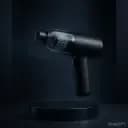
The engineering behind the 120 W motor utilizes a high-speed impeller design to generate 8000 Pa of static suction. This specific motor-to-airway ratio is optimized for a 0.15 kg chassis, prioritizing high velocity over raw mass airflow. While not intended for deep-pile carpet extraction, the pressure is perfectly calibrated for lifting fine dust from hard surfaces like cement or wood flooring. The static pressure allows for effective debris pickup in narrow crevices where larger vacuums lose airflow efficiency. This balance ensures that the motor remains cool during its 20-minute cycle while maintaining consistent suction performance across various household surfaces.
The Single Stage-stage HEPA system is engineered to capture 99.97% of particles as small as 0.3 microns, including dander and fine road dust. Unlike multi-stage systems that increase air resistance and drain battery faster, this single-stage approach maintains high airflow for the 120 W motor. The washable filter construction is a critical engineering choice for the Indian climate, where high humidity can cause dust to cake onto filter membranes. By allowing water-based cleaning, the system restores original airflow levels without requiring new hardware, significantly extending the operational lifespan and maintaining the peak efficiency of the suction unit.
Powered by a compact battery array, the system utilizes a 12 V configuration optimized for a 20-minute discharge cycle at full load. The charging circuit employs a CC-CV protocol, enabling a rapid 0.5-hour recharge time which is remarkably fast for this category. This engineering trade-off prioritizes quick turnover for multiple cleaning sessions throughout the day over a single long-duration run. For Indian users dealing with frequent power fluctuations, the rapid charging cycle ensures the device is rarely out of service, providing a reliable power-to-weight ratio that facilitates effortless handling during ceiling or high-shelf cleaning tasks.
The 0.5 L bagless dust bin utilizes a transparent polycarbonate chassis, allowing users to monitor debris levels in real-time. The internal geometry is designed to create a cyclonic effect that separates larger particles from the HEPA filter surface, preventing premature clogging. Engineering a 0.5 L capacity into a 0.15 kg device required a vertical alignment of the motor and bin, which also streamlines the airflow path. This direct-suction design minimizes energy loss, ensuring that every watt from the motor contributes to debris recovery, making the device highly efficient for localized cleaning of car upholstery and sofa cushions.
The blower function is achieved by utilizing the motor's exhaust path through a dedicated rear nozzle interface. Unlike vacuums that simply vent air through side louvers, this model concentrates the discharge air to create a high-velocity stream suitable for clearing keyboard grime or AC vent dust. This dual-purpose engineering eliminates the need for compressed air cans, aligning with the product's focus on long-term cost-efficiency. In the Indian context, the blower is particularly effective for dislodging fine dust from window tracks before vacuuming it up, demonstrating a practical application of pneumatic engineering in a handheld form factor.
Constructed from high-impact ABS plastic, the 0.15 kg chassis is engineered for durability while remaining the lightest in its class. The ergonomic handle is positioned at the center of gravity, reducing wrist strain during extended use on ceiling corners or car interiors. The modular attachment system, including the inflation and brush nozzles, uses a friction-fit interface that maintains an airtight seal without complex mechanical latches. As a result, the 3 IN 1 Portable Vacuum Cleaner represents a triumph of minimalist engineering, delivering essential cleaning performance in a robust, lightweight package designed for daily Indian household maintenance.